
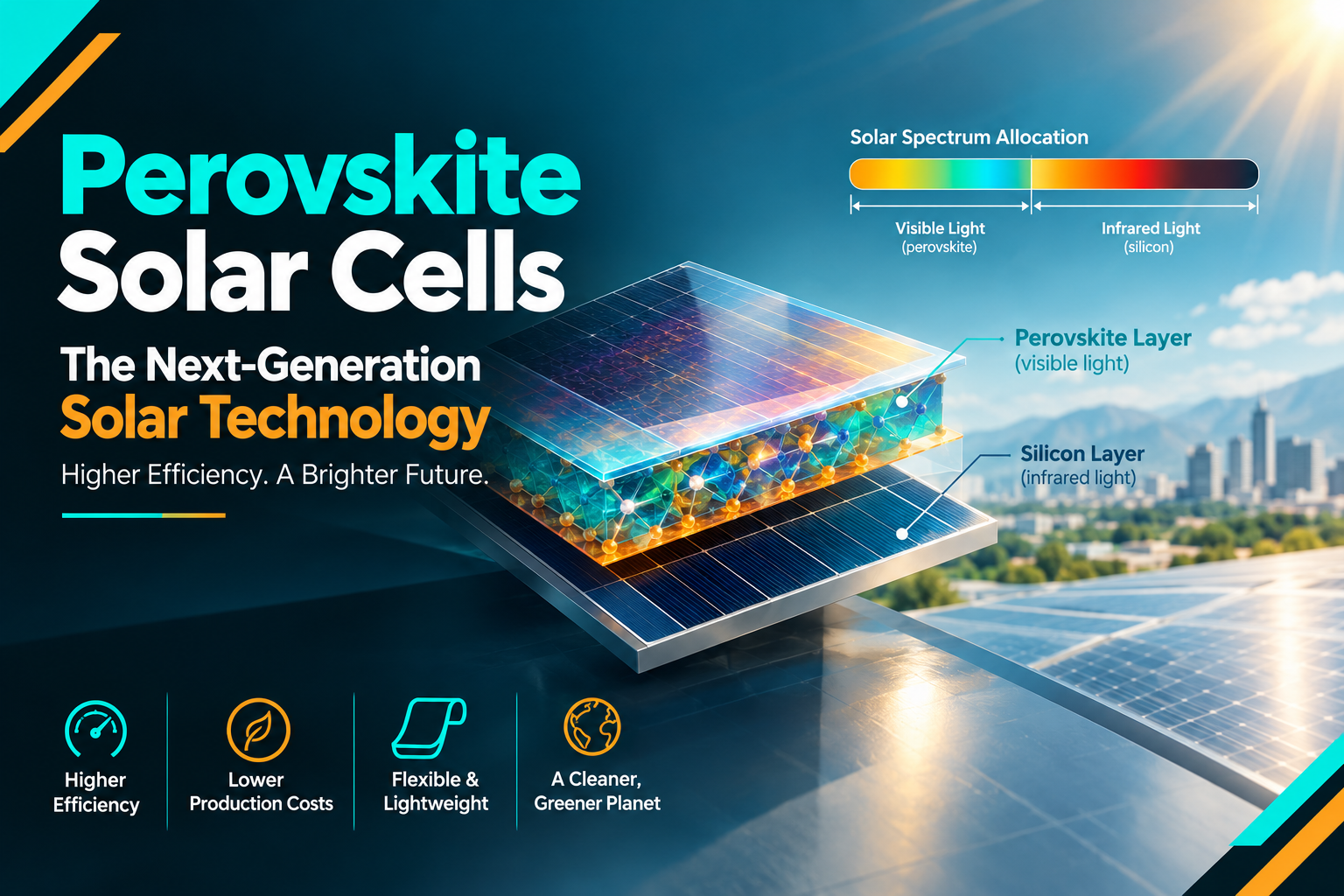
What Are Perovskite Solar Cells?
When people hear 'perovskite,' they usually assume it’s a specific mineral you mine from the earth. But it’s actually just a catch-all term for a unique crystal structure—scientifically written as $ABX_3$.Think of it like a highly customizable molecular template. You can plug different elements into different slots: maybe methylammonium on the corners, a metal like lead anchoring the center, and a halide like iodide wrapping around it.The real magic here is the flexibility. You can mix and match these components to engineer an absolute powerhouse for solar absorption, and you can literally synthesize it at room temperature.
Why Solar Researchers Are Looking Beyond Silicon
Silicon is the undisputed king of solar power right now, but it has some serious limitations. For starters, standard commercial silicon solar cells are surprisingly inefficient, capturing only about 20% to 25% of the sunlight that hits them. On top of that, making them is a massive headache. Silicon has to be aggressively mined, heavily purified, and processed in massive furnaces requiring temperatures well over 1,000 degrees Celsius. It’s an energy-intensive process for a technology meant to save energy, which is exactly why scientists have been hunting for a better alternative.
How a Perovskite Solar Cell Converts Sunlight Into Electricity
Perovskite cells are brilliant at absorbing the visible light spectrum. Because they can be created as liquid solutions, researchers can quite literally spin them onto a glass plate at 4,000 revolutions per minute, using an anti-solvent to force the crystals to form as the liquid evaporates. In commercial applications, this means perovskite solar cells can be printed directly onto surfaces using processes similar to printing a daily newspaper, or evaporated onto thin films. This incredibly simple, low-heat production method drastically cuts down the energy bottleneck required to manufacture solar technology.
Why Perovskite Can Be Combined With Silicon
Instead of throwing standard silicon panels in the trash, researchers realized they could just stack perovskite right on top of them. This setup is called a "tandem cell." Since perovskite can be made somewhat transparent and tuned to specific parts of the light spectrum, it makes the perfect partner for silicon rather than a pure replacement.
What Makes Tandem Solar Cells More Efficient?
It really comes down to dividing and conquering the solar spectrum. Perovskite is amazing at soaking up visible light—the stuff we can actually see. Silicon, meanwhile, does its best work with infrared.
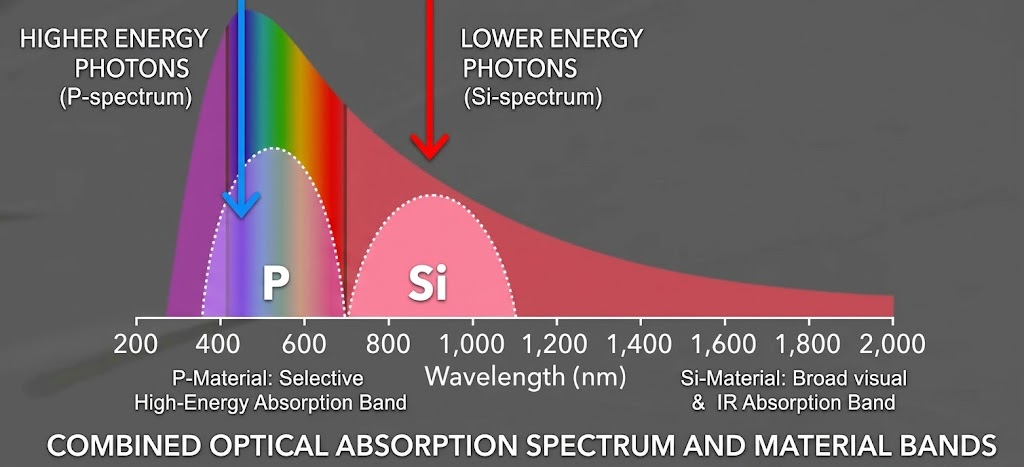
When you stack them together in a tandem cell, you get the best of both worlds. The perovskite sits on top, capturing the visible rays and letting the infrared pass straight through to the silicon layer underneath. By teaming up, these cells can pump out roughly 50% more power, and we’re already seeing lab tests pushing that 30% efficiency mark.
How Researchers Improve Perovskite Cell Performance
Getting to that high efficiency takes some clever engineering. A research team at PolyU recently hit a record power conversion efficiency of 25.5% for a perovskite-silicon tandem cell using three major innovations:
- Oxygen Passivation: They used oxygen to patch up microscopic defects in the perovskite materials, smoothing the way for better energy conversion.
- Transparent Electrodes: To make sure the infrared light actually reaches the bottom silicon layer, they built highly transparent electrodes out of ultra-thin layers of molybdenum trioxide (MoO3) and gold.
- Biomimicry: What do rose petals have to do with solar energy? A lot, it turns out.
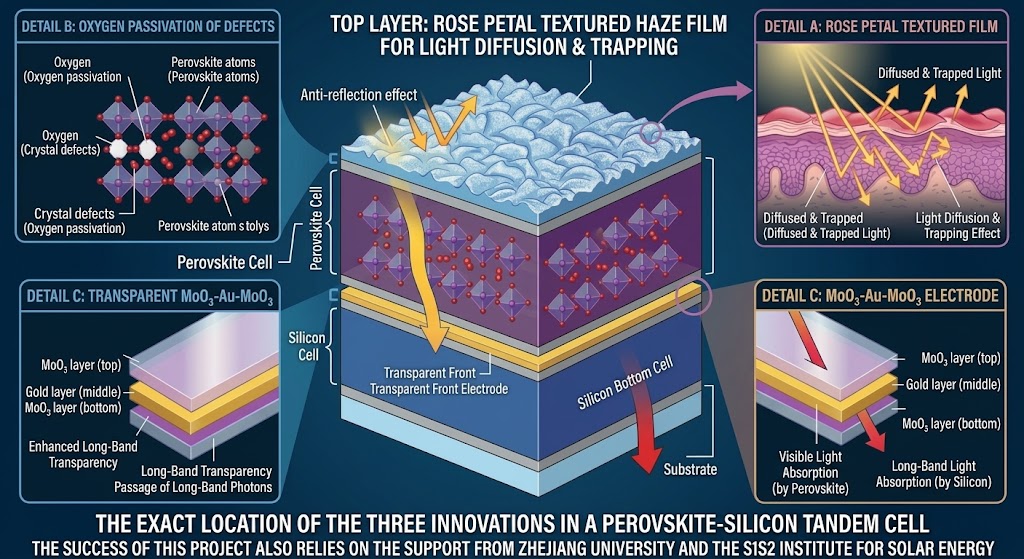
Scientists have engineered a new 'haze film' that perfectly copies the natural texture of a rose. Instead of reflecting incident light, this texture acts like a trap. When applied to the surface of a solar cell, the light is forced to bounce around inside the panel for much longer. It's a simple trick of nature that translates into a huge boost in overall energy production.
The Biggest Problem: Stability and Degradation
If perovskite is so great, why isn't it on your roof yet? The simple answer is stability. The very thing that makes perovskite so appealing—how easily the crystals form at low temperatures—also means they come apart easily. The material degrades quickly when exposed to moisture, heat, oxygen, and UV light. Even the electrical charges traveling through the cell during normal operation can create defects and break down the crystal structure from the inside out, ruining its record-breaking efficiency.
Can Perovskite Solar Panels Survive Real-World Conditions?
To survive outside a pristine lab environment, perovskite modules have to be intensely protected. Researchers are actively fighting degradation through advanced encapsulation—essentially sealing the modules inside highly durable protective layers to block out the elements. While lab tests are promising, extensive, long-term outdoor testing in real-world weather conditions is still a major hurdle the industry has to clear before we see 30-year warranties.
Are Perovskite Solar Panels Already on the Market?
You can't buy a perovskite tandem cell at your local hardware store just yet. A few major companies and university spin-offs are racing toward serial production, but they are still in the pilot phase. Some companies claim to have solved the degradation problem entirely, but verifiable, independent data from long-term real-world use hasn't been widely published yet.
Commercial Perovskite and Tandem Solar Products
While true consumer pricing isn't available yet due to the pre-commercial nature of the technology, here is where the current leading companies stand:
| Company Name | Product / Technology | Technical Specs / Efficiency | Estimated Price |
|---|---|---|---|
| Oxford PV | Perovskite-on-Silicon Tandem Cell | 28.6% efficiency; standard commercial panel sizing | N/A (B2B pilot production) |
| QCells | Commercial Tandem Modules | Target: 26% efficiency over a 30-year lifespan | N/A (Pre-commercial R&D) |
| PolyU (Research) | Prototype Tandem Cell | 25.5% efficiency; uses MoO3/gold electrodes and rose-petal haze film | N/A (Lab Prototype) |
What Could Happen Next?
The solar industry is standing right on the edge of a major shift. Over the next few years, the primary focus will be scaling up from tiny, perfectly controlled lab environments to massive, stable factory production. Once the stability and encapsulation issues are definitively solved for outdoor use, perovskite technology won't just go on rooftops. Because it can be made into lightweight, flexible thin films, we could soon see highly efficient solar chargers integrated directly into everything from smart home speakers to the windows of commercial skyscrapers.