
INTRODUCTION
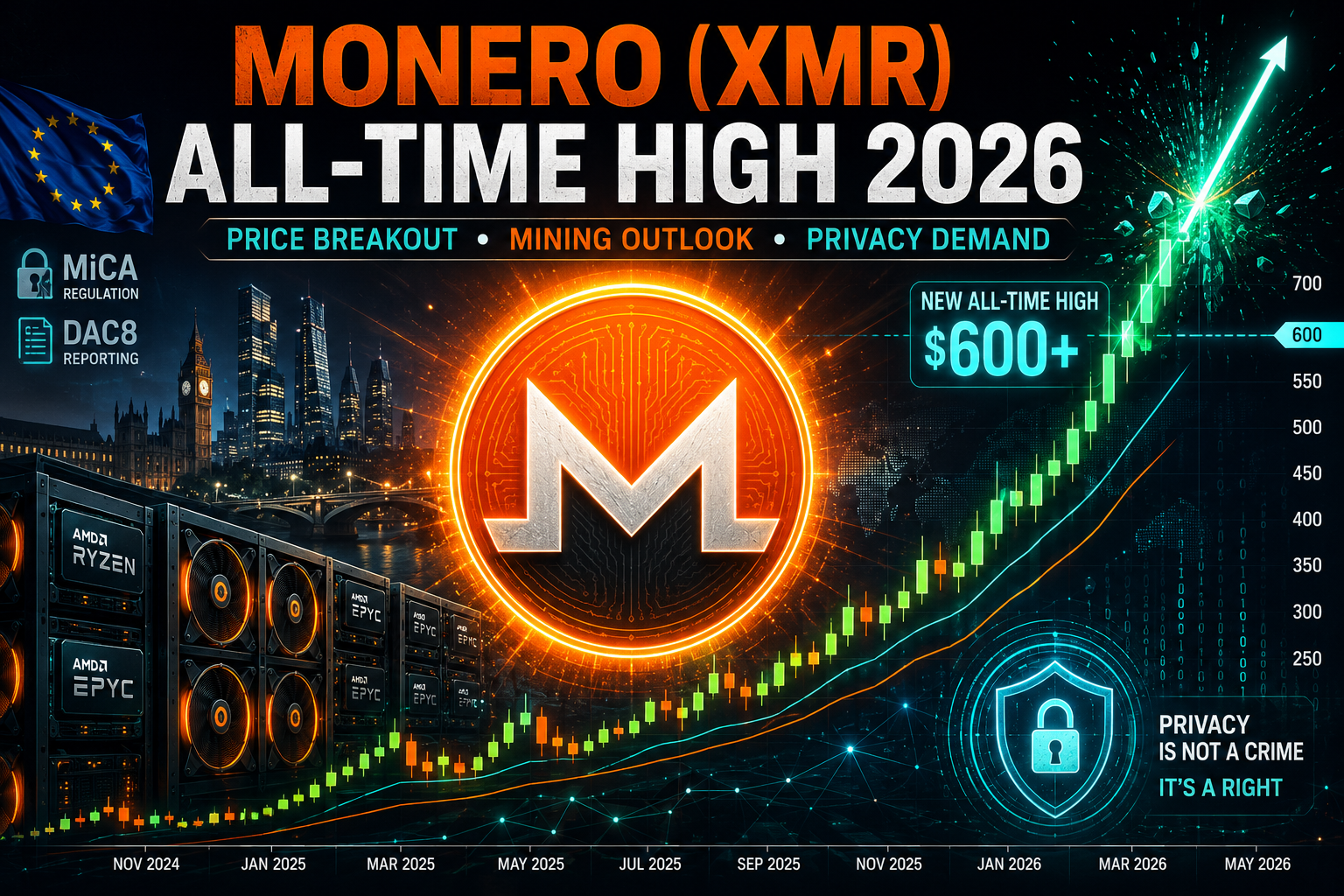
Monero just hit a new all-time high, but if you’ve been watching the charts, you know this wasn't just another hype-driven pump. Seeing Monero climb past the $600 level—well above its previous peaks—tells a specific story about where the market is headed. While most altcoins are still tethered to Bitcoin’s every move, Monero is starting to decouple.
For those of us mining in Europe or managing hardware farms, this isn't just about a green candle on a screen. It’s about structural demand. We are seeing a real-world shift where privacy isn't a "feature" anymore; it’s a necessity. Whether it’s capital moving away from struggling projects like Zcash or investors looking for a hedge against new regulations, Monero is proving that it has a floor that other coins simply don't have.
Why Is Monero (XMR) Price Rising in 2026? Liquidity Shifts and Market Rotation Explained
If you look at the 4-hour charts, that aggressive bullish candle is hard to miss. For anyone running a mining rig, the immediate question is: Why now?
The answer is simpler than the conspiracy theories suggest. It’s not new money coming from Bitcoin or gold; it’s a massive liquidity rotation within the privacy sector. When the core team started walking away from Zcash (ZEC), investor confidence didn't just dip—it evaporated.
As capital fled Zcash, it needed a safe place to land. Naturally, Monero was the only door open. We’re seeing a classic sector-specific move: the money stayed in privacy coins, it just picked a more stable winner. That explains the sharp price jump perfectly without needing to invent any artificial narratives.
Monero’s Long-Term Growth Trend: Sustainable Demand vs. Speculative Altcoins
It wouldn't be right to say that Monero's performance is only tied to what's happening with Zcash. Even before those events, XMR was already showing a steady upward trend since November 2024, with a consistent and clear growth curve.
For anyone mining, this kind of long-term value increase is really important. It shows that there's actual demand for it, not just quick speculative trades. This really sets Monero apart because many other altcoins often depend a lot on hype, social media, or what influencers say. If you're a miner in Europe, this steady performance is critical when you're planning for energy, making sure your farm runs well, and figuring out your return on investment over time.
Monero’s real utility goes beyond just people speculating. This is clear because it's actually used in situations where privacy is absolutely essential. While some of these uses might be controversial, the main point is that XMR works as a medium of exchange, and that generates real transactional demand.
Markets tend to reward currencies that are actively used, not just those that look good on charts or in whitepapers. Over time, a lot of the underground economy has moved from Bitcoin to Monero as Bitcoin became easier to trace. This gives miners a key insight: a coin that is used in the real world is much more resilient and sustainable over the long term.
European Crypto Regulation (MiCA, DAC8) and Monero’s Anti-Fragile Position
Regulatory Pressures and Monero’s Anti-Fragile Nature
Let’s be honest: Europe isn’t making life easy for anyone in crypto right now. Between MiCA and DAC8, we’re seeing a mountain of paperwork, from endless reporting to having to justify every single transaction. It’s invasive, and it’s a massive headache for both investors and miners.
But here’s the irony—the harder the authorities push for total transparency, the more people realize they actually need privacy. By trying to track everything, they’ve essentially handed Monero its best use case.
Yes, we’re likely looking at a future—probably by mid-2027—where regulated European exchanges won't touch privacy coins. Sure, that makes cashing out to fiat a bit more of a puzzle, but it doesn't change the law: holding and mining Monero is still perfectly legal. If anything, these hurdles just take Monero back to its roots—providing a way to move money without someone constantly looking over your shoulder.
Monero Mining Strategy in 2026: Key Considerations for European Miners
Key Takeaways for Miners in 2026
For those involved in cryptocurrency mining within Europe, Monero stands out as a unique opportunity. This is due to its genuine demand, underlying philosophy, and steady performance, even as market conditions shift. There are a few things worth keeping in mind here.
First, invest the time to set up your hardware correctly, particularly if you are focused on RandomX mining.
Second, pay attention to market trends; this can help you predict price changes tied to liquidity shifts.
Third, be ready for potential regulatory updates. This kind of preparation gives you more options when you need to convert your assets down the line.
Finally, build your holdings for sustained growth instead of chasing coins that are just creating temporary excitement.
Overlooking Monero's core advantages for coins driven purely by trends, especially those without practical uses, would be a mistake if you're aiming for consistent profits from mining.
Many cryptocurrencies face difficulties once their initial narratives fade. In contrast, Monero continues to advance for a clear reason: it offers solutions to problems made more pressing by increasing regulation, surveillance, and central banking.
It is often true in the crypto world that assets providing real solutions tend to endure longer than those built only on promises.
- Asset: 0
- Algorithm: RandomX
- Hardware: CPU-based (AMD Ryzen / EPYC preferred)
- Energy sensitivity: High ⚡
- Main cost factor: Electricity price per kWh
- Profit stability: Moderate (depends on market cycles)
- Risk level: Medium–High
- Best strategy: Long-term accumulation + efficient rigs
The Bottom Line for European Miners in 2026
Let’s be real for a second. Monero is not a guaranteed win. The price could stagnate, regulations could tighten harder than expected, and liquidity could dry up faster than most miners are prepared for. There’s also a real possibility that the average small-scale miner ends up spending more on electricity than what they earn back.
In this market, nothing is guaranteed — not even for projects with strong fundamentals like Monero.
If you’re mining in Europe right now, you’re playing a different game than everyone else. The rising cost of electricity and the looming shadow of MiCA regulations mean you can’t afford to be inefficient. Monero is one of the few projects that actually rewards a long-term, calculated approach rather than just chasing the latest trend.
Here’s what you should be focusing on:
- Hardware Efficiency: Don’t just throw power at the problem. Optimize your RandomX settings. If you’re running AMD Ryzen or EPYC gear, focus on that L3 cache—it’s the difference between a profitable month and just breaking even.
- The Energy Factor: Keep a sharp eye on your local electricity rates. Mining XMR is only as profitable as your power bill allows, so consider shifting your heavy loads to off-peak hours if your provider allows it.
- Privacy as an Asset: Don't let the talk of exchange delistings scare you off. Regulation actually makes Monero more valuable, not less. Just make sure you have your P2P exit strategies ready for when you eventually need to move into fiat.
- Stop Chasing Hype: Most coins disappear when their marketing budget runs out. Monero stays relevant because people actually use it for real transactions every single day.
At the end of the day, the market rewards utility. As surveillance gets tighter and banking gets more restrictive, the demand for what Monero offers is only going one way. Plan accordingly.
FAQ: Keeping It Real with Monero in 2026
Q1: Is Monero mining actually worth the electricity costs in Europe right now?
It’s all about your setup and your strategy. If you’re running outdated hardware or paying peak residential rates, it’s a struggle. But for miners using high-efficiency CPUs (like the latest Ryzen or EPYC series) and managing their power loads smartly, the margins are there. Because XMR has a floor built on real-world usage rather than just hype, the returns are much more predictable than most altcoins that crash as soon as the trend dies.
Q2: What happens if Monero gets delisted from major European exchanges?
Honestly? It’s probably going to happen given the current MiCA trajectory. But delisting doesn’t mean disappearing. Monero was built for peer-to-peer (P2P) use from day one. While it might be harder to swap XMR for Euros on a centralized app, the decentralized nature of the coin means it will always have a market. For miners, this just means you should start getting comfortable with P2P platforms and decentralized bridges early on.
Q3: Why did capital move from Zcash (ZEC) to Monero so quickly?
Markets hate uncertainty. When Zcash faced core leadership departures and development delays, big holders looked for the exit. Monero was the only logical place for that "privacy capital" to go. It’s a battle-tested network with a clear, unwavering roadmap. It wasn't a pump; it was a mass migration to a more stable and committed ecosystem.
Q4: Can I still mine Monero with my current PC, or do I need a farm?
One of the best things about Monero’s RandomX algorithm is that it’s ASIC-resistant. You don't need a massive warehouse to participate. A high-end home PC with a good processor can still contribute and earn. However, if you're looking for serious, consistent monthly income in 2026, you'll want to focus on multi-node setups that prioritize hashrate-per-watt. It’s a game of efficiency, not just raw power.