

Crypto Market Analysis 2026: What Happened in 2025?
At the beginning of 2025, the crypto market looked like it was finally ready to grow up. Headlines were optimistic, prices were moving higher, and for the first time in a while, there was a feeling that the industry was becoming more stable. Bitcoin broke above the $125,000 level, institutions were getting more comfortable, and regulation was no longer just a vague promise. For a brief moment, it felt like the long-awaited mature crypto market had arrived.
Then October happened.
Green candles turned red. Confidence faded. And by the end of the year, Bitcoin was sitting well below its peak, while the total market value of crypto had dropped back toward $3 trillion. The year that started with excitement ended with a lot more questions than answers.
So what really went wrong? Was this just another normal crypto cycle, or did 2025 reveal deeper problems that investors and miners can no longer ignore?
Let’s take a closer, more realistic look.
Why the Crypto Market Increased in 2025: Key Growth Drivers
Bitcoin ETFs, Regulation, and Institutional Adoption
One important thing about the early 2025 rally is that it was not built only on hype. For once, there were real structural changes happening in the background. Bitcoin ETFs were attracting steady inflows. Regulatory frameworks in major markets became clearer. And after years of hesitation, large institutions finally had rules they could work with.
That matters more than many people realize. Big money does not move on rumors alone. It needs legal clarity, predictable frameworks, and a basic level of stability. Once those conditions improved, capital that had been waiting on the sidelines started to enter the market. The result was simple: prices went up, and sentiment followed.
Early Signs of Real Crypto Revenue
Another positive signal was that some crypto applications started to show early, modest revenue. Nothing compared to big tech companies, of course, but still a step forward compared to previous cycles where almost everything depended on speculation.
Payments, infrastructure tools, and tokenization platforms began to look less like experiments and more like small businesses. This helped support the idea that crypto was slowly moving toward real-world use, not just trading. All of this pushed Bitcoin to a new all-time high, just over $126,000 in early October, and briefly lifted the total crypto market above $4 trillion. For many investors, this felt like the start of the euphoria phase everyone talks about.
October Crypto Market Crash: Causes and Market Impact
The $19 Billion Liquidation Event in Crypto History
The mood changed fast. A combination of geopolitical tensions and new tariff announcements triggered a broad shift away from risk assets. In crypto, where leverage is always close to the surface, this turned into a brutal deleveraging event.
Roughly $19 billion in positions were wiped out in a short period of time. That is not just a number on a screen. Events like this destroy confidence, force funds to reduce exposure, and remind everyone that crypto is still a very fragile market when stress appears.
Why Digital Assets Underperformed Traditional Markets
While stocks were relatively more stable and gold kept rising, crypto sold off much more aggressively. This is not surprising. Digital assets are still seen as high-risk investments, especially during times of global uncertainty.
By the end of 2025, Bitcoin was down around 30% from its peak. The broader market followed. What looked like a strong year on paper ended up feeling disappointing for many participants.
Why Positive Crypto News Didn't Increase Bitcoin Prices
Why the 2025 Bull Market Ran Out of Momentum
One of the key lessons from 2025 is simple, but often ignored: good news does not always push prices higher.
ETFs, regulation, and institutional participation were not sudden surprises. They were expected. By the time they fully arrived, markets had already adjusted to that expectation. In other words, a big part of the future had already been priced in. Financial markets react to differences between expectations and reality. If reality only matches what people already believed, there is no strong reason for prices to keep climbing.
The Altcoin Valuation and Mass Adoption Problem
This issue is even more visible in the altcoin market. Many tokens are valued as if mass adoption and strong revenue growth are guaranteed. In practice, real usage is still small compared to other technology sectors.
When prices already reflect a perfect future, progress alone is not enough. And when uncertainty appears, even a little, prices can fall very fast because that “perfect future” suddenly looks less certain.
AI vs Cryptocurrency: How Artificial Intelligence Is Changing Crypto Investing
Why Institutional Capital Shifted to AI Enterprises
While crypto was losing momentum, artificial intelligence was pulling in more and more attention and money. The difference is important. Many AI companies are already showing real enterprise demand and real revenue growth.
For large investors, this is critical. Companies do not adopt technology because it sounds exciting. They adopt it because it saves money, makes money, or solves expensive problems. AI is already doing that in many industries. Crypto, in many cases, is still working toward that stage.
So some of the capital that might have gone into crypto simply went somewhere else.
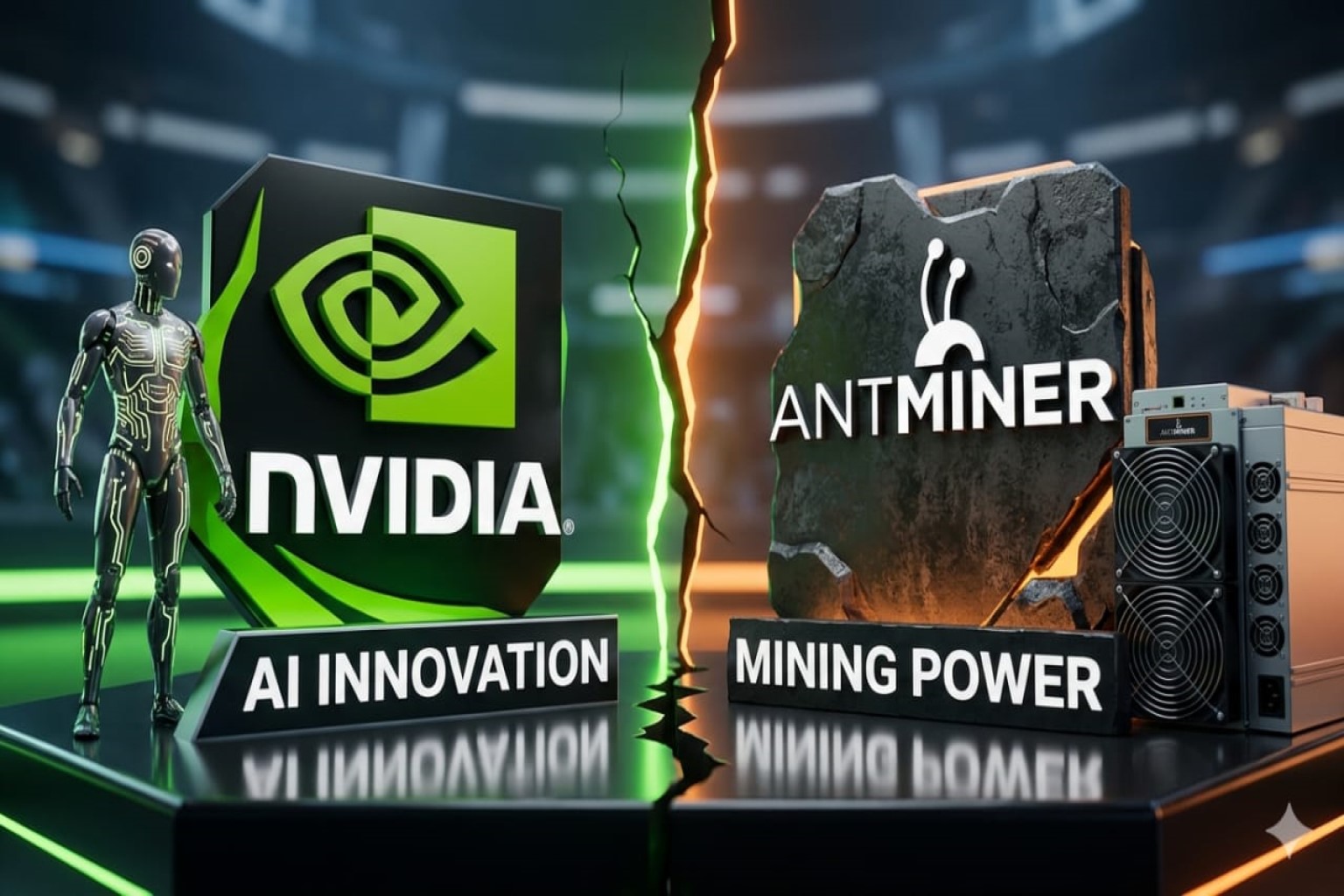
Impact on GPU Mining Hardware and Data Centers
This shift also affects the hardware market. GPUs that were once bought mainly for mining are now increasingly used for AI workloads. Data centers, high-performance compute, and AI infrastructure are becoming serious competitors for the same equipment.
For miners, this is both a risk and an opportunity. Those who can adapt and diversify their hardware usage have more options. Those who rely only on mining revenue are more exposed to market cycles than ever.
Crypto Mining Profitability and Long-Term Investment Challenges
Traditional Market Valuations vs. Digital Assets
In traditional markets, companies are usually valued based on predictable factors: revenue growth, profit margins, cash flow, and the ability to repeat performance over time. Crypto still struggles here.
A large part of on-chain activity is still tied to trading, speculation, and short-term incentives. Even Bitcoin’s fee revenue tends to rise sharply in bull markets and fall quickly during downturns. That makes long-term planning difficult.
Market Narratives vs. Sustainable On-Chain Demand
This is why crypto prices often move on stories. When new buyers arrive, prices rise. When the story is fully priced in, momentum fades. Without strong, structural, and consistent demand, growth remains fragile.
Yes, Bitcoin could still reach much higher levels in the future. But price alone does not fix this problem. The market, in the long run, wants real economic activity to support valuations, not just expectations.
Best Crypto Investment Strategies for 2026
Crypto Investing Strategies: Diversification and Fundamentals
Crypto is not dead. Far from it. Progress is real, and areas like tokenization and infrastructure continue to develop. But 2025 showed that optimism alone is not enough. Investors should focus more on fundamentals, on where real usage is growing, and on how crypto compares to other sectors like AI and cloud compute. Diversification is not a luxury anymore; it is a necessity.
Crypto Mining Survival Strategies: GPU Flexibility and Efficiency
For miners, the message is even clearer. Cycles turn fast. Margins can disappear quickly. Access to cheap energy, efficient ASICs or GPUs, and flexible business models can decide who survives the next downturn.
Using hardware only for one purpose is becoming a risky strategy. The future likely belongs to operators who can switch between mining, AI compute, and other high-performance workloads depending on market conditions.
Future of Cryptocurrency: What Investors and Miners Should Expect in 2026
The crypto market in 2025 was not broken by one single event. It was hit by several pressures at the same time: a historic liquidation shock, rising global uncertainty, strong competition from AI for capital, and ongoing questions about sustainable revenue models.
The rally showed what is possible when liquidity and optimism come together. The downturn reminded everyone how quickly that balance can disappear.
Crypto is still evolving. Real progress is happening. But for long-term growth to become more stable, the industry needs more than narratives. It needs consistent, measurable economic value that can support prices even when the mood changes.
Crypto Market 2026 FAQs: Bitcoin, Mining & Investment
Q1: "Is the dream of $200k Bitcoin dead after the 2025 crash?"
Not necessarily, but the get rich quick timeline has definitely shifted. The drop from the $126,000 peak was a painful reality check, showing us that even with ETFs, Bitcoin isn't immune to global chaos. For $200k to happen, we need to move past speculation and see Bitcoin act as a true "debased currency" hedge again. It’s a marathon now, not a sprint.
Q2: "I have a GPU mining rig. Should I switch to AI compute right now?"
It depends on your hardware. If you’re running top-tier cards (like RTX 4090s or newer), diversifying into AI clusters or rendering services is a smart move to hedge your bets. However, it’s not as "set it and forget it" as mining. AI requires more uptime reliability and bandwidth. If your electricity is dirt cheap, mining might still be your bread and butter, but don't ignore the AI pivot—it’s where the institutional "big money" is currently playing.
Q3: "Why did my altcoins drop 80% while Bitcoin only dropped 30%?"
This is the liquidity trap we saw in October. When the market panics, investors run to the exit door, and that door is much smaller for altcoins. Many projects in 2025 were valued on pure hype without any real revenue to catch the fall. If a token doesn't have people actually using it for something other than trading, it’s going to bleed much harder when the "Fear" index spikes.
Q4: "Should I stop investing in crypto and just buy AI stocks?"
It’s not an "either/or" situation anymore. In 2026, the smartest portfolios treat them as two sides of the same coin. AI is providing the productivity, while crypto (specifically infrastructure and DePIN) is providing the decentralized rails for that productivity. Instead of jumping ship, look for the "overlap"—projects where AI actually uses blockchain for verification or computing power. Diversification is your best friend this year.