Introduction
Choosing between the Ledger Nano S Plus and Ledger Nano X is less about security features on paper and more about how you plan to manage your crypto. Both are hardware wallets designed to keep private keys protected, but they offer different levels of convenience, connectivity, and mobility.
Rather than comparing every specification separately, it makes more sense to start with what they have in common, then look at the differences that can actually affect everyday use.
1. What Both Ledger Wallets Have in Common
Even though both devices build on the exact same core setup—keeping your keys isolated in a Secure Element chip and making you confirm trades with physical buttons—under the hood, their hardware specs tell a slightly different story.
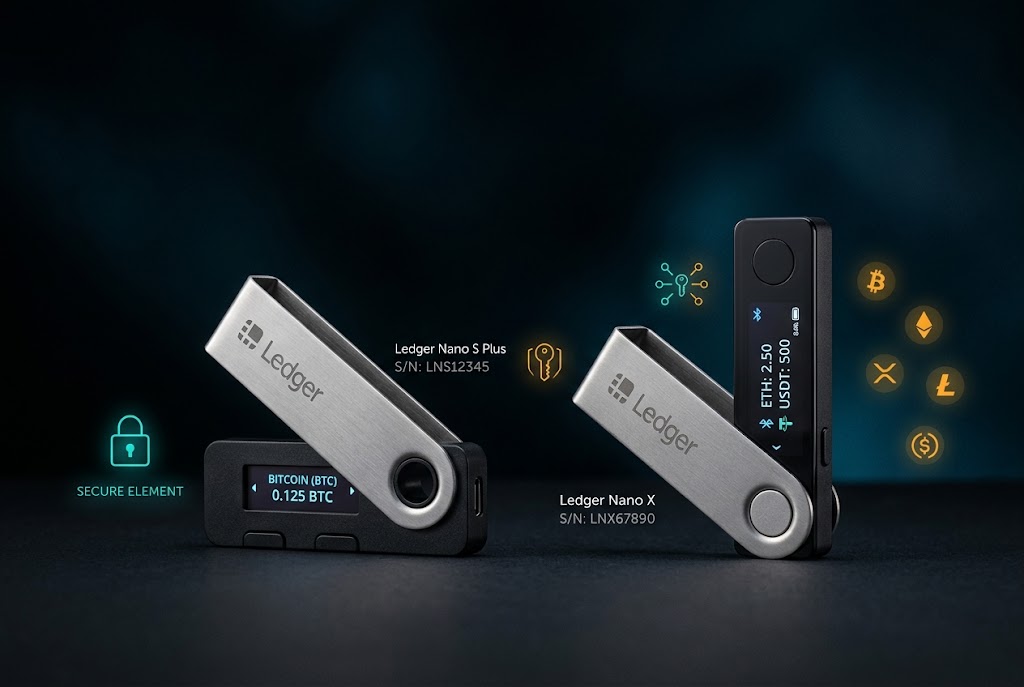
- Secure Element Chip & Certification: The Ledger Nano S Plus uses the newer ST33K1M5 chip certified at CC EAL6+. In contrast, the Ledger Nano X uses the ST33J2M0 chip certified at CC EAL5+. Both ratings represent high-grade, enterprise-level hardware security against physical side-channel attacks, so the higher certification level on the Nano S Plus does not make the Nano X unsafe for everyday use.
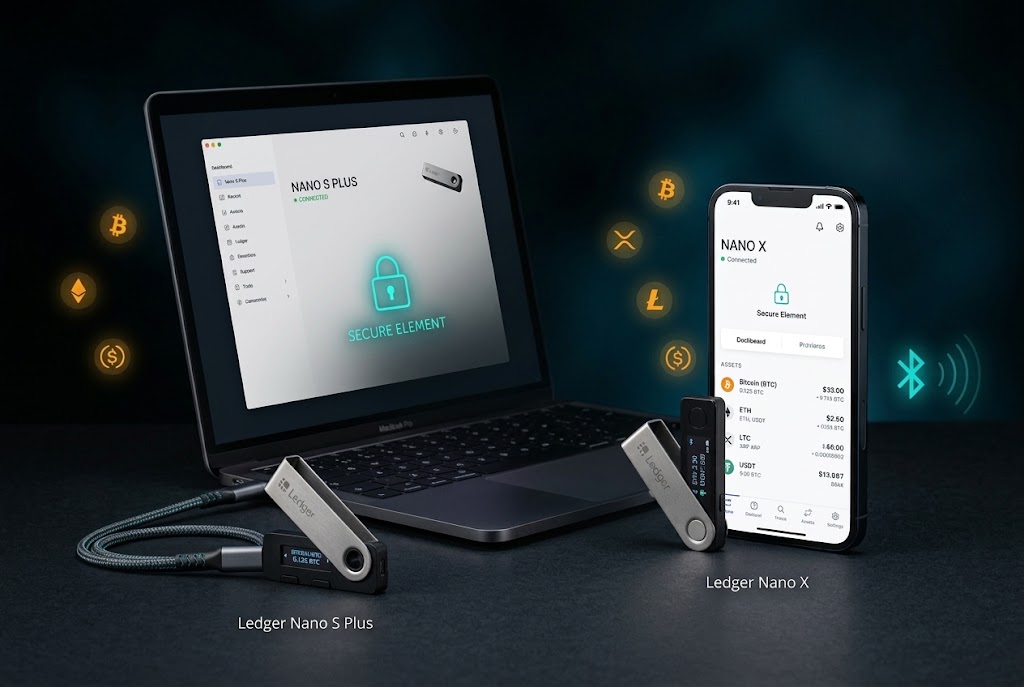
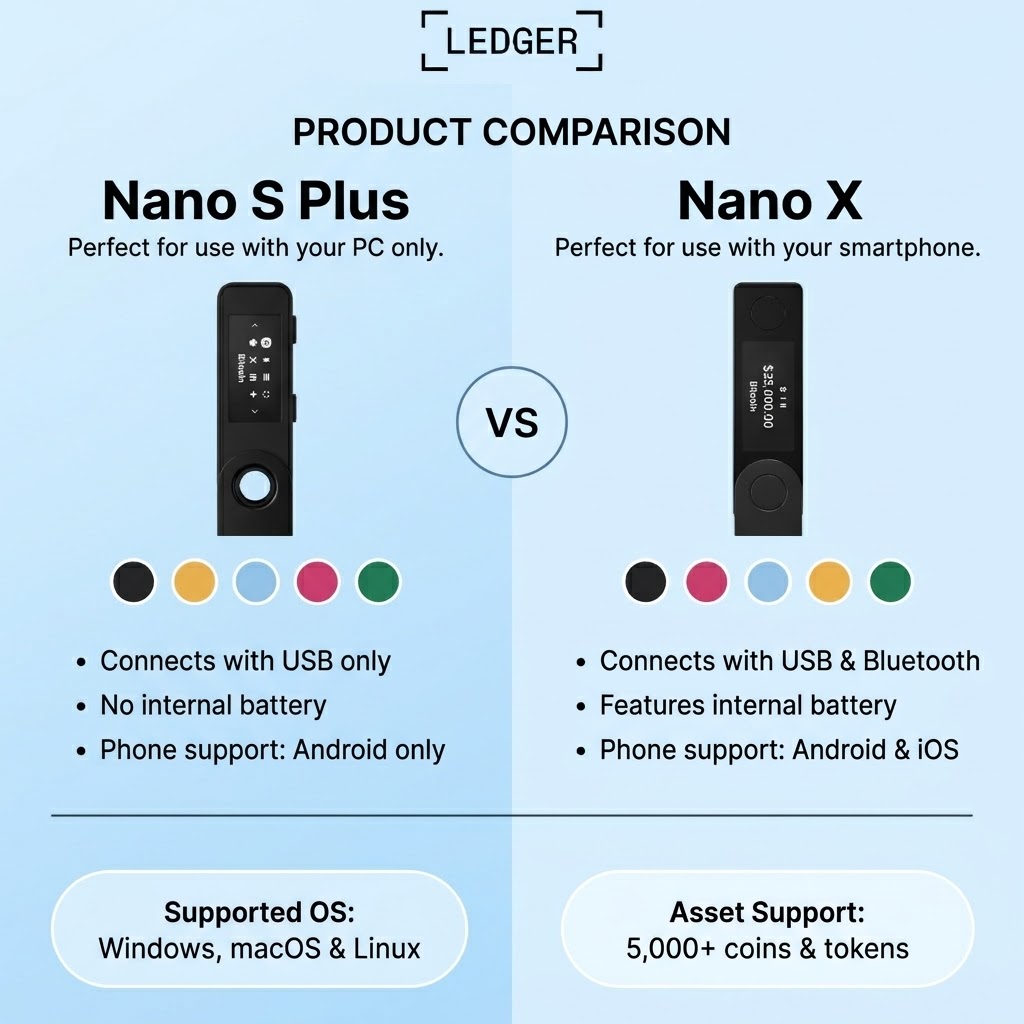
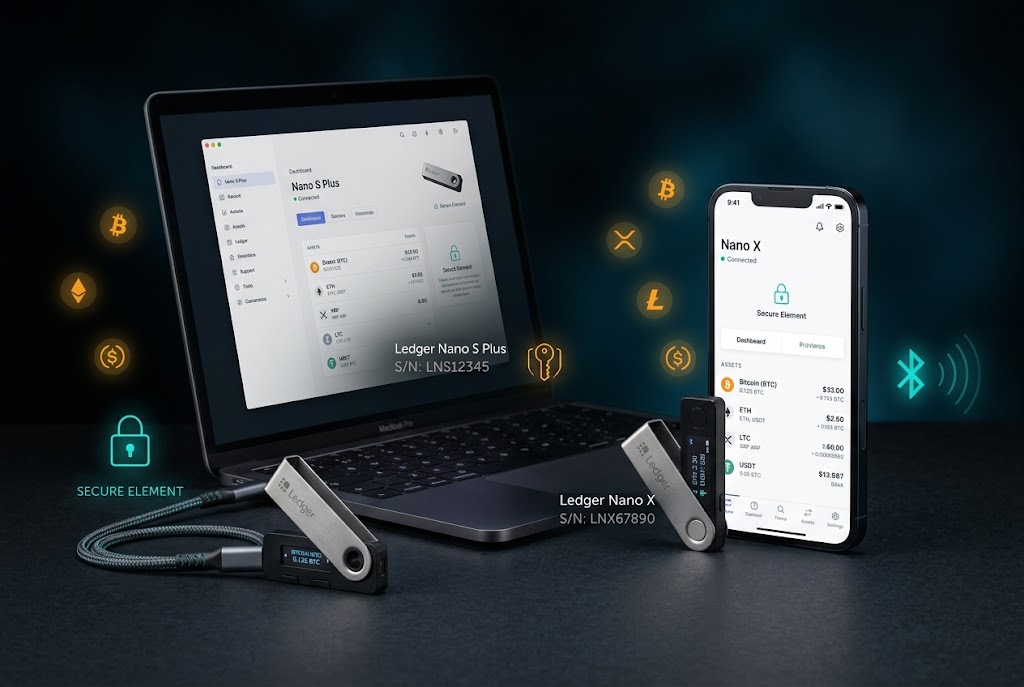
- Connectivity & Battery Architecture: The Nano X integrates Bluetooth Low Energy 5.2 and an internal 100 mAh battery to support wireless signing with mobile devices (including iOS/iPhone). The Nano S Plus relies exclusively on a USB-C cable for power and data transmission, removing the battery and wireless radio entirely. For security purists who want to keep their attack surface as small as possible, sticking strictly to a wired setup completely sidesteps any wireless vulnerabilities.
At the end of the day, these differences just come down to what you prefer—there's no definitive winner. The Nano X is built for people who want seamless mobile flexibility, while the Nano S Plus gives desktop and Android users a straightforward, battery-free experience backed by a slightly higher chip security rating.
The bottom line: You do not need to buy the Nano X simply because you believe it offers a fundamentally different level of crypto protection.
2. Where the Real Differences Begin
The biggest differences become apparent when you connect the wallets, install applications, and manage your assets away from your desk.
Price: Is the Nano X Worth the Extra Cost?
In the price comparison discussed here, the Nano S Plus was listed at around $79 during a promotion, compared with approximately $149 for the Nano X. These are reference prices from that comparison, not guaranteed current offers.
At those prices, the Nano S Plus is the more affordable entry point. The Nano X costs considerably more, so its additional features need to be useful to justify the difference.
Connectivity and Compatibility
The Nano S Plus connects through USB-C. It works with supported desktop computers and Android devices, but it does not support iOS devices.
The Nano X offers both USB-C and Bluetooth connectivity. This allows it to work with compatible iPhones and Android smartphones, as well as desktop computers.
That distinction matters more than the connector itself. If you use an iPhone to manage your crypto, the Nano X is the practical choice between these two models. If you primarily use a computer or an Android phone with a wired connection, the Nano S Plus may be all you need.
Everyday Use: Desk or Pocket?
The Nano S Plus is straightforward: connect it by cable whenever you need to use it. It has no battery, which means there is no battery to recharge or maintain.
The Nano X is designed for greater mobility. Bluetooth makes it easier to manage assets from a compatible smartphone without carrying a cable or having a computer nearby. It also has a built-in battery, which adds convenience but introduces another component to manage.
The Nano X is larger and heavier, weighing about 34 g compared with 21 g for the Nano S Plus. Both remain compact enough to carry easily.
Application Storage
Both wallets support a broad range of cryptocurrencies, but the number of applications you can install simultaneously can vary with application sizes and available storage. It is worth checking your specific coins and application requirements rather than assuming the two devices have identical capacity.
3. Which Ledger Should You Choose?
The best option depends on how you actually use your hardware wallet, not simply on which model has more features.
Choose the Ledger Nano S Plus if:
- You want to spend less on a hardware wallet.
- You mainly manage crypto from a desktop or laptop.
- You are comfortable using a USB-C cable.
- You want a battery-free device for straightforward, wired use.
Choose the Ledger Nano X if:
- You want to manage crypto from an iPhone.
- You regularly use your smartphone to check or manage your assets.
- You travel frequently or prefer not to depend on a cable.
- You value the convenience of Bluetooth connectivity.
For someone who mainly stores crypto and occasionally makes transactions from a computer, the Nano S Plus is a sensible choice. For an active user who prefers managing assets on the move, the Nano X offers greater flexibility.
Final Verdict
The Ledger Nano S Plus offers better value for users who do not need wireless connectivity. The Nano X is the more versatile option, especially for iPhone users and anyone who wants a mobile-first experience.
Neither is automatically the best for everyone. If Bluetooth and iOS support would make little difference to your routine, paying substantially more may not be worthwhile. If those features are important to you, the additional cost can be justified by convenience.
(For more comparisons of other cold wallets, visit our Cold Wallets page.)