Introduction
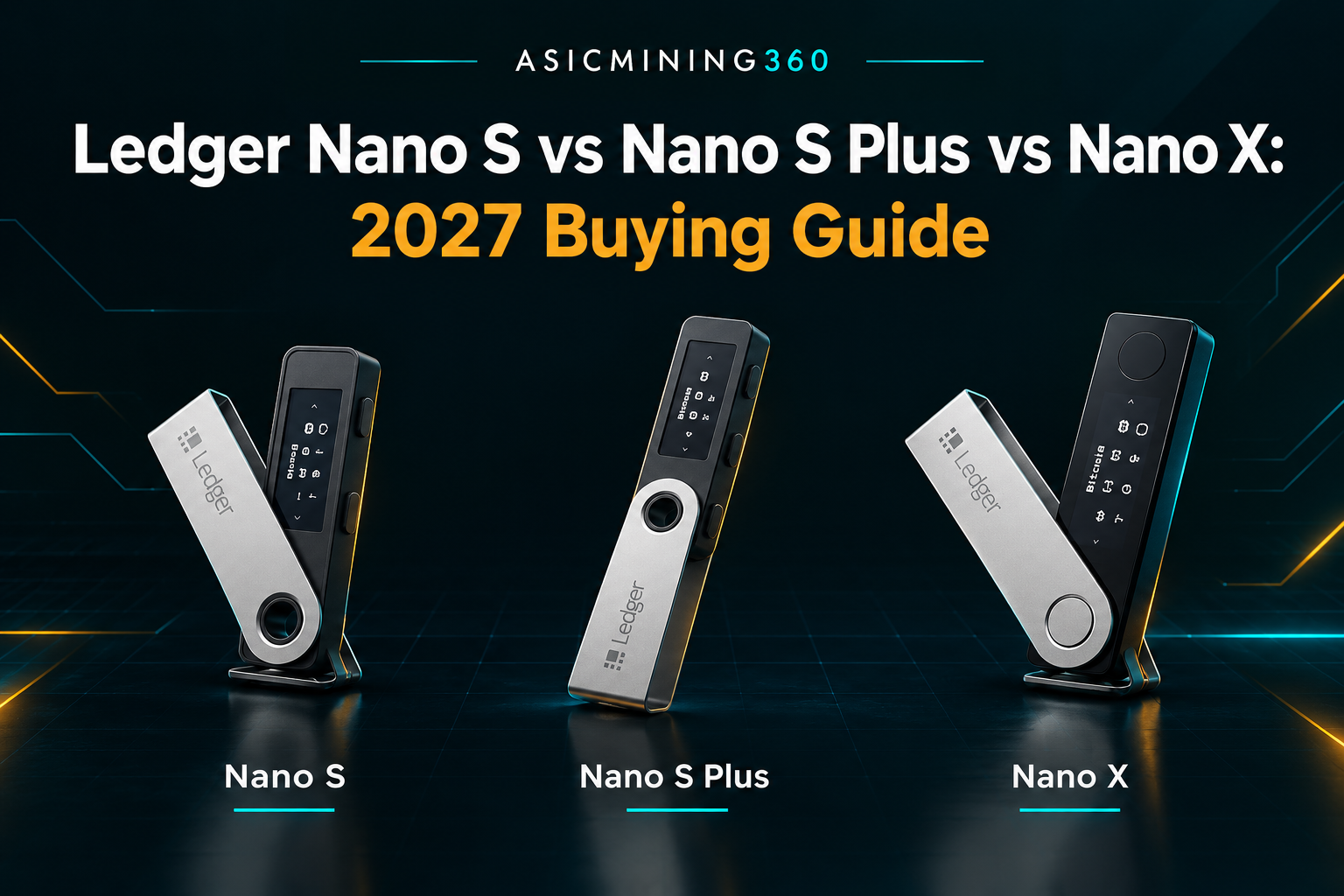
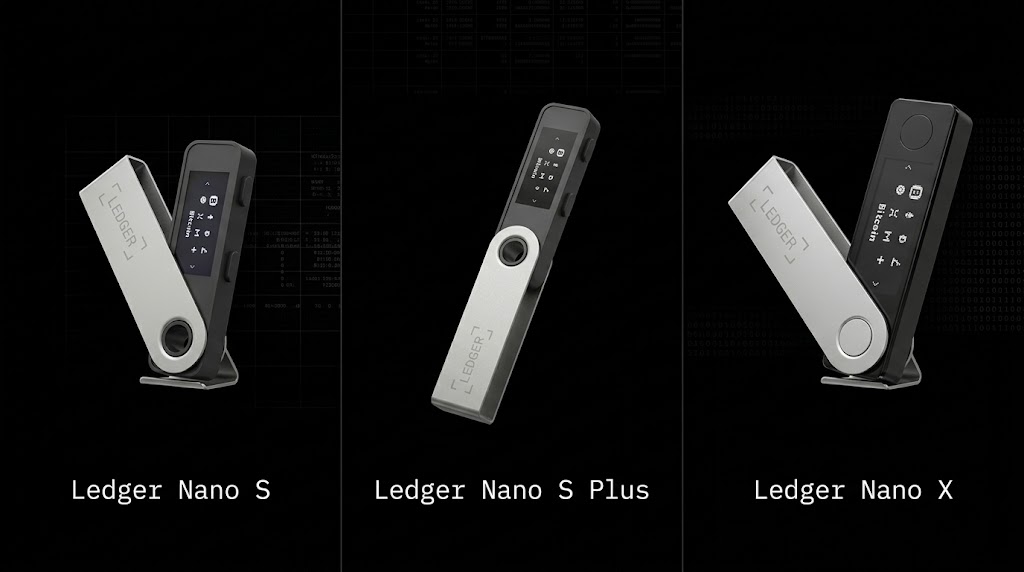
Choosing a Ledger wallet used to be fairly simple.The original Nano S helped make hardware wallets more accessible, while the Nano X added Bluetooth and a built-in battery. The Nano S Plus later arrived with more room for apps and a USB-C connection.
The differences are still important today, especially if you want a wallet for long-term storage or plan to manage your crypto from a phone.
In this comparison, we’ll look at what separates the three devices, what the differences mean in everyday use, and which one is worth considering.
Ledger Nano S vs Nano S Plus vs Nano X: At a Glance
| Feature | Ledger Nano S | Ledger Nano S Plus | Ledger Nano X |
|---|---|---|---|
| Release | 2016 | 2022 | 2019 |
| Connection | Micro-USB | USB-C | USB-C and Bluetooth |
| Built-in battery | No | No | Yes |
| iPhone compatibility | Limited; check current support | Not supported through a direct wired connection | Yes, through Bluetooth |
| Android support | Depends on current device and app compatibility | Yes, through USB-C | Yes, through USB-C or Bluetooth |
| Display | Small monochrome OLED | 128 × 64 monochrome OLED | 128 × 64 monochrome OLED |
| Secure element | Older-generation hardware | ST33K1M5, CC EAL6+ | ST33J2M0, CC EAL5+ |
| Physical controls | Two buttons | Two buttons | Two buttons |
| Current status | Discontinued | Available | Available |
Specifications and compatibility are based on Ledger’s published information. The original Nano S is a discontinued product, so its current support and availability may differ from those of the newer models.
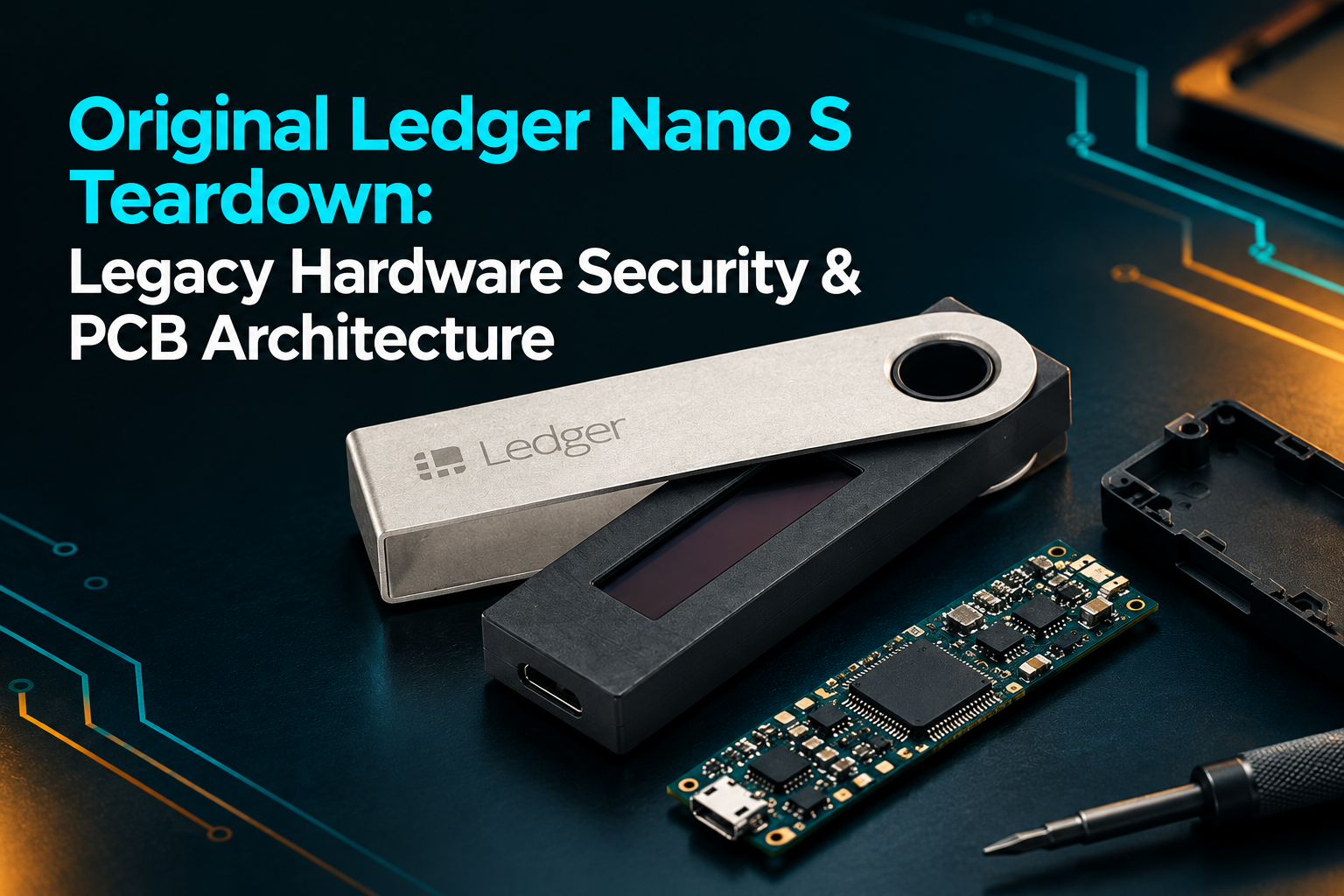
1. Legacy Analysis: The Original Ledger Nano S (Discontinued)
the original Ledger Nano S helped make hardware wallets more accessible. Released in 2016, it offered offline private-key storage in a compact device with a small screen and two physical buttons.
Its biggest limitation today is not necessarily its core security design. It is its age.
The Nano S uses Micro-USB rather than USB-C, and its internal storage is more limited than that of the newer models. If you manage several cryptocurrencies, you may find that you need to install and remove apps more often.
That does not automatically make the original device unsafe. However, buying a used or old-stock unit introduces additional questions about its history, condition and current software support.
Who should consider it?
Someone who already owns one and has confirmed that it remains compatible with their setup may have no immediate reason to replace it. For a new purchase, though, the Nano S Plus is generally the more practical starting point.
2. Ledger Nano S Plus Review: USB-C, 1.5MB Storage & EAL6+ Security
The Nano S Plus keeps the basic idea of the original Nano S but updates the hardware and removes some of its everyday limitations.
It uses USB-C, has a larger app-storage capacity than the original Nano S, and features a 128 × 64-pixel monochrome OLED display. It does not have a battery or Bluetooth, so it needs a wired connection to operate.
That makes it a good fit for people who mainly manage their crypto from a desktop computer or a compatible Android phone.
The Nano S Plus also uses the ST33K1M5 secure element, certified to CC EAL6+. That certification is a useful part of its security profile, although certification levels alone do not tell the whole story about a wallet’s real-world security.
The trade-off is convenience. There is no wireless connection, and the Nano S Plus does not support direct wired use with an iPhone.
Who should consider it?
If you want a current, straightforward Ledger for desktop use and do not need Bluetooth, the Nano S Plus is likely to be the most sensible choice of these three.
3. Ledger Nano X Analysis: Bluetooth, iPhone Support & Internal Battery
The Nano X takes a different approach. It adds Bluetooth connectivity and a rechargeable battery, allowing you to use the device with compatible iPhones and Android phones without keeping it connected by cable.
That is the main reason to choose it over the Nano S Plus.
Its screen is still a small monochrome OLED display, and navigation still relies on two physical buttons. So while the wireless connection makes it easier to use on the move, the overall interaction is not dramatically different from the Nano S Plus.
The Nano X uses the ST33J2M0 secure element, certified to CC EAL5+. Its security architecture is designed so that private keys remain protected by the secure element rather than being exposed through the Bluetooth connection. Ledger explains its Bluetooth security model in its official technical article.
Bluetooth is optional: if you would rather avoid wireless connections, you can use the Nano X through USB-C instead.
There are two practical drawbacks to keep in mind. First, the device is heavier than the Nano S Plus. Second, it contains a rechargeable battery, which adds a component that can age over time.
Who should consider it?
The Nano X makes the most sense if you regularly manage crypto from an iPhone or want the option to use your wallet without a cable.
4. Security Architecture: ST33K1M5 (EAL6+) vs. ST33J2M0 (EAL5+)
Not simply because it costs more or offers more features.
Both models are designed to protect private keys using a secure element and to require user approval for transactions. The Nano S Plus has a CC EAL6+ certified secure element, while the Nano X uses a CC EAL5+ certified one.
These are different certification levels, but they should not be treated as a complete ranking of the two wallets’ overall security. Security also depends on the device’s implementation, firmware, supply chain and how you use it.
Bluetooth is another point worth putting into perspective. A wireless connection creates an additional communication path, but that alone does not mean an attacker can extract the private keys. Ledger’s published security model separates Bluetooth communication from the secure element that protects sensitive information.
For either model, your habits remain crucial:
- Buy from Ledger or a seller you can independently verify.
- Set up the device yourself and follow the official instructions.
- Never enter your recovery phrase into a website or share it with anyone claiming to provide support.
- Read transaction details on the device screen before approving them.
- Keep your recovery phrase offline and stored securely.
Hardware isolation guards against remote key extraction, not operational errors. Approving an unverified transaction or compromising your seed phrase completely undermines the security boundary of the device.
5. App Storage & App Limits: 1.5MB (S Plus) vs. 2MB (Nano X)
The amount of space available for wallet apps is one reason the Nano S Plus improved on the original Nano S.
The older Nano S has more restrictive storage, which can mean managing installed apps more actively. The Nano S Plus and Nano X offer more room, making it easier to keep multiple apps installed.
However, app storage is not the same as the number of cryptocurrencies a wallet supports. Compatibility depends on the asset, the relevant app or third-party wallet, and the device’s current software support.
Before buying, check the official Ledger compatibility information for the specific coins and networks you use. Do not rely solely on a general claim that a device supports thousands of assets.
6. Buyer's Decision Framework: Desktop vs. Mobile Cold Storage
The choice is easier when you start with how you plan to use the device.
Choose the Nano S Plus if:
- You mainly manage crypto from a desktop computer.
- You do not need Bluetooth.
- You want a newer wired device without a rechargeable battery.
Choose the Nano X if:
- You want to use an iPhone with a Ledger hardware wallet.
- Wireless access is useful to you.
- You prefer having both Bluetooth and USB-C connectivity.
Keep your original Nano S if:
- You already own one.
- It remains supported and compatible with your current setup.
- You have no specific reason to upgrade.
For a new buyer, I would generally start with the Nano S Plus and move to the Nano "X" only if mobile compatibility or Bluetooth is genuinely useful. The Nano "X" offers more convenience, but that does not automatically make it the better choice for everyone.
Engineering Verdict: Balancing Physical Security & Mobile Flexibility
The original Nano S remains an important part of Ledger’s history, but its age and limited storage make it a less practical option for most new buyers.
The Nano S Plus is the simpler choice for wired use, while the Nano X is better suited to people who want to manage their crypto from an iPhone or use Bluetooth.
Neither model removes the need for careful transaction checks and safe recovery-phrase storage. Those habits matter far more than choosing between two closely related hardware wallets.
FAQ
Q1: Do I really need to throw away my old Nano S if I already have one?
No. If your original Nano S is functioning properly and supports the assets and management software you rely on, it remains a secure signer for holding private keys offline. However, given its discontinued status and severe onboard memory limits (~320 KB), upgrading to a Nano S Plus makes sense if you are tired of juggling app installations or if future firmware updates drop support for legacy board revisions.
Q2: Is it worth paying extra for the Nano X just to get Bluetooth?
The Nano X only makes sense if mobile connectivity is a hard requirement—specifically wireless pairing with iOS or Android devices. If your workflow is strictly desktop-based, the Nano S Plus offers identical core security, the same 128x64 display, and expanded app storage at a lower price point without the maintenance overhead of an internal lithium-ion battery.
Q3: Is Bluetooth on the Nano X actually secure, or can hackers steal my crypto wirelessly?
Bluetooth on the Nano X functions strictly as an untrusted transport protocol for encrypted payload data—it has zero direct access to your private keys. Cryptographic operations and seed storage are isolated inside a certified Secure Element (CC EAL5+). As long as you enforce the "What You See Is What You Sign" rule on the physical OLED screen and guard your 24-word recovery phrase offline, the wireless connection introduces no risk of key extraction.