Strategic Analysis of the 2025–2026 Bitcoin Mining Landscape in Iceland
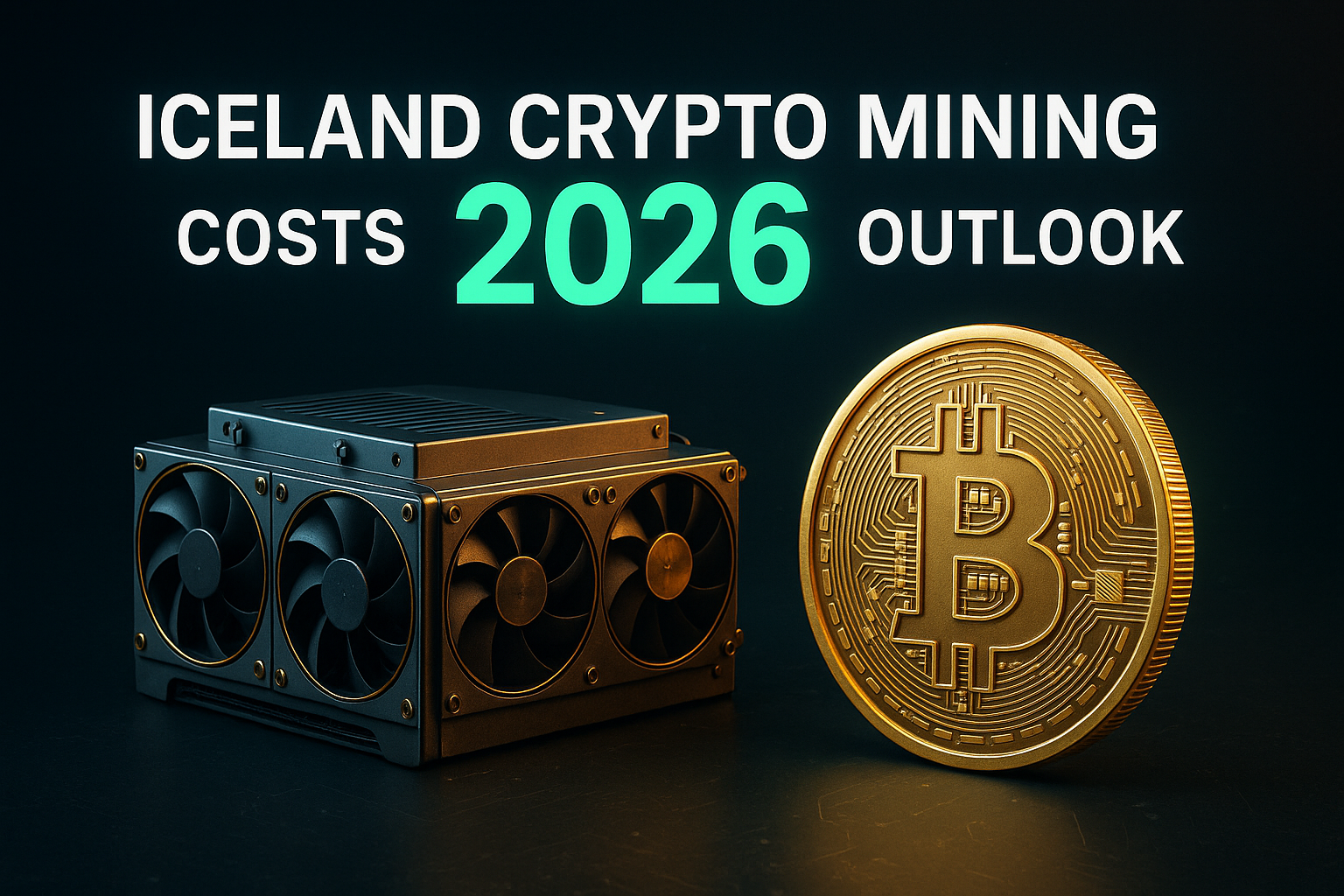
Nowadays, Iceland is considered to be the beating heart of the digital currency mining industry in Europe and the whole world. It has become a refuge for most European miners, especially due to the extreme electricity prices throughout the continent. The combination of the island's volcanic geology, polar climate, and stable economic policies has transformed this little island into a big one, contributing to over 1.3% of the total Bitcoin Hashrate globally in 2025. However, these high and mighty figures represent a strategic war between digital ambition and the basic needs of the Icelandic state. Will it affect the future of mining in this country?
Why Iceland Dominates Global Bitcoin Mining: Energy, Climate, and Legal Stability
Iceland's effectiveness in luring massive data centers was not a coincidence; it was one of the results of three main pillars:
Renewable Energy Advantage: Low Electricity Prices and 100% Green Power
Iceland's electricity prices are among the lowest in the world at approximately $0.1 per kWh.
Iceland is entirely on renewable energy sources—hydroelectric power from rivers and glaciers, and geothermal energy from the Earth's interior.
Miners in Iceland are less affected by the fluctuating market than their US or European counterparts who are directly impacted by the changing prices for oil and gas. Miners in Iceland effectively have stable power costs by way of the long-term contracts with the power companies.
With global ESG (Environmental, Social, and Governance) concerns on the rise, Iceland provides an ethical exit for investors where Bitcoin is mined with almost zero carbon footprint.
Natural Cooling Infrastructure: How Iceland’s Climate Reduces Mining Costs
Heat is the greatest enemy of mining hardware (ASICs) in Bitcoin mining, shortening their lifespan and making them costlier. In hotter regions, miners' energy bills can include 30% to 40% spent merely on keeping the machines cool.
Iceland, the Land of Cool Air: The cold air in Iceland is used to cool the devices in the data centers; air from the outside is drawn and circulated inside, thus negating the need for sophisticated and costly air conditioning. This conserves the power of the device and prolongs its use considerably.
The Icelandic Winter: Winter is cold with temperatures on the average coast from -1°C to 3°C (inland areas may get down to -10°C). The summer is nice and pleasant with an average of 10°C to 15°C. This continuously cool climate throughout the year is a great natural cooling device for the devices and hence will reduce industrial cooling costs.
Political and Regulatory Stability for Institutional Bitcoin Mining
Mining in China was banned overnight, or Kazakhstan faced supply disruptions. Iceland provides a trustworthy legal framework. The data center sector has become an inseparable part of the national economy, thus creating a powerful lobby that protects the industry from the impact of political changes.
Tax Structure and Financial Incentives for Crypto Mining in Iceland
Iceland is not merely a paradise for low-cost energy; it also provides a very attractive and sophisticated financial structure for professional investors:
-
Corporate Tax: Around 20%, which is very competitive when compared to the European average.
-
VAT Refund: The VAT rate is 24%, which can be significant when acquiring hardware. However, the Icelandic system allows for the complete reclamation of this tax on imported equipment such as Antminer S21 or S23, thus considerably decreasing the initial CAPEX.
-
Connectivity: Iceland is provided with undersea fiber optic cables connecting it to both Europe and America, which guarantees extremely low latency.
Energy Policy Shift: Prioritizing Agriculture Over Crypto Mining
In spite of the advantages, a new tone in politics has been set by the Icelandic government. The Prime Minister has shown his wish to change the order of energy consumption preferences:
National Food Security
The government, which is now viewing using energy for "greenhouses" (for crops such as corn and vegetables) as a way to attain self-sufficiency, was once entirely dependent on imports and thus had crypto mining priority over other uses.
Energy as a Bottleneck
Energy is a limited resource. The consumption of data centers has already reached a level of concern with no large power plant projects planned for the near future. It is getting increasingly more difficult to get new licenses for big mining farms as home heating and the food industry take priority.
Bitcoin Halving Impact on Iceland Mining and Global Hardware Migration
The Icelandic mining industry is at present experiencing a technical challenge brought about by the Halving event:
Phasing Out Old Generations
The Antminer S19 series is among the devices that are losing economic viability. With the block reward being halved, the cost of electricity (even at a low rate) is more than the returns from these old units.
Migration to Africa and South America
It is reported that more than 600,000 devices have migrated in a mass to the countries of Ethiopia and Paraguay. Although energy tariffs might be less there, the political risks are much higher—especially in Africa because of the ever-changing political landscape, inadequate infrastructure, and the existence of regional conflicts (like the tensions in the Horn of Africa).
Survival of the Fittest
To remain competitive in Iceland nowadays, you need to have the latest and most efficient hardware (low Joules per Terahash). Iceland is gradually evolving from a "playground for all" into a "platform for professionals."
How to Start Bitcoin Mining in Iceland: Practical Steps via Quotecolo
Investors who are thinking about entering the Icelandic market have made the right choice by working with specialized platforms like Quotecolo:
-
Consultation: Due to the energy crisis, specialists are pinpointing sites with spare electrical capacity (Colocation Hosting).
-
Comparison: The platform allows comparison of kWh prices and maintenance fees across 30 providers in Iceland and globally.
Iceland vs. Ethiopia for Bitcoin Mining: Stability vs. Cheap Electricity
Electricity Pricing
Ethiopia's rates were around $0.0314/kWh but by 2026, prices will be skyrocketing to the range of $0.04-$0.06/kWh. Iceland provides stability through long-term agreements, while Ethiopia imposes financial uncertainty.
Climate vs. Maintenance
Iceland's pure polar air makes air cooling easy. In Ethiopia, heavy filtration and forced cooling are used to combat dust and heat, thus increasing hidden operational costs.
Political Security
Iceland is an EEA member with full law enforcement. Ethiopia struggles with stability in the region and suffers from social pressures, as a large part of the population still does not have access to electricity.
Hybrid Bitcoin Mining Models: Greenhouses and Demand Response Strategies
New-generation miners are adopting "Smart Mining" to mitigate government pressure:
Greenhouse Heating
The miner becomes a food production partner by sending hot air from the data center to grow vegetables in the greenhouse.
Demand Response
Power cuts during peak demand are allowed in return for greatly reduced rates through the signing of contracts.
2026 Investor Roadmap for Mining in Iceland
-
Avoid Old Hardware: Only invest in equipment that consumes less than 15 J/TH.
-
Early Tax Registration: Start the VAT registry process months before shipping hardware to ensure customs exemptions.
-
Expert Partnership: Finding space in Iceland today is like finding a needle in a haystack; use platforms with "insider maps" of available power.
Is Iceland Still Worth It for Bitcoin Mining in 2026?
The answer is yes, but for professionals only. The era of random mining in Iceland is over. Today, Iceland is the destination for sovereign wealth funds and major corporations seeking sustainability and security. While Africa may offer cheaper rates, the risks are far greater. Iceland no longer just sells electricity; it sells "Stability"—the most valuable currency in the volatile world of Bitcoin.
FAQ: Iceland Crypto Mining 2026
Q1: Is Iceland still profitable for Bitcoin mining in 2026?
Yes, Iceland can still be profitable for professional miners using high-efficiency hardware (under 15 J/TH). While electricity is not the cheapest globally, stability, renewable energy, and low cooling costs make long-term ROI more predictable compared to higher-risk regions.
Q2: Why is Iceland attractive for ESG-focused Bitcoin mining?
Iceland operates on 100% renewable energy (hydroelectric and geothermal). This allows Bitcoin to be mined with an almost zero carbon footprint, making it attractive for ESG-conscious institutional investors and funds seeking sustainable digital asset exposure.
Q3: How much does electricity cost for mining in Iceland?
Electricity prices are approximately $0.10 per kWh under long-term contracts. While higher than some emerging markets, the price stability and protection from fossil fuel volatility reduce operational uncertainty.
Q4: Is Iceland prioritizing agriculture over crypto mining?
Yes, recent political discussions indicate energy may increasingly be allocated to greenhouse agriculture and food security. This has made new large-scale mining licenses harder to obtain due to limited available power capacity.
Q5: What hardware is viable for mining in Iceland after the Halving?
Only highly efficient ASIC miners—generally consuming less than 15 J/TH—remain competitive. Older generations such as Antminer S19 units are losing economic viability due to reduced block rewards.
Q6: Is Ethiopia cheaper than Iceland for Bitcoin mining?
Ethiopia offers lower electricity rates ($0.04–$0.06/kWh projected), but political instability, infrastructure limitations, and rising tariffs introduce significant operational risk compared to Iceland’s regulatory and legal stability.
Q7: What is hybrid mining in Iceland?
Hybrid mining refers to integrating mining operations with greenhouse heating or demand-response programs. Waste heat from ASIC miners is reused for agriculture, and miners may accept temporary shutdowns in exchange for reduced energy rates.
Q8: Who should consider mining in Iceland in 2026?
Iceland is best suited for institutional investors, sovereign funds, and professional operators prioritizing regulatory stability, ESG compliance, and long-term infrastructure reliability over ultra-cheap electricity.