
Introduction
Today, something happened that’s honestly concerning, and I want to break it down for you so you really understand what’s going on and, more importantly, what you can do to protect yourself. Many people in the crypto space rely on hardware wallets—cold wallets—for securing their funds, and recently, one of the third-party services that multiple wallet brands rely on for order processing and shipping experienced a security incident.
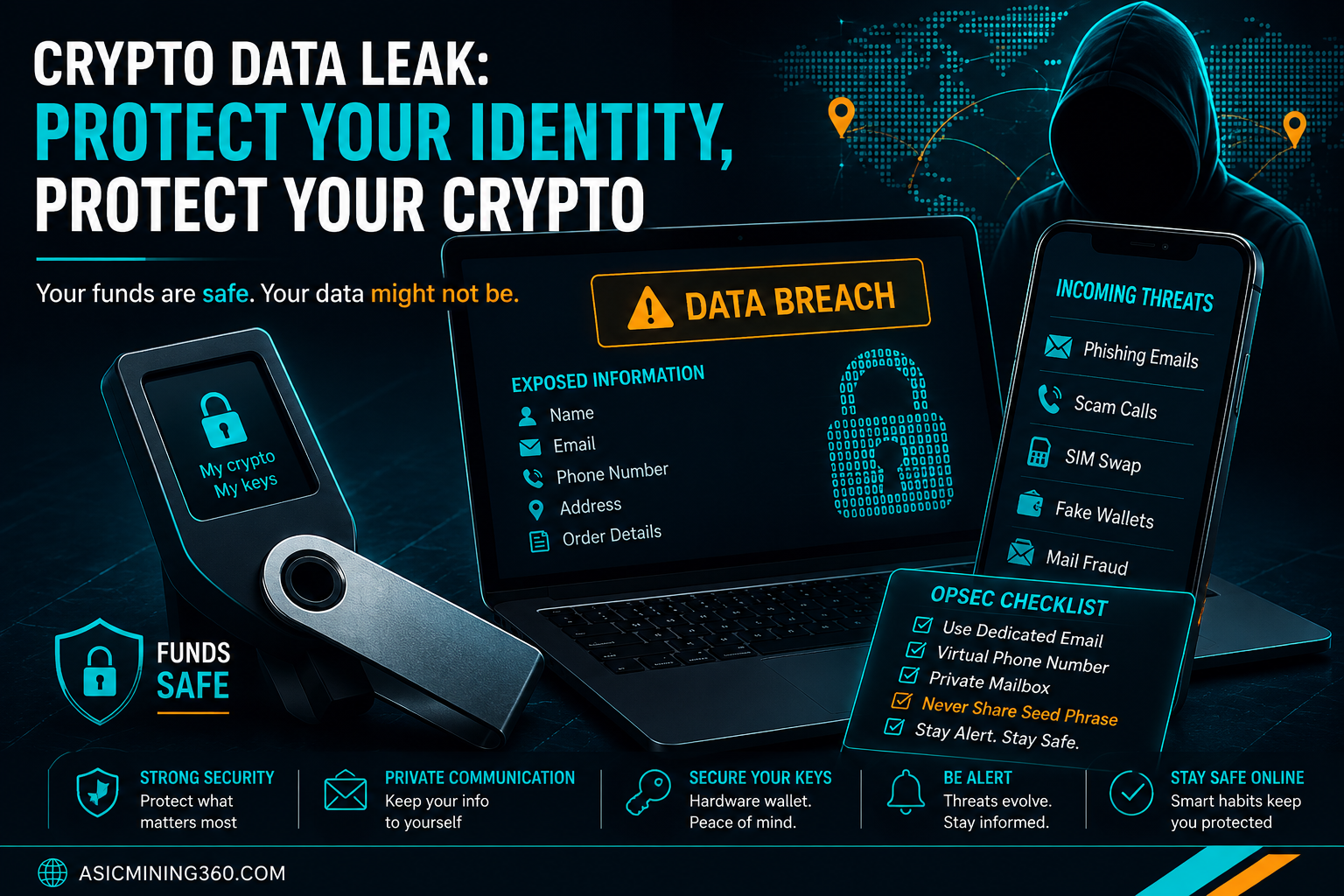
Before anyone panics, let me make this crystal clear: your cryptocurrency funds are safe. Your hardware wallets weren’t compromised, no payments were stolen, and your passwords are still secure. That said, this incident is significant because a lot of personal customer information got exposed, and it’s exactly the kind of information scammers absolutely love to exploit.
Understanding the Risks of the Recent Third-Party Logistics and Shipping Partner Data Breach
Here’s the thing: the breach didn’t occur in the wallets themselves—it happened at a third-party logistics and shipping partner that handles orders for multiple cold wallet brands. This partner stores customer information and processes shipments, which unfortunately makes it a target.
As a result of the breach, names, emails, phone numbers, physical addresses, and order details—basically all the information you provide when purchasing a wallet—were exposed. While your cryptocurrency remains secure, the danger now is that scammers know exactly who owns a wallet, where you live, and how to contact you. That creates a perfect setup for phishing emails, scam calls, and even fraudulent physical mail.
The Hidden Vulnerabilities in the Crypto Hardware Wallet Supply Chain Risk and Security
Even the most secure wallet companies cannot fully control the security of the third parties they rely on. A cold wallet manufacturer can design an unhackable device, but shipping partners and e-commerce platforms often do not maintain the same cybersecurity standards, creating a weak link in the supply chain.
Hackers don’t attack the wallet company directly because it’s much harder to breach; they attack the easiest point in the chain that still gives them valuable data—your personal information. Moreover, many of these third-party services are legally required to retain customer data for years. Even if the wallet company deletes your information, the partners often still have it, which is why breaches continue to happen repeatedly across the industry.
Common Post-Breach Scam Warning Signs: Phishing, SIM Swaps, and Mail Fraud
After a breach like this, you might think, “My crypto is safe, so I don’t need to worry.” But this is exactly what scammers count on—they exploit personal information, not the wallets themselves. Some of the most common tactics include:
Identifying Sophisticated Phishing Emails Targeting Hardware Wallet Owners
Phishing Emails: Scammers send emails that appear legitimate, often claiming there’s a problem with your order or wallet. Links in these emails are traps. Even if the email looks official, never click links unless you are 100% certain of their authenticity.
How to Avoid Targeted Phone Scams and Social Engineering Attacks
Phone Scams: Hackers now have your phone number, which means targeted calls are likely. No legitimate cold wallet company will ever call you asking for your seed phrase or password. If someone does, hang up immediately—it’s a scam.
The Dangers of Fraudulent Physical Mail and Malicious QR Code Scams
Physical Mail: Scammers may send letters claiming to be from wallet companies, asking you to scan a QR code or visit a website to “verify” information. The goal is always the same: trick you into revealing your 12- or 24-word seed phrase so they can steal your crypto.
Effective Strategies to Protect Your Personal Information After a Crypto Data Breach
The good news is, you can take steps to protect your personal information. It needs some extra effort, but it's worth it. Here's how:
Why You Should Use a Dedicated Email Address for Wallet Purchases
Use a separate email for all wallet orders: This way, you will know immediately which emails are real order confirmations and which might be phishing attempts.
Benefits of Using a Virtual Phone Number to Reduce SIM Swap Risk
Get a virtual phone number: Services like Google Voice let you use a different number for orders, so scam calls don't come to your real phone.
Best Practices to Limit Identity Exposure in Online Hardware Wallet Orders
Change how your name appears on orders: You don't need to lie completely, but small changes—like using a middle name or a shorter first name—make it harder for scammers to link your information to who you really are.
How to Secure Your Shipping Address with a Mailbox Service or PO Box
Secure your shipping address: You still need your packages delivered, so think about sending them to your job or renting a mailbox that takes deliveries from all delivery services. A mailbox is usually more flexible than a P.O. box, though it costs a small fee, and it adds good protection.
The Golden Rule: Never Share Your Seed Phrase Under Any Circumstances
Never put your seed phrase online: No real company will ever ask for your seed phrase. Keep it safe no matter what.
Why Personal Data Security Is Critical for Long-Term Crypto Investors
You might be thinking, Why bother with all this? Here's why: once hackers have your information, they can put it together to make scams seem very real. Emails, calls, and even letters can all be made to trick you into giving away your account details. As more people use crypto, these attacks will get smarter. Your wallet might be safe, but your personal information is now the weakest spot, and keeping it safe is just as important.
Real-Talk: What the Ledger Leak Taught Us About Staying Invisible
If you’ve been in the crypto space for a while, you’ve definitely heard the horror stories about the 2020 Ledger breach. It wasn't a hack in the way most people think—nobody cracked the encryption or found a backdoor into the devices. Instead, the attackers went after the low-hanging fruit: a marketing database.
In an instant, thousands of names, phone numbers, and—worst of all—home addresses were out in the wild. It was a massive wake-up call that proved your crypto is only as secure as the data you leave behind at checkout.
When Scams Get Personal (and Physical)
This wasn't just about getting more spam in your inbox. The fallout was honestly chilling. Because hackers knew exactly who had bought a cold wallet, they could tailor their attacks with terrifying precision.
Some people started getting disturbingly realistic phishing emails that addressed them by name, claiming their funds were at risk. But it didn't stop at the screen. There were reports of users receiving fake hardware wallets in the mail, complete with professional-looking packaging and "manuals" designed to trick them into typing their seed phrase into a compromised app. It was a classic Trojan Horse move, and it worked on more people than you’d think.
The "Identity" Vulnerability
The Ledger incident shifted the entire conversation around crypto security. It taught us that the "weakest link" isn't the blockchain or your PIN—it's you and your digital footprint.
If a bad actor knows you have a significant amount of crypto and knows exactly where you sleep at night, that’s a physical security risk that no amount of encryption can fix. This is why "OpSec" (Operational Security) became such a buzzword after 2020.
The New Rules of the Game
Most of the pro habits we see today—like using dedicated burner emails for crypto, signing up with alias names, or renting private mailboxes instead of giving out a home address—were born out of the lessons learned from this breach.
We learned the hard way that being your own bank means more than just holding your keys; it means protecting your identity like it’s a private key itself. If you’re still using your primary Gmail and home address to buy hardware wallets, you’re essentially leaving a map for the next group of hackers to follow.
Final Thoughts: Your Hardware Wallet Is Safe — Your Data Might Not Be
At the end of the day, even the most secure hardware wallets cannot solve the problem of external data exposure. Hackers will always target the easiest point in the chain that provides valuable information, which is often the third-party shipping and processing services.
By being cautious—using a dedicated email, a virtual phone number, variations of your name, and secure delivery options—you make it much harder for scammers to exploit your information.
Your crypto funds are safe, but your personal info might not be. Being careful now will keep you safer later. The best way to protect yourself online these days is to stay informed, be cautious, and always be alert.
The Bottom Line: Don't Let Your Data Map Out Your Downfall
Look, the reality of the crypto world is that your tech is usually much stronger than your privacy habits. We’ve seen it time and time again—from the Ledger mess to the latest shipping leaks. Your hardware wallet is a beast at protecting your keys, but it’s completely useless at protecting your identity.
If there’s one thing you should take away from all of this, it’s that security isn't a "set it and forget it" task. It’s an ongoing habit. Scammers are lazy—they want the easiest targets. By taking ten minutes to set up a dedicated email, using a virtual phone number, or sending your next order to a private mailbox, you’re effectively moving yourself out of the "easy target" pile.
Your crypto funds are safe behind your PIN and seed phrase, but your personal life is now the new frontline. Don't wait for the next data breach notification to land in your inbox before you start taking your OpSec seriously. Be proactive, stay skeptical, and remember: in the crypto space, being invisible is your best defense.
Frequently Asked Questions (FAQ)
Q1: If my shipping data was leaked, can hackers actually get into my hardware wallet remotely?
No, they cannot. Your hardware wallet is designed to keep your private keys offline. A data leak at a shipping company only exposes marketing info like your name and address. To steal your funds, a hacker would still need your physical device and its PIN, or more likely, they will try to trick you into giving up your seed phrase through a scam.
Q2: I received an email saying my wallet needs a "firmware update" because of the breach. Is this real?
Be extremely careful. While wallets do need updates, scammers often use breaches as an excuse to send fake update alerts. These fake emails usually contain links to cloned websites that ask for your recovery seed. Always go directly to the official manufacturer's website or use the official app (like Ledger Live or Trezor Suite) to check for updates. Never click a link in an email to perform an update.
Q3: Should I throw away my hardware wallet and buy a new one if my address was leaked?
There is no need to replace the device itself, as the hardware remains secure. However, you should be on high alert for physical mail scams or people showing up at your door (though this is extremely rare). The best move is to improve your digital hygiene—change your passwords, enable 2FA on your accounts, and consider using a mailbox service for any future crypto-related deliveries to keep your home address private.