Introduction
If you’re holding cryptocurrency, you’ve probably had that late-night ‘what if’ moment. What if the exchange collapses? What if my phone is hacked? What if my recovery phrase isn't as safe as I think? In the wild west of digital assets, being your own bank is a liberating feeling—until you realize you’re also the one responsible for the vault.
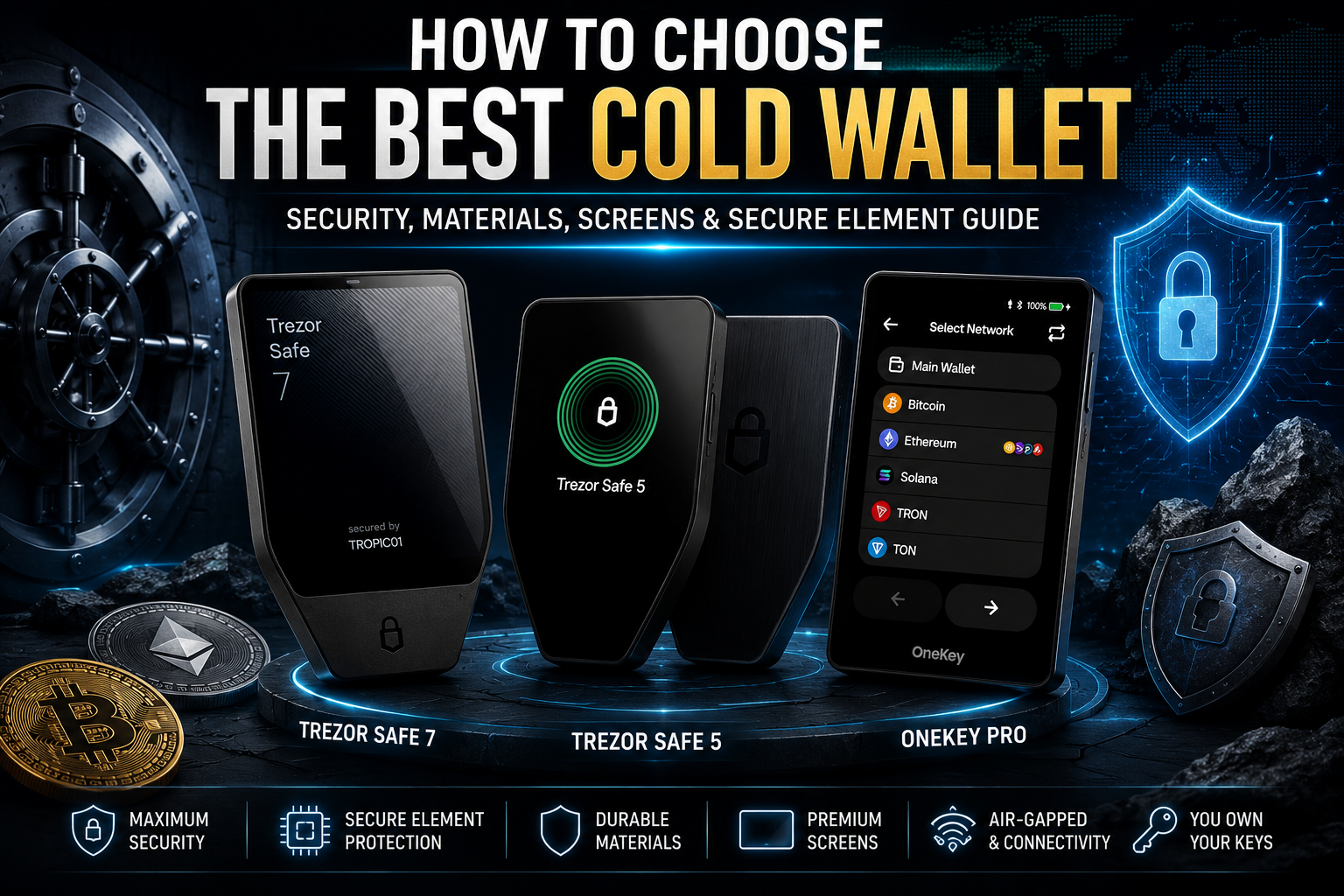
Choosing a cold wallet shouldn’t feel like a gamble. It’s not just about picking a device with a sleek design or a famous logo; it’s about choosing your long-term security partner. As hacking techniques evolve from simple phishing to complex supply-chain attacks, understanding the why behind your wallet's design is critical. From the type of chip inside to the very material it’s built from, every detail is a brick in your financial fortress. In this guide, we’re cutting through the marketing noise to help you understand how to pick a wallet that doesn’t just store your keys, but actually protects your future.
1. Cold Wallet Design Types and Form Factors Explained
Cold wallets today are no longer confined to one form or a traditional concept. The market has evolved to include several physical designs, each serving a different security philosophy and specific usage behavior. The most common types include card wallets, flash wallets (USB), in addition to wearable forms such as rings or small embedded units.
2. Cold Wallet Screens, Size, and Physical Specifications
The physical interface of a device is a critical part of the user experience (UX) and security verification.
Touchscreen vs. Non-Touch Cold Wallet Screens
-
Touchscreen: Direct and easy control, higher security for confirming transactions.
-
High-Resolution Color Screen: Better user experience, found in luxury wallets.
-
Without Screen: Relies entirely on the external application, making it inherently less secure.
LCD vs. OLED vs. E-Ink Screens in Cold Wallets
-
Regular LCD Screen: Low power consumption, medium clarity. LCD screens in cold wallets are more resistant to aging and less prone to damage than OLED. They rely on inorganic backlighting, tolerating humidity and heat better, with a practical life exceeding 7 to 10 years.
-
OLED Screen: Strong contrast and excellent clarity. However, they are less durable than LCD and E-Ink, as organic materials degrade over time. Their realistic life is often between 3 to 5 years, increasing the probability of damage in long-term storage.
-
E-Ink Screen (Electronic Ink): Does not consume power except when updating. It is ideal for security and long life, being highly resistant to heat and pixel burning. Its practical life is usually between 10 to 20 years, making it ideal for long-term investment.
Cold Wallet Size and Portability Considerations
The choice of dimensions depends on the need for concealment versus continuous transport:
-
Smartphone Size: Larger devices like the Goldshell Wallet (103.8×66×9.95mm, 150g).
-
Key-Fob Size: Compact options like the Trezor Safe 7 (44.5×75.4×8.3mm, 45g).
-
Wearable Size: For those who want their savings accessible at all times, such as the Tangem Ring (20×20×3mm, 9g).
3. Cold Wallet Materials and Build Quality for Long-Term Durability
Manufacturing materials represent the level of the wallet's resistance to physical tampering and environmental conditions such as heat, cold, and humidity. Aluminum, titanium, and treated plastic are the most used materials due to their balance between hardness and electromagnetic protection.
Metal Cold Wallets Compared: Titanium vs. Stainless Steel vs. Aluminum
| Feature | Titanium Cold Wallets | Stainless Steel Cold Wallets | Aluminum Cold Wallets |
|---|---|---|---|
| Durability | Very High / Shock-resistant | High / Shock-resistant | Moderate |
| Heat Resistance | Withstands high temperatures | Withstands moderate heat | Low (may deform) |
| Corrosion | Completely resistant | Resistant to rust | Water-resistant |
| Operational Life | 20 years+ | 10–15 years | 5–10 years |
| Common Brands | Premium Luxury Models | Mid-range Industrial | Trezor Safe 5-7, OneKey Pro |
Ceramic and Plastic Cold Wallet Options
-
Ceramic Wallets: Made of durable materials like Zirconia Ceramic (e.g., Tangem Ring). They provide strong protection against scratches, water, and extreme temperatures.
-
Plastic Cards: Often made of ABS, Polycarbonate, or PET (e.g., Tangem Cards, Ledger Nano X). Their average life is 5 to 10 years. Factors affecting longevity include UV exposure, severe scratches, and chemical contact.
4. Cold Wallet Security Architecture and Cryptographic Trust Model
The internal security framework is the most vital aspect of protecting digital assets.
Secure Element Chip and Certified Hardware Security
The Secure Element (SE) Chip is a dedicated microchip designed to store private keys in total isolation. Its primary function is preventing key extraction even during physical tampering.
-
EAL Score (Evaluation Assurance Level): An international security standard.
-
EAL5+: Very strong security against advanced attacks.
-
EAL6+: The latest for civilian equipment, resistant to physical chip analysis.
PIN, Passphrase, and Seed Phrase Protection Layers
-
PIN: A numerical code for immediate access to the device.
-
Passphrase: An additional password used with the Seed Phrase to create a "hidden" wallet, providing double protection.
Open Source vs. Partially Open Source Wallets
-
Open Source: The code is open for public review, ensuring no backdoors exist. (e.g., Trezor).
-
Partially Open Source: Some parts are open, but critical components—like the Secure Element chip—remain closed for proprietary security reasons (e.g., Ledger).
Quantum-Resistant Encryption in Cold Wallets
Modern algorithms are being developed to resist quantum computers. Only a few wallets currently support this quantum-resistant encryption, such as the Trezor Safe 7, ensuring security against future technological threats.
5. Cold Wallet Connectivity Options, Pricing, and Security vs. Convenience
The connection type determines the level of air-gapped isolation:
-
USB-C/USB-A: Provides high reliability but requires a physical link.
-
Bluetooth and NFC: Adds convenience for mobile use but introduces more connection layers.
-
QR Codes: Offers the highest level of isolation by eliminating direct electronic data transfer.
Cold wallet prices usually range between $49 and $400. Higher prices often reflect certified security elements, superior materials, and advanced software structures rather than just cosmetic improvements.
The Bottom Line: Are You Buying a Gadget, or Buying Peace of Mind?
Ultimately, a cold wallet isn’t just another tech accessory; it is the final line of defense between your life’s savings and hackers who never sleep. You could opt for the cheapest plastic model to save a few dollars today, but remember: the "cost of regret" during a security breach or a sudden hardware failure will be thousands of times higher than the price of the most premium wallet on the market.
The choice you make right now dictates how you’ll feel when the next major exchange collapse or hacking wave hits the news. Will you sleep soundly, knowing your keys are buried in a Secure Element chip protected by a Titanium shell? Or will you be the one rushing to your computer in a panic?
The hard truth: In the world of crypto, you are your own bank. And a bank isn't built out of cheap plastic or screens that die in two years. Invest in your security as if your entire future depends on it—because, quite literally, it does.
FAQ
Q1: What is the safest type of cold wallet?
A: Air-gapped wallets that use QR codes and Secure Element chips generally provide the highest level of protection against remote attacks.
Q2: Is a Secure Element chip necessary?
A: While not mandatory, a Secure Element significantly improves resistance against physical tampering and key extraction attempts.
Q3: Which screen type lasts the longest?
A: E-Ink displays typically offer the longest lifespan, often lasting 10–20 years with minimal power consumption.
Q4: Are titanium cold wallets worth the extra cost?
A: Titanium wallets offer exceptional durability, corrosion resistance, and heat tolerance, making them attractive for long-term storage.
Q5: Is Bluetooth secure for a cold wallet?
A: Modern Bluetooth implementations can be secure, but they introduce additional attack surfaces compared to fully air-gapped solutions.
Q6: What happens if my cold wallet breaks?
A: Your crypto can be recovered using the recovery seed phrase, provided it has been stored securely and correctly.
Q7: Are open-source wallets safer?
A: Open-source wallets allow independent code review, improving transparency and trust, though security also depends on hardware design.
Q8: Can cold wallets protect against future quantum computers?
A: A small number of wallets are beginning to explore quantum-resistant cryptographic approaches, but widespread adoption remains in development.