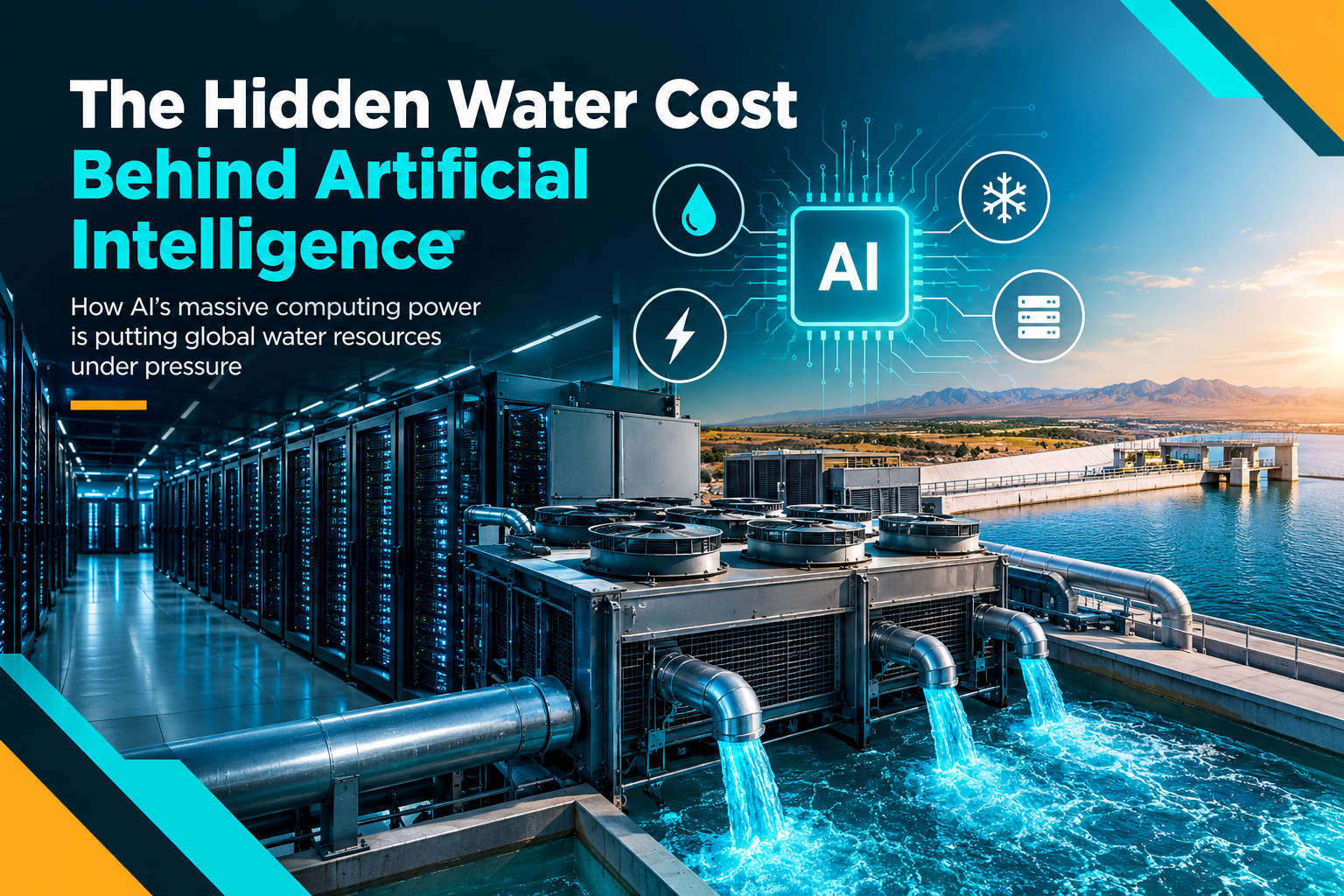
Why Reliable Electricity Infrastructure Is Now a Core Pillar of Economic and National Security
In the modern era, a reliable electricity infrastructure is no longer just a utility—it is the primary pillar of economic and national security. As the world pivots toward massive digital infrastructure, artificial intelligence, and hyperscale data centers, the global economy has become fundamentally tethered to a country’s ability to generate vast amounts of power consistently, without falling prey to the fragility of international supply chains.
How Domestic Energy Resources Create the World’s Most Secure Power Systems
The nations highlighted in the following tables represent the gold standard of energy-secure power systems. Their strength lies in a homegrown strategy: electricity generation is primarily anchored in domestic resources, ranging from fossil fuels like natural gas and coal to stable, long-term assets like hydropower and nuclear energy. By leveraging local resources, these countries have effectively insulated their grids from the shocks of geopolitical tensions, fuel transport disruptions, and global market volatility.
The Role of Reserve Capacity and Grid Resilience in Energy Sovereignty
Beyond mere resource availability, a defining characteristic of these leaders is infrastructure resilience. These nations maintain a significant reserve capacity—meaning their installed power generation far exceeds peak demand. This surplus acts as a strategic buffer, ensuring grid stability during extreme weather events, sudden industrial spikes, or essential maintenance. In many cases, this resilience transforms these countries into regional energy hubs that export excess power to their neighbors.
Why Some Energy-Rich Countries Are Not Included in This Industrial Power Comparison
It is important to clarify that this analysis focuses specifically on large-scale industrial power systems with a measurable production surplus. While countries like Qatar or Kuwait possess exceptionally strong grids and vast domestic resources, they are not included in this specific comparison. Their electricity demand and system scale, while efficient, operate on a different magnitude than the massive industrial grids discussed here, making a direct comparison less representative of global industrial trends.
The Three Pillars of the Most Energy-Secure Power Systems in the World
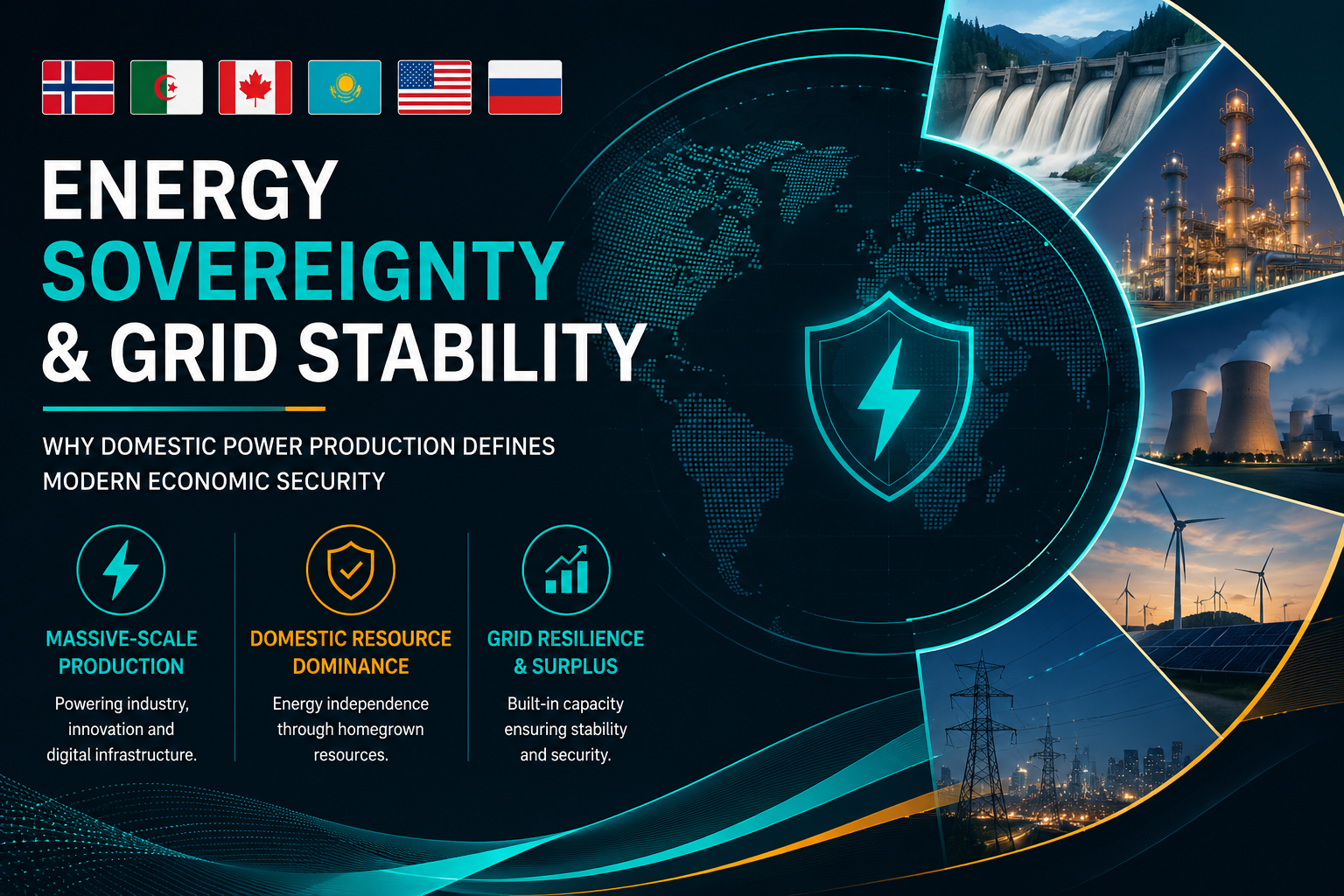
The following tables highlight countries that successfully integrate three critical pillars:
-
Massive-Scale Production: The capacity to power heavy industry and digital expansion.
-
Domestic Resource Dominance: Minimal reliance on imported fuels or external supply chains.
-
Grid Resilience & Surplus: A measurable excess in capacity that guarantees stability under pressure.
Together, these factors define the most resilient power landscapes in the world today.
1- Norway Electricity Production Overview 
| Indicator | Value |
|---|---|
| Country | Norway |
| Annual Electricity Production | ~155 TWh |
| Hydropower Share | ~88–90% |
| Wind Share | ~9% |
| Estimated Reserve Position | ~10–20% |
2- Algeria Electricity Production Overview 
| Indicator | Value |
|---|---|
| Country | Algeria |
| Annual Electricity Production | ~95 TWh |
| Natural Gas Share | 96–99% |
| Solar Share | <1% |
| Estimated Reserve Position | ~15–25% |
3- Canada Electricity Production Overview 
| Indicator | Value |
|---|---|
| Country | Canada |
| Annual Electricity Production | ~630 TWh |
| Hydropower Share | ~59% |
| Nuclear Share | ~15% |
| Estimated Reserve Position | ~8–12% |
4- Kazakhstan Electricity Production Overview 
| Indicator | Value |
|---|---|
| Country | Kazakhstan |
| Annual Electricity Production | ~115 TWh |
| Coal Share | ~70% |
| Natural Gas Share | ~20% |
| Estimated Reserve Position | ~5–10% |
5- UAE Electricity Production Overview 
| Indicator | Value |
|---|---|
| Country | United Arab Emirates |
| Annual Electricity Production | ~150 TWh |
| Natural Gas Share | ~74% |
| Nuclear Share | ~20% |
| Estimated Reserve Position | ~8–12% |
6- Russia Electricity Production Overview 
| Indicator | Value |
|---|---|
| Country | Russia |
| Annual Electricity Production | ~1,150 TWh |
| Installed Capacity | ~270 GW |
| Natural Gas Share | ~46% |
| Nuclear + Hydro | ~37% |
| Estimated Reserve Position | ~5–8% |
7- Iran Electricity Production Overview 
| Indicator | Value |
|---|---|
| Country | Iran |
| Annual Electricity Production | ~360 TWh |
| Natural Gas Share | ~82% |
| Hydropower Share | ~10% |
| Estimated Reserve Position | ~5–7% |
8- Saudi Arabia Electricity Production Overview 
| Indicator | Value |
|---|---|
| Country | Saudi Arabia |
| Annual Electricity Production | ~380 TWh |
| Natural Gas Share | ~60% |
| Oil Share | ~39% |
| Estimated Reserve Position | ~5–10% |
9- Brazil Electricity Production Overview 
| Indicator | Value |
|---|---|
| Country | Brazil |
| Annual Electricity Production | ~680 TWh |
| Hydropower Share | ~63% |
| Wind + Solar | ~16% |
| Estimated Reserve Position | ~5–8% |
10- United States Electricity Production Overview 
| Indicator | Value |
|---|---|
| Country | United States |
| Annual Electricity Production | ~4,300 TWh |
| Installed Capacity | ~1,300 GW |
| Natural Gas Share | ~43% |
| Nuclear + Renewables | ~32% |
| Estimated Reserve Position | ~3–6% |
United States Electricity Production and Energy Infrastructure Overview (2026)
| Indicator | Value |
|---|---|
| Country | United States |
| Annual Electricity Production | ~4,300 TWh |
| Installed Power Capacity | ~1,300 GW |
| Natural Gas Share | ~43% |
| Coal Share | ~16% |
| Nuclear Power Share | ~18% |
| Wind Power Share | ~10% |
| Solar Power Share | ~4% |
| Estimated Electricity Surplus | ~3–5% |
Power vs. Sovereignty: The New Rules of Grid Security
In the 21st century, grid security is about much more than just hitting production targets. It’s the delicate balance between your total capacity, peak-hour demand, and who actually holds the keys to the fuel. You can churn out massive amounts of power and still be incredibly fragile if your reserve margins are thin or if you're tethered to imported energy. Ultimately, true energy sovereignty isn't an accident; it’s the result of three things: owning your resources, overbuilding your reserves, and hardening the grid to eat shocks for breakfast.
Mathematically, it looks like this:
Reserve Margin = ((Total Capacity - Peak Demand) / Peak Demand) × 100
But beyond stability, a surplus is a Strategic Magnet. Countries that produce more than they consume using their own domestic resources (Energy Sovereignty) aren't just selling power; they’re buying independence. They become the primary destination for the AI revolution and heavy industry. In a world where hyperscale data centers never sleep, a grid with "room to breathe" is the only one that wins. Ultimately, having a surplus means you stop being a victim of global energy shocks and start being the architect of your own stability.
FAQ: Energy Sovereignty and Power Grid Stability
Q1: What does energy sovereignty mean in modern infrastructure?
Energy sovereignty refers to a country's ability to produce most of its electricity using domestic resources. This reduces reliance on imported fuels and global supply chains, making the national power grid more resilient to geopolitical conflicts, market volatility, and transportation disruptions.
Q2: Why is electricity generation capacity important for economic stability?
Large electricity generation capacity ensures that a country can support industrial production, digital infrastructure, and economic growth. Excess capacity also provides a buffer during peak demand, extreme weather events, or maintenance shutdowns, helping prevent blackouts and supply disruptions.
Q3: How do data centers and artificial intelligence increase energy demand?
AI systems, cloud computing platforms, and hyperscale data centers require enormous amounts of continuous electricity. Training large AI models and running global digital services consume significant power, making reliable electricity infrastructure a strategic national asset.
Q4: Why are domestic energy resources important for grid security?
Using domestic resources such as natural gas, coal, nuclear fuel, hydropower, or renewable energy allows countries to control their power supply. This reduces vulnerability to international fuel shortages, shipping disruptions, or political conflicts that could affect imported energy.
Q5: What is reserve capacity in a power grid?
Reserve capacity refers to the amount of electricity generation available beyond peak demand. A strong reserve margin ensures that a grid can handle unexpected demand spikes, equipment failures, or extreme weather events without causing power shortages.
Q6: Which industries benefit the most from energy-secure power systems?
Industries that rely heavily on electricity benefit the most from stable power systems. These include artificial intelligence, semiconductor manufacturing, cryptocurrency mining, cloud computing, heavy industry, and large-scale data centers that require uninterrupted energy supply.
![Siacoin Mining [BLAKE2b]: Why Is SC So Profitable?](https://res.cloudinary.com/duoaxhyqn/image/upload/v1790011975/blog/covers/WhatsApp%20Image%202026-09-21%20at%2019_1790007875902_d46vt6.jpg)