
INTRODUCTION
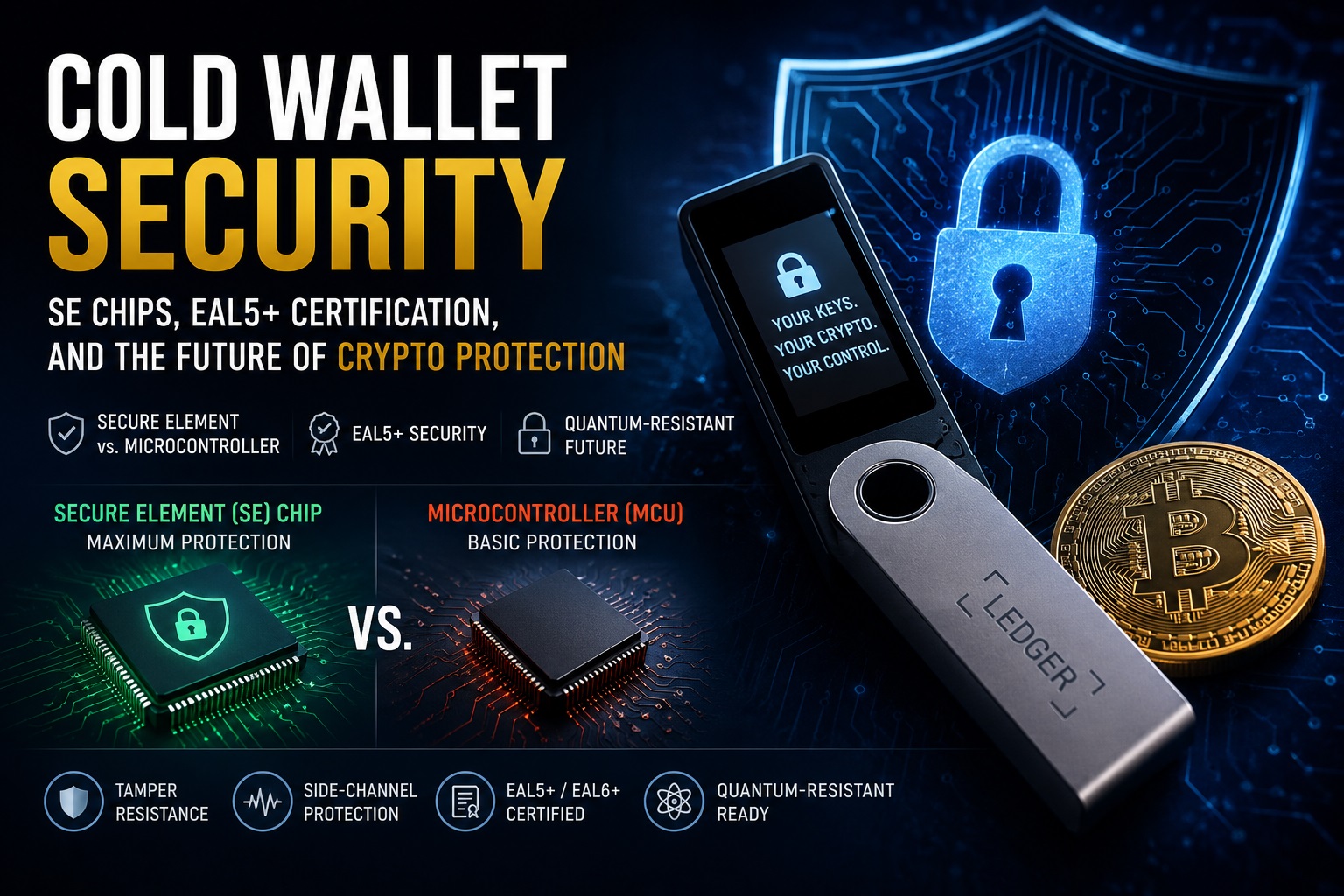
While most of us spend our days staring at price charts and mining yields, we often overlook the one tiny thing standing between our wealth and total loss: the chip inside our cold wallet. It’s easy to think all hardware wallets are created equal, but behind the screen, there’s a world of difference. Some chips are built like military bunkers, while others are just basic locks waiting to be picked. In an era of advanced malware and the looming shadow of quantum computing, understanding what’s actually guarding your private keys isn't just for engineers anymore—it’s the most critical decision a serious investor can make.
1. Understanding the Secure Element (SE) Chip: The Highest Level of Hardware Wallet Security for Digital Assets
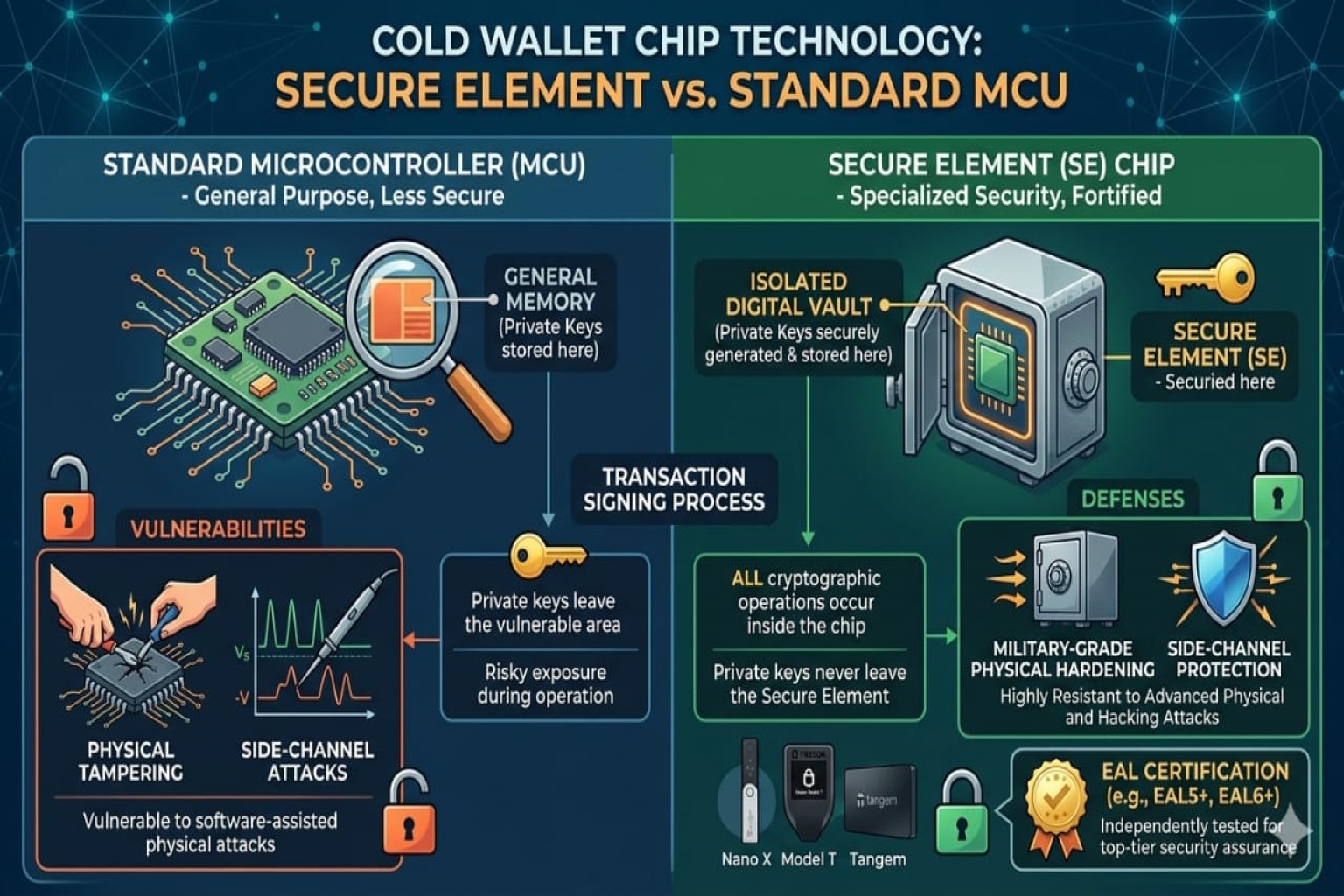
The Secure Element chip is a dedicated electronic chip fitted into the cold wallet. It is purposed for storing private keys in an entirely different environment, well away from any external dangers and internet access. It serves like a small digital safe, which makes it very complicated for hackers to reach the private keys even in cases of physical manipulations with the device. Wallets with SE chips are one of the safest options of long-term storage of cryptocurrencies, as they are resistant to advanced physical attacks, side-channel attacks, and other sophisticated forms of hacking. Examples of wallets using this chip include Ledger Nano X, Trezor Model T, and Tangem Card.
2. Analyzing Microcontrollers Without Secure Elements: The Architecture of Basic Cold Wallet Chips
.crypto-table-container { width: 100%; overflow-x: auto; margin: 20px 0; } .comparison-table { width: 100%; border-collapse: collapse; font-family: Arial, sans-serif; font-size: 16px; text-align: left; } .comparison-table th { background-color: #1a73e8; color: white; padding: 12px; border: 1px solid #ddd; } .comparison-table td { padding: 10px; border: 1px solid #ddd; } .comparison-table tr:nth-child(even) { background-color: #f8f9fa; } .comparison-table tr:hover { background-color: #f1f4f9; } @media screen and (max-width: 600px) { .comparison-table { font-size: 14px; } }| Feature | Secure Element (SE) Chip | Standard Microcontroller (MCU) |
|---|---|---|
| Primary Purpose | Specialized Security & Encryption | General-purpose processing |
| Private Key Storage | Isolated in a "Digital Vault" | Stored in general memory |
| Physical Tamper Resistance | High (Military-grade) | Low to Moderate |
| Side-Channel Protection | Advanced Hardware Protection | Vulnerable to software-assisted attacks |
| Certification Level | Usually EAL5+ or EAL6+ | Rarely certified for high security |
| Common Examples | Ledger Nano X, Trezor Model T | Basic USB Wallets, DIY storage |
Some cold wallets contain only a microcontroller for storing and handling private keys, without the use of an SE. Such wallets are less secure compared to those with an SE since an attack could be physical, with assistance from software. The microcontroller wallets may be easier to breach and reverse, but these wallets will still be safe in terms of their offline capabilities. Such wallets will be best for users who might not need extensive security due to the limited cryptocurrency they have. Basic USB wallets and plastic cards with not so stringent security levels fall in this category.
3. Why EAL5+ and EAL6+ Certified Chips Matter: Evaluating Assurance Levels in Modern Hardware Wallets
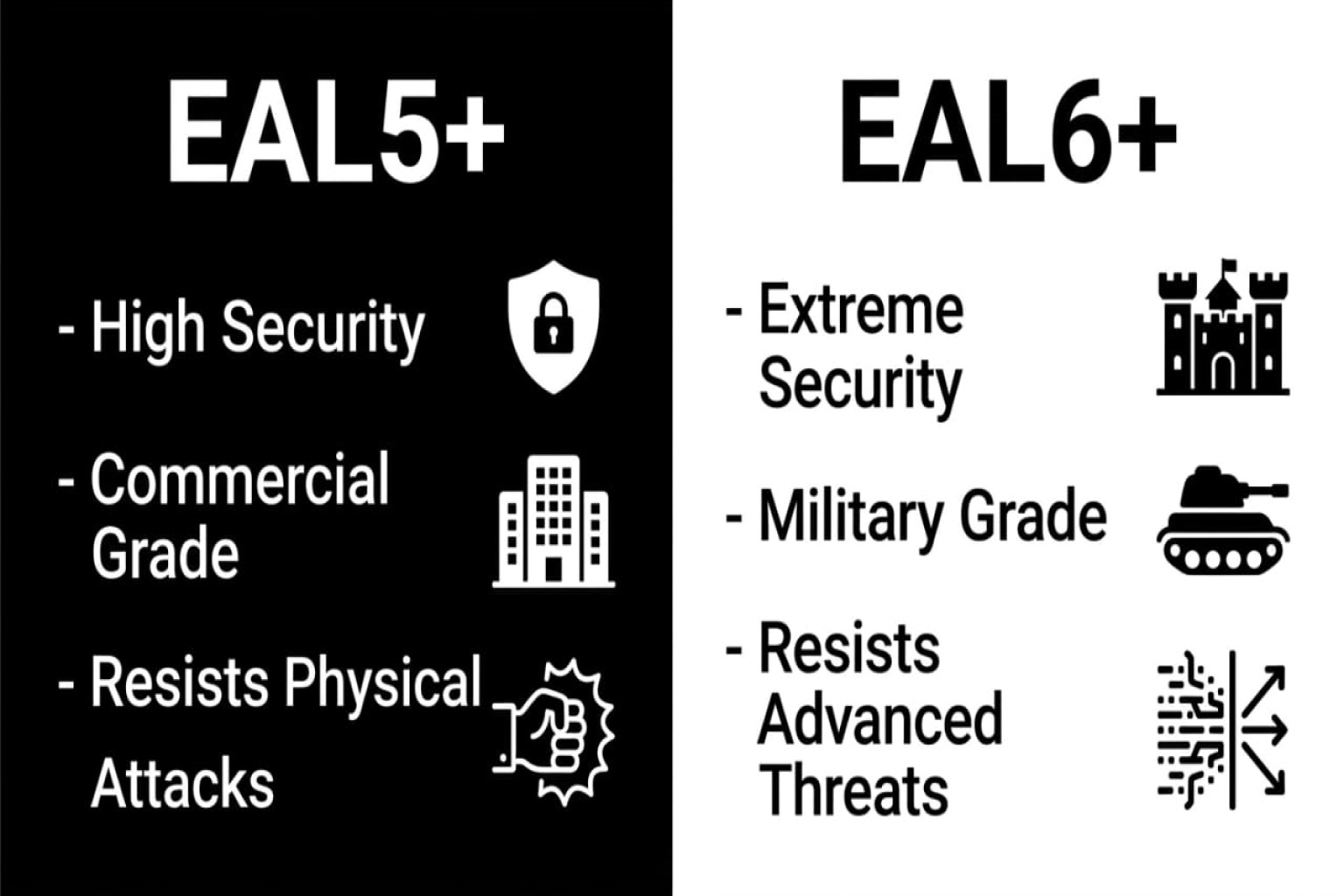
Think of the Evaluation Assurance Level (EAL) as a "stress test" score for a wallet's armor. It’s a global scale from 1 to 7, but in our world, anything below a 5 isn't really worth talking about for serious storage. When you see EAL5+ or EAL6+ on a spec sheet, it means the chip didn't just pass a basic factory test—it was handed over to independent labs that tried every dirty trick in the book to break it.
These ratings are the only way to cut through the marketing noise. For example, an EAL5+ rating is your guarantee that the hardware can survive "side-channel" leaks and high-level physical tampering. While EAL7 is the absolute "Fort Knox" maximum, it’s rarely seen in consumer tech. EAL5+ and 6+ are the current "sweet spot"—they offer that military-grade peace of mind without making the wallet impossible for a regular person to use.
4. The Future of Crypto Security: Quantum-Resistant Chips and Post-Quantum Cryptography in Cold Wallets
As advancements in quantum computing progress, some cold wallets are beginning to integrate either hardware or software solutions to provide safe private keys with the help of quantum computer-resistance algorithms, in case future attacks using quantum computers are potentially threatening in the future to their safety. For now, there are very few** quantum computer**-resistance wallets available in the market, and some of those experimental or highly advanced wallets include the likes of the Trezor Safe 7 and other highly advanced wallets available in the market.
5. The Transparency Debate: Partially Open Source Hardware Wallet Chips vs. Proprietary Security
Some cold wallets have partially open-source architecture, where certain parts of the hardware's firmware and code can be audited by the general public. The security-critical components, such as the Secure Element chip on the hardware, can remain closed. This helps to instill trust in the system as auditors can oversee the system's code and look out for security loopholes such as backdoors. This is practiced by Ledger wallets as well as Trezor wallets to some extent.
Cold Wallet Chip Security Levels: A Deep Dive Comparison of Secure Element vs. Microcontroller
At the end of the day, your cold wallet is only as strong as the tiny chip tucked inside it. It doesn’t matter how cool the design looks or how famous the brand is if the hardware buckles under a modern hack. As crypto values skyrocket and hackers get smarter, picking a wallet isn't just a 'nice-to-have' convenience anymore—it’s a survival move. In this digital frontier, one tiny crack in the armor means your assets are gone forever, no second chances. Serious investors are moving past the hype; they’re looking for Secure Elements, EAL certs, and even quantum-ready tech.
Don't just buy into the marketing. Take a moment to understand the tech protecting your future. Because when it comes to your life savings, you want a fortress, not just a fancy gadget.
Frequently Asked Questions: Breaking Down Cold Wallet Security
Q1. Does my wallet really need a Secure Element (SE) chip, or is a standard one enough?
If you’re just holding a few dollars for fun, a standard microcontroller is fine. But for anything you’d hate to lose, a Secure Element (SE) is non-negotiable. Think of it this way: a standard chip is like keeping your money in a locked drawer—it’s okay until someone brings a crowbar. An SE chip is like a professional bank vault built into the hardware; it’s designed to stay silent and secure even if a hacker has the device in their hands.
Q2. Is an EAL5+ rating actually enough, or should I wait for EAL7?
In the real world, EAL5+ is more than enough for 99% of crypto investors. While EAL7 is technically the "highest," it’s mostly used for top-secret government infrastructure and isn't practical for consumer gadgets. EAL5+ and EAL6+ mean the chip has already survived "worst-case scenario" testing in professional labs. If your wallet has this rating, the hardware isn’t your weak link—your recovery phrase security probably is.
Q3. If a chip is Closed-Source like the Secure Element, can I still trust it?
This is the classic "Transparency vs. Security" debate. While we love everything open-source in crypto, most high-end security chips (like those from Ledger) are proprietary because the manufacturers want to keep their blueprints away from hackers. Most top-tier wallets solve this by making the firmware open-source while using the "closed" SE chip as a hardened bodyguard. It’s a compromise that currently offers the best physical protection available.
Q4. Should I be worried about Quantum computers stealing my Bitcoin today?
Not today, and likely not for a few more years. While Q-Day (when quantum computers can crack current encryption) is coming, it’s not an overnight threat. Developers are already working on Quantum-Resistant updates. Buying a wallet like the Trezor Safe 7 that prepares for this is smart future-proofing, but you don't need to panic yet. The industry will move to post-quantum standards long before a hacker can use a quantum computer to empty your wallet.