The Energy Arbitrage: Why Local Power Prices Are the New Global Currency
In the current industrial landscape, we’ve reached a tipping point where a single decimal place in your utility bill dictates whether your entire operation thrives or hemorrhages capital.
By 2026, energy has ceased to be a mere line item on the balance sheet. For high-density compute, industrial-scale crypto mining, and energy-intensive manufacturing, it is the fundamental "make-or-break" variable. When you are running thousands of ASICs or scaling a data center, a spread of just a few cents per kilowatt-hour isn't just a cost saving—it is the difference between aggressive global expansion and a total operational shutdown.
Right now, a handful of jurisdictions are quietly reshaping the global map by offering "ultra-cheap" power, with rates plummeting to an almost unbelievable range of $0.003 to $0.015 per kWh. On paper, these regions look like the ultimate offshore haven for any power-hungry enterprise. But as anyone who has actually deployed hardware in the field knows: cheap power is a liability if it isn’t stable.
The "catch" that many spreadsheets miss is the gap between a theoretical price and a functional grid. In many of these low-cost frontiers, the low price tag often comes bundled with systemic grid instability, shifting regulatory sands, and infrastructure that can’t handle industrial loads. Chasing the lowest number without auditing the reliability of the local transformer or the political climate is how smart investors make very expensive mistakes.
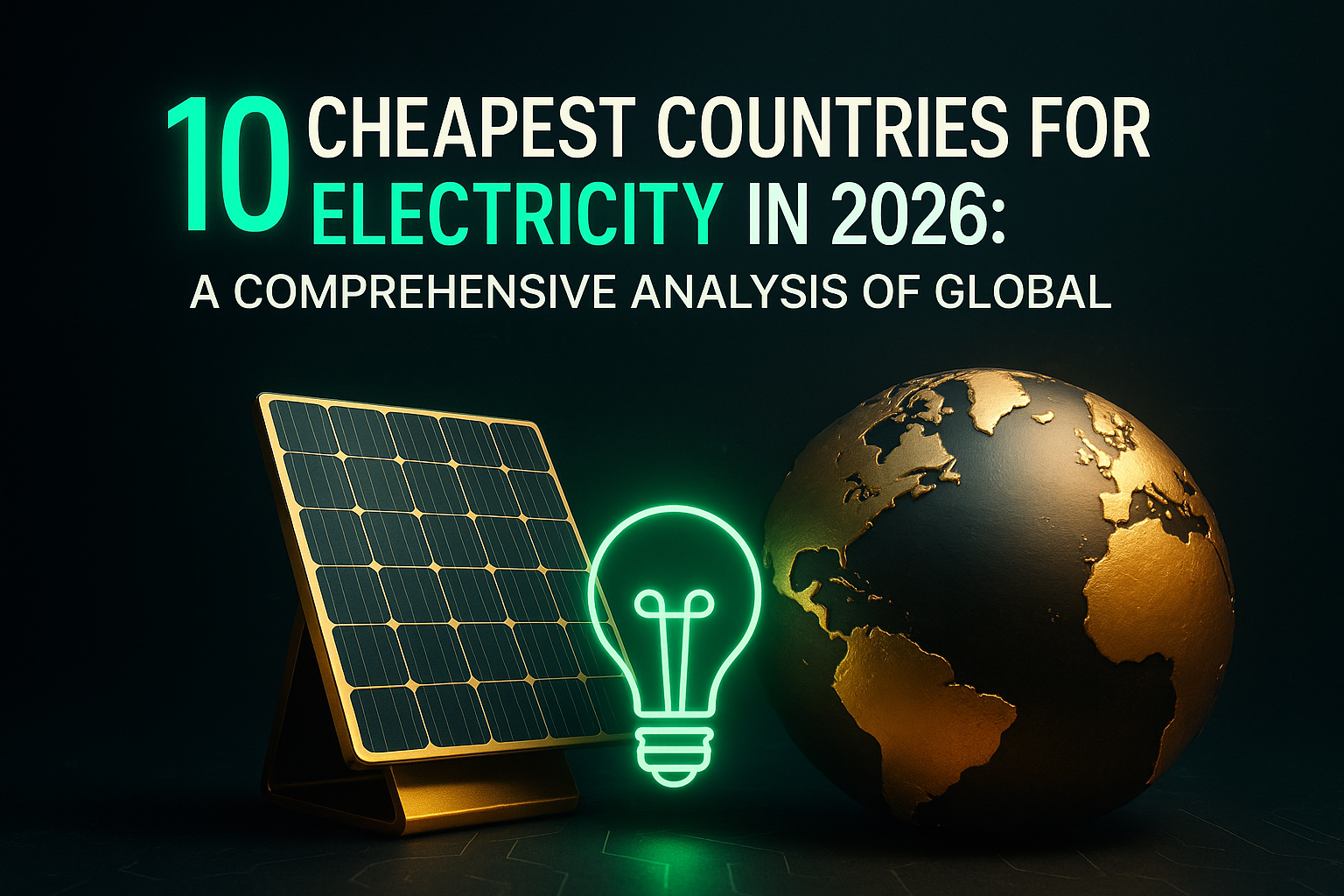
In this analysis, we are stripping back the marketing layers to identify the top 10 cheapest energy markets in 2026. We aren’t just looking at the sticker price; we are evaluating these regions through the lens of a practitioner—analyzing real-world uptime, regulatory longevity, and the true cost of doing business where the power is cheapest.
Countries with the Lowest Electricity Prices in 2026
Below is a quick overview of the cheapest electricity markets in 2026 based on estimated average prices.
Top 10 Cheapest Electricity Countries (2026)
| Country | Price (USD/kWh) | Grid Stability | Best Use Case | Mining Suitability |
|---|---|---|---|---|
 Syria Syria | $0.003 | Low | High-risk operations | Not recommended |
 Cuba Cuba | $0.006 | Medium | Small businesses | Limited |
 Turkmenistan Turkmenistan | $0.01 | Medium | Industrial use | Good |
 Iraq Iraq | $0.014 | Medium | Local industry | Moderate |
 Sudan Sudan | $0.02 | Low | Experimental setups | High risk |
 Angola Angola | $0.02 | Medium | Industrial operations | Moderate |
 Ethiopia Ethiopia | $0.03 | High | Mining farms | Excellent |
 Bahrain Bahrain | $0.03 | High | Data centers | Excellent |
 Saudi Arabia Saudi Arabia | $0.05 | High | Large-scale industry | Very good |
 Turkey Turkey | $0.066 | High | SMEs & services | Average |
Iraq Electricity Price per kWh in 2026
🇮🇶 Iraq is one of those places with really low prices, around $0.014 to $0.015/kWh. Their government helps by making sure energy doesn't cost too much for anyone.
Syria Electricity Cost in 2026
🇸🇾 Syria really stands out with huge electricity discounts; prices can be as low as $0.003/kWh. Even with their economic struggles, it's one of the cheapest spots for power.
Cuba Electricity Rates for Residential and Small Businesses
🇨🇺 Cuba also has very low electricity rates, about $0.006/kWh, which is great for people running businesses from home.
Cheapest Electricity Prices in G20 Countries: Saudi Arabia and Turkey
For the G20 countries, 🇸🇦 Saudi Arabia and 🇹🇷 Turkey have the cheapest electricity. Their prices are between $0.05 and $0.066/kWh, making it easier for businesses to put money back into their growth.
Why Electricity Is So Cheap in Some Countries
Government Energy Subsidies and Price Controls
Why is electricity so cheap in these places?
It usually comes down to one of two things:
-
Lots of government help: They pitch in cash to keep prices low for everyone.
-
Abundant natural energy resources: They have easy access to things like natural gas, solar power, or hydropower.
Economic Benefits of Low Electricity Prices
What good do these low prices do?
These cheap prices help out in a few ways:
-
Lower Operating Costs for Factories and Heavy Industries: Big industries save a lot of money.
-
Agricultural Advantages from Affordable Power: Discounts help with watering crops and trying out new farming methods.
-
Opportunities for Small Businesses and Startups: It makes it easier for new businesses to kick off by lowering their running costs.
Challenges of Cheap Electricity in Developing Countries
But there are still difficulties. Even with low prices, some developing countries still deal with power outages or poor service. To truly use these low prices well, you need smart investment plans that fit local rules and focus on saving energy.
Electricity Grid Reliability and Infrastructure Issues
It's not all sunshine and roses, though. Even when prices are low, some developing countries still struggle with electricity – think power cuts or just plain bad service. The truth is, most of these places have shaky power grids, especially when everyone cranks up their AC in the summer. To really make the most of those cheap prices, we need smart money moves that respect local rules and really push for saving energy.
Future Trends: How Renewable Energy May Keep Electricity Prices Low
The Role of Solar and Wind Energy in Future Power Costs
What’s coming next?
More green energy in these countries will keep prices low for a long time and mean they don't have to buy expensive fuels from elsewhere. On the flip side, countries with high prices often depend on imported fuels or old power grids, which puts them at a disadvantage.
Putting money into solar and wind farms could bring new countries into the cheap electricity club in the next few years.
Conclusion: Countries with the Cheapest Electricity in the World
To wrap it up:
The countries with the cheapest electricity are scattered all over — from the Middle East to Africa and Latin America. In 2026, the main ones will likely still be 🇹🇲 Turkmenistan, 🇸🇩 Sudan, 🇧🇭 Bahrain, 🇦🇴 Angola, 🇪🇹 Ethiopia, 🇮🇶 Iraq, 🇸🇾 Syria, 🇨🇺 Cuba, 🇸🇦 Saudi Arabia, and 🇹🇷 Turkey.
These prices offer a fantastic chance for investors and companies aiming to cut costs. Even though the world is moving more towards clean energy, these nations should stay competitive for a while.
FAQ: Cheapest Electricity Countries and Global Power Prices
Q1: Which country has the cheapest electricity in the world in 2026?
Syria is often cited as one of the countries with the lowest electricity prices in 2026, with rates sometimes reported around $0.003 per kWh. However, low prices can come with infrastructure challenges such as unstable power supply or frequent outages in some regions.
Q2: Why is electricity cheaper in some countries than others?
Electricity prices are usually lower in countries that have strong government subsidies or abundant natural energy resources such as natural gas, hydropower, or solar energy. When energy production costs are low, governments can provide electricity to residents and businesses at significantly reduced rates.
Q3: Which G20 countries have the lowest electricity prices?
Among G20 countries, Saudi Arabia and Turkey are known for relatively low electricity prices compared to other large economies. Their electricity rates typically range between $0.05 and $0.066 per kWh, making them attractive for businesses that rely heavily on energy.
Q4: Are countries with cheap electricity good for crypto mining?
Countries with low electricity prices can be attractive for crypto mining because mining operations consume large amounts of power. However, miners must also consider electricity reliability, government regulations, and internet infrastructure before choosing a mining location.
Q5: Can renewable energy reduce electricity prices in the future?
Yes. Investments in renewable energy such as solar and wind power can significantly lower electricity production costs over time. Countries with strong renewable resources may continue to see lower electricity prices while reducing dependence on imported fossil fuels.
Q6: What risks exist in countries with very cheap electricity?
Some countries with very low electricity prices may face issues such as outdated power grids, unreliable electricity supply, or regulatory restrictions. Businesses planning to operate in these regions should carefully evaluate infrastructure stability, government policies, and long-term energy reliability.