Overview of the Best Countries for Small-Scale ASIC Mining
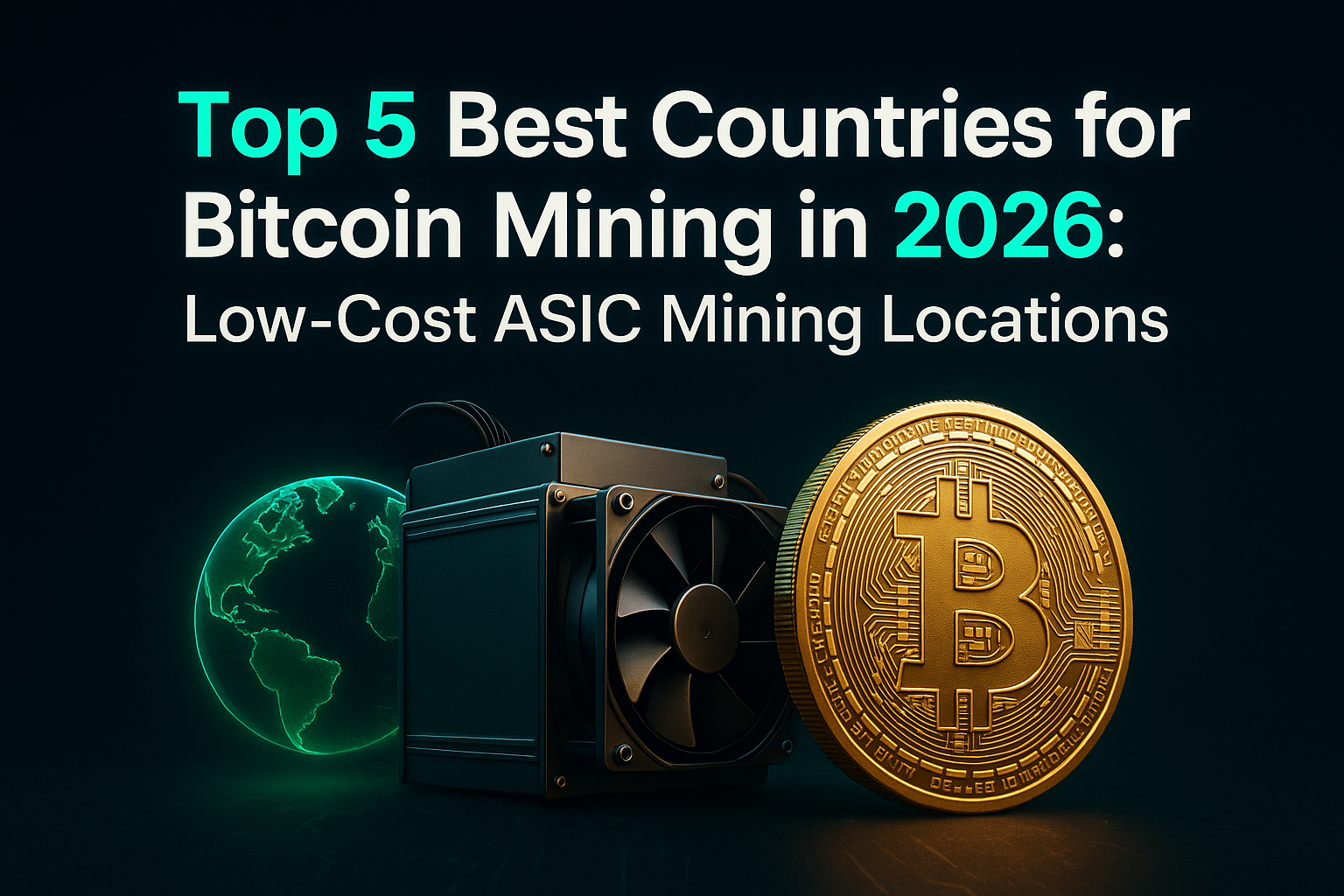
The ASIC MINING 360 team successfully filtered 190 countries globally. After in-depth research relying on verified sources, a small list of nations considered the dream destinations for miners was extracted. This analysis was built upon three key criteria: electrical energy cost, grid stability, and the capacity of local companies for maintenance and spare parts supply. The article targets individual mining (6 to 10 devices), using the S23 Hyd 3U Antminer Bitmain as the comparison model, while deliberately excluding the explicit legal status of mining (prohibition or permission).
Here’s a quick comparison of the top ASIC mining destinations in 2026:
| Country | Electricity Cost | Daily Profit (S23 Hyd 3U) | Key Advantage | Main Risk |
|---|---|---|---|---|
| Azerbaijan | $0.05 / kWh | $30/day | Low electricity cost | Weak maintenance access |
| Libya | $0.015 / kWh | $42/day | Cheapest electricity globally | Extreme heat + hardware risks |
| Saudi Arabia | $0.045 / kWh | $24/day | Stable infrastructure | Tariff jump after limit |
| Oman | $0.029 / kWh | $38/day | Strong logistics + UAE access | High temperature |
| Algeria | $0.038 / kWh | $36/day | Low cost of living + strong grid | Legal restrictions |
5. Azerbaijan  – Low Electricity Costs and Growing Interest in Crypto Mining
Azerbaijan is recognized for its competitive energy prices, with an average cost of about $0.05 per kWh. Mining operates in a non-explicitly prohibited grey area. Maintenance and securing original spare parts present a challenge for individual miners, often requiring reliance on imports. Using the S23 Hyd 3U Antminer Bitmain device, the net daily income is around $30, making it a feasible option compared to Western costs.
4. Libya  – The Cheapest Electricity for Bitcoin Mining in the World
Libya ranks fourth, boasting the lowest raw energy price globally, with electricity in the highest consumption tier costing only $0.015 per kWh. Diesel generators are an economical backup due to the extremely low fuel price of only $0.028 per liter. The net daily income is the highest on the entire list at $42 per day for the S23 Hyd 3U device.
However, challenges are substantial: maintenance is severely lacking with a scarcity of original spare parts. Environmental conditions are harsh, with summer temperatures reaching 50°C, making advanced water or immersion cooling essential. Legally, there is no explicit ban, but devices are frequently confiscated at borders.
3. Saudi Arabia  – Competitive Residential Electricity Rates for Small Mining Operations
Saudi Arabia features low energy costs in the residential tier. Electricity for consumption under 6,000 kWh per month (with 15% VAT) is approximately $0.045 per kWh. Miners must strictly avoid exceeding this threshold (around 20 kWh per day) to prevent jumping to the expensive commercial tariff ($0.08 per kWh).
Legally, mining remains in a grey area (neither forbidden nor explicitly allowed). The daily income for the S23 Hyd 3U is $24 per day. The main challenges are climatic: temperatures reach 45°C, plus dust, requiring water or immersion cooling. Maintenance and spare parts can be easily sourced through the UAE.
2. Oman  – High Profitability for ASIC Mining with Strong Regional Logistics
The Sultanate of Oman is a strong competitor, with electricity costs in the highest consumption tier (over 6,000 kWh/month) at only $0.029 per kWh including VAT. Legally, large-scale mining is licensed, while individual mining is in an unregulated grey zone.
The net profits here are among the highest, with the S23 Hyd 3U achieving an estimated $38 per day after electricity deduction. Oman benefits from strong logistical support: land borders with the UAE (a regional ASIC hub) and no visa requirements greatly simplify acquiring and maintaining devices. However, climatic challenges—especially high temperatures—necessitate water or immersion cooling.
1. Algeria  – One of the Most Profitable Countries for ASIC Mining in 2026
Algeria tops the list due to unparalleled economic advantages. Although mining was legally banned in 2025, devices are smuggled via the black market by the Algerian diaspora in Europe. Algeria boasts extremely cheap electricity, with a nominal cost of about $0.038 per kWh.
The country’s infrastructure is strong; it has power-generation capacity double its domestic needs, ensuring excellent grid stability. Additionally, most individual homes have 3-phase (380V) electricity and high-quality wiring, reducing the consumption bill by 2% to 7%. Bills are issued every 3 months, and the biggest surprise is that the effective electricity cost is reduced by approximately 42% due to the difference between the official and black-market exchange rates.
The estimated daily income for the benchmark device is $36 per day. Algeria is also one of the cheapest countries in the world to live in (3-room apartment rent under $120, gasoline under $0.34/liter). Maintenance services are available through over 4 local shops, some with international expertise.
Conclusion: Which Country Is Best for Small-Scale Bitcoin Mining?
For individual miners operating between 6 and 10 ASIC machines, electricity cost and infrastructure reliability remain the most decisive factors. Countries such as Libya and Oman offer extremely competitive electricity prices, while Saudi Arabia and Azerbaijan provide relatively stable operational environments.
Algeria stands out due to a combination of low electricity prices, strong power infrastructure, and a low cost of living. When these factors are combined, the overall operational cost for miners can be significantly lower than in many Western countries.
FAQ: Bitcoin Mining Locations, Electricity Costs, and ASIC Profitability
Q1: What are the most important factors when choosing a country for Bitcoin mining?
The three most critical factors are electricity price, grid stability, and access to maintenance services or spare parts. Electricity typically represents the largest operational cost in ASIC mining, so countries with cheap and stable power infrastructure offer significantly higher profitability for miners operating multiple devices.
Q2: Which country has the cheapest electricity for crypto mining in 2026?
Among the countries analyzed, Libya offers the lowest electricity price, around $0.015 per kWh in the highest consumption tier. However, while electricity is extremely cheap, miners may face logistical challenges such as limited spare parts availability and extreme environmental conditions.
Q3: How much can an ASIC miner earn per day in low-electricity countries?
Daily profitability depends on electricity prices, mining difficulty, and hardware efficiency. In this analysis using the S23 Hyd 3U Antminer Bitmain, estimated net daily income ranges from about $24 to $42 depending on the country and operational conditions.
Q4: Why is electricity price so important for ASIC mining profitability?
ASIC mining hardware consumes large amounts of electricity continuously. Even small differences in electricity cost per kWh can significantly affect profitability over time. Countries with electricity below $0.05 per kWh are generally considered competitive environments for small-scale miners.
Q5: Are hot climates a problem for crypto mining operations?
Yes. High temperatures increase cooling requirements and can reduce hardware lifespan if not managed properly. In hot regions such as North Africa or the Middle East, miners typically rely on water cooling or immersion cooling systems to maintain stable operating temperatures.
Q6: What size mining operation is this analysis designed for?
This analysis focuses on individual mining operations running approximately 6 to 10 ASIC devices. Larger industrial mining farms often operate under different electricity contracts, infrastructure setups, and regulatory conditions, which can significantly change the profitability calculations.