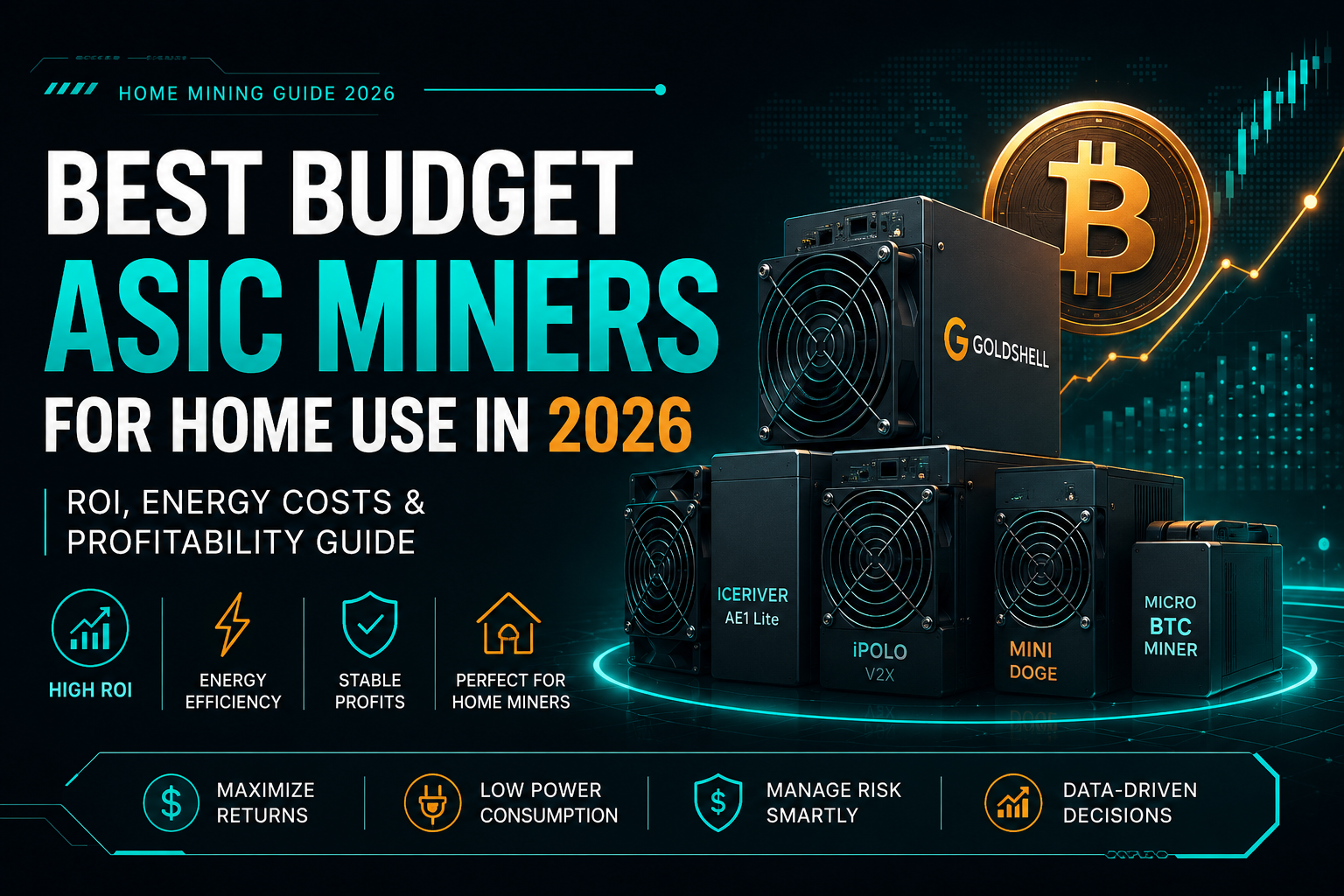
Crypto Mining in 2026: What Works for Small-Scale Miners?
If you’re thinking about getting into crypto mining in 2026, let’s get one thing straight: the era of plugging in a machine and printing easy money is over. We're stepping into a totally different landscape now.
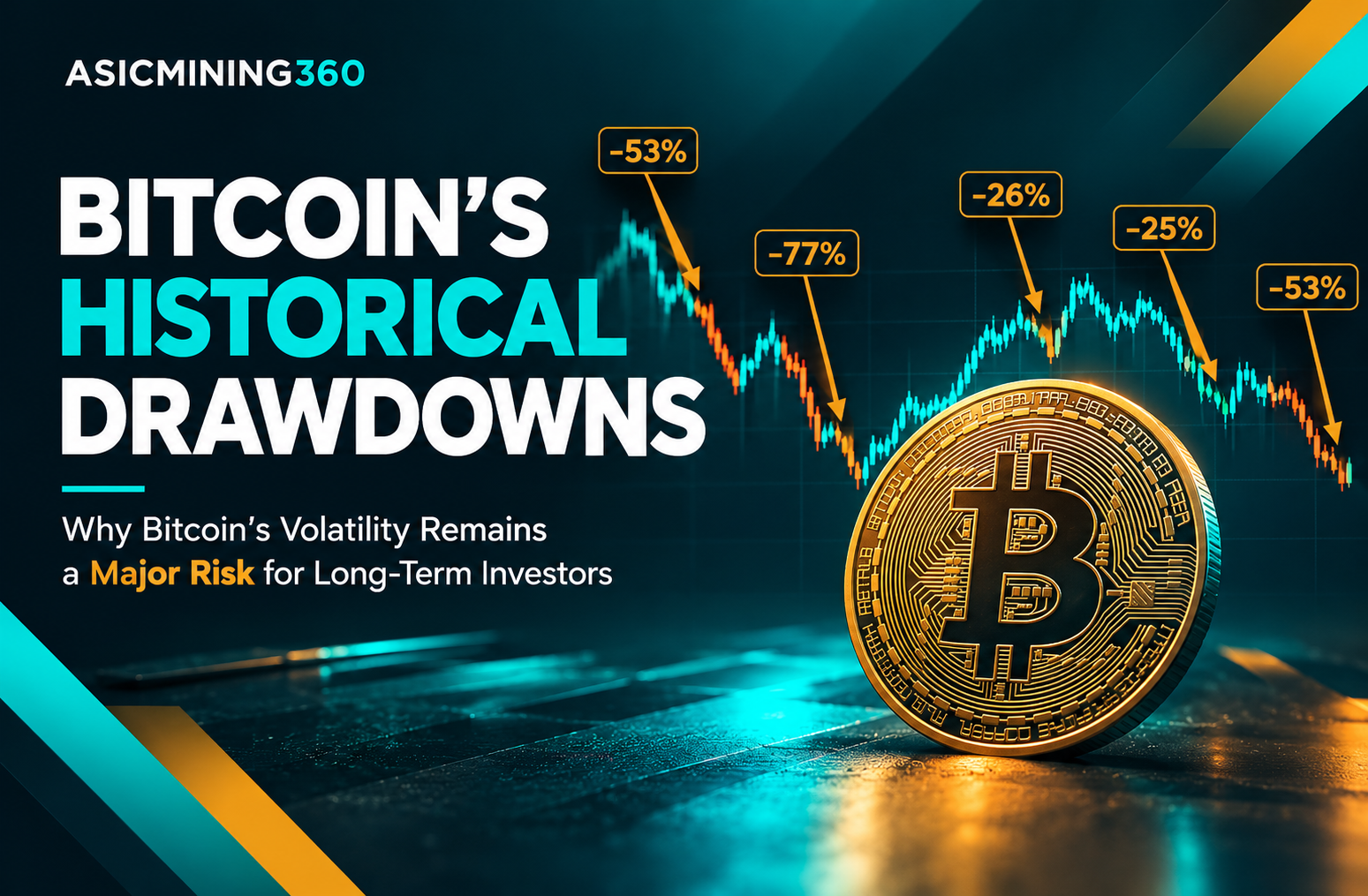
With Bitcoin ripping past $120,000 and then violently correcting below $90,000, extreme volatility is just the new normal. But for home miners, that volatility isn’t a death sentence—it’s an opportunity, provided you know how to play the game.
The industry has largely pivoted away from focusing solely on massive, loud industrial farms. Today, there’s a massive secondary market for compact, relatively quiet, and energy-efficient ASICs built specifically for residential setups. It’s a calculated game now, driven by energy costs, efficiency, and timing.
Here is a breakdown of the best budget ASIC miners for home use this year, based on real profitability, power draw, and long-term risk.
Quick Comparison of Budget ASIC Miners: Profitability, Power & Use Cases
| Miner | Algorithm | Power | Daily Profit | Best For |
|---|---|---|---|---|
| Goldshell XT Box | Tari (XTM) | ~400W | $2.5–$3.5 | High ROI / High Risk |
| IceRiver AE1 Lite | Aleo (ZK) | ~500W | $1.0–$1.5 | Long-term bet |
| iPolo V2X | Etchash (ETC) | ~165W | $0.8–$1.2 | Stable mining |
| Mini Doge | Scrypt | ~500W | $0.8–$1.0 | Consistency |
| Micro BTC Miner | SHA-256 | ~200W | Lottery | Bitcoin bet |
Profit estimates are based on current network difficulty, token prices, and data from mining calculators such as WhatToMine and ASIC profitability trackers. Actual returns may vary.
Best Budget ASIC Miners for Home Use (Detailed Breakdown)
Goldshell XT Box
The Goldshell XT Box keeps the "box-miner" dream alive. It’s lightweight, incredibly easy to set up, and won't sound like a jet engine in your home office.
-
The Numbers: Under typical residential power rates, this is currently one of the strongest earners in the budget tier, pulling in roughly $2.50 to $3.50 a day (depending on token price and difficulty).
-
The Catch: This is high-risk, high-reward. You are mining a low-liquidity altcoin. If network difficulty spikes or the token tanks, your fast ROI goes out the window. Treat this miner as a speculative bet on the future of privacy tech.
IceRiver AE1 Lite
IceRiver AE1 Lite: ZK-Proof ASIC Miner for Long-Term Crypto Mining Strategy
Zero-knowledge (ZK) technology is arguably the future of blockchain privacy and scaling, and the IceRiver AE1 Lite is your ticket in.
-
The Numbers: At current market conditions, it’s a modest earner, bringing in about $1.00 to $1.50 a day. Expect a longer ROI period here.
-
The Catch: It pulls more power than your average home miner and runs pretty hot, so it might not be great for a tiny apartment. This isn't a machine for quick flippers; it’s for investors who genuinely believe ZK networks will explode in adoption over the next few years.
iPolo V2X
iPolo V2X ASIC Miner: Efficient Ethereum Classic (ETC) Mining for Beginners
If the iPolo V2X has a superpower, it’s sheer efficiency. It’s wild to think that the hash power we used to get from a massive, power-hungry GPU rig is now packed into this tiny, low-power ASIC.
-
The Numbers: Returns are stable but on the lower end, averaging $0.80 to $1.20 a day.
-
The Catch: There really isn't one, other than lower daily yields. You’re mining Ethereum Classic (ETC), which is a battle-tested, highly liquid asset that has survived multiple bear markets. If you want a "set it and forget it" machine that won't blow up your power bill, this is it.
Goldshell Mini-Doge
Goldshell Mini-Doge: The "Two-for-One" Special
Operating on the Scrypt algorithm, the Goldshell Mini-Doge lets you merge-mine Litecoin and Dogecoin at the same time. It’s quiet, easy to live with, and exposes you to two massive legacy networks simultaneously.
-
The Numbers: You can expect a very consistent $0.80 to $1.00 a day.
-
The Catch: Scrypt mining is famously competitive but incredibly stable. The difficulty grows slowly, meaning your machine won't become obsolete overnight. It’s the ultimate conservative choice.
Micro Bitcoin ASIC Miners
Micro-Form Bitcoin Miners: The Lottery Ticket
Forget everything you know about daily ROI for a second. Micro BTC miners aren't about generating steady income; they are about taking a swing at the fences.
-
How it Works: You are solo mining with very low hash power. Your daily return is basically zero. But, if your little machine somehow beats the astronomical odds and solves a block, you get the entire block reward.
-
The Catch: You will likely never hit a block. But these devices draw almost no power and allow Bitcoin purists to support network decentralization while holding a permanent lottery ticket.
ROI Speed, Risk Level, and Mining Strategy Comparison
| Miner | ROI Speed | Risk Level | Strategy Type |
|---|---|---|---|
| Goldshell XT Box | Fast | High | Speculative |
| IceRiver AE1 Lite | Medium | Medium | Tech Bet |
| iPolo V2X | Slow | Low | Defensive |
| Mini Doge | Slow | Low | Stable |
| Micro BTC Miner | Unknown | Very High | Lottery |
The Reality Check: Energy Costs
Let’s talk about the silent killer of mining profits: your electric bill. If you are paying anything over $0.12 per kWh, a lot of these home setups are going to bleed money.
| Miner | Power | Monthly Cost ($0.10/kWh) | Efficiency Level |
|---|---|---|---|
| Goldshell XT Box | 400W | $28–$32 | Medium |
| IceRiver AE1 Lite | 500W | $35–$40 | Low |
| iPolo V2X | 165W | $12–$15 | High |
| Mini Doge | 500W | $35–$40 | Medium |
| Micro BTC Miner | 200W | $15–$18 | High |
- Pro Tip: A lot of smart home miners treat their ASICs as space heaters during the winter. If you're going to pay to heat your house anyway, you might as well use a machine that spits out crypto while it warms up your living room.
Final Verdict: Choosing the Best Budget ASIC Miner Based on Risk and Strategy
In 2026, there is no single "best" miner. It entirely depends on your personal risk tolerance. Want fast cash and high risk? Go with the XT Box. Believe in the tech? Grab the AE1 Lite. Want to play it safe? Stick to Scrypt or ETC.
Success today isn't about buying the loudest hardware; it's about matching the right machine to your electricity rate and having the discipline to play the long game.
FAQ: Budget ASIC Mining at Home in 2026
Q1: What is the best budget ASIC miner for home use in 2026?
The best budget ASIC miner depends on your strategy. For high ROI, Goldshell XT Box stands out. For stability, iPolo V2X or Mini-Doge are safer options. Long-term investors may prefer IceRiver AE1 Lite. There is no universal “best”—it depends on risk tolerance and electricity costs.
Q2: Is crypto mining at home still profitable in 2026?
Yes, but only under specific conditions. Profitability depends heavily on electricity cost, hardware efficiency, and market timing. If your power rate is below $0.10–$0.12 per kWh, small-scale mining can still generate consistent returns with optimized hardware choices.
Q3: How much electricity does a home ASIC miner consume?
Most budget ASIC miners consume between 150W and 500W. Monthly costs typically range from $12 to $40 depending on your electricity rate. Energy efficiency is one of the most critical factors when choosing a miner for home use.
Q4: Which ASIC miner is best for beginners?
The iPolo V2X is one of the best beginner-friendly ASIC miners due to its low power consumption, stable returns, and simple setup. It offers a low-risk entry point for users who want predictable mining without high operational complexity.
Q5: Are micro Bitcoin miners worth it in 2026?
Micro Bitcoin miners are not designed for steady income. They function more like a lottery ticket with extremely low probability of success. However, they consume very little power and allow users to participate in Bitcoin mining and network decentralization.
Q6: What is the biggest risk in home crypto mining?
The biggest risk is electricity cost combined with market volatility. If energy prices are too high or crypto prices drop, profitability can quickly turn negative. Choosing efficient hardware and managing operating costs is essential for long-term success.