
Introduction
In 2026, losing your crypto is no longer about hackers breaking systems — it’s about small human mistakes that cost everything.
One wrong click, one exposed recovery phrase, or one fake wallet purchase can erase years of investment in seconds. And the worst part? Most of these losses are completely preventable.
This is why choosing the right cold wallet is no longer a technical decision — it’s a survival strategy.
But here’s the problem: not all hardware wallets are built the same. Some prioritize simplicity but sacrifice flexibility. Others deliver strong security but come with complexity that beginners struggle with. And many investors don’t even realize that certain wallets don’t support all their coins until it’s too late.
After testing multiple devices and analyzing real user experiences, one thing became clear:
👉 The best cold wallet isn’t the most expensive or the most popular — it’s the one that matches your behavior, your risk level, and how you actually use crypto.
In this guide, we’ll break down exactly how to choose the right hardware wallet in 2026 — without the confusion, without the marketing noise, and without costly mistakes.
Hot Wallets vs Cold Wallets: Understanding the Two Types of Crypto Storage
Hot Wallets
These are applications connected to the internet.
Suitable for daily and instant trading due to easy connectivity for buying or selling digital currencies with great ease, but they are less secure due to the relative ease of being hacked or exposed to scams.
Examples: Trust Wallet, MetaMask.
Cold Wallets (Hardware Wallets)
These are physical devices completely disconnected from the internet.
Suitable for long-term or medium-term crypto investments.
More secure and considered very safe compared to Hot Wallets.
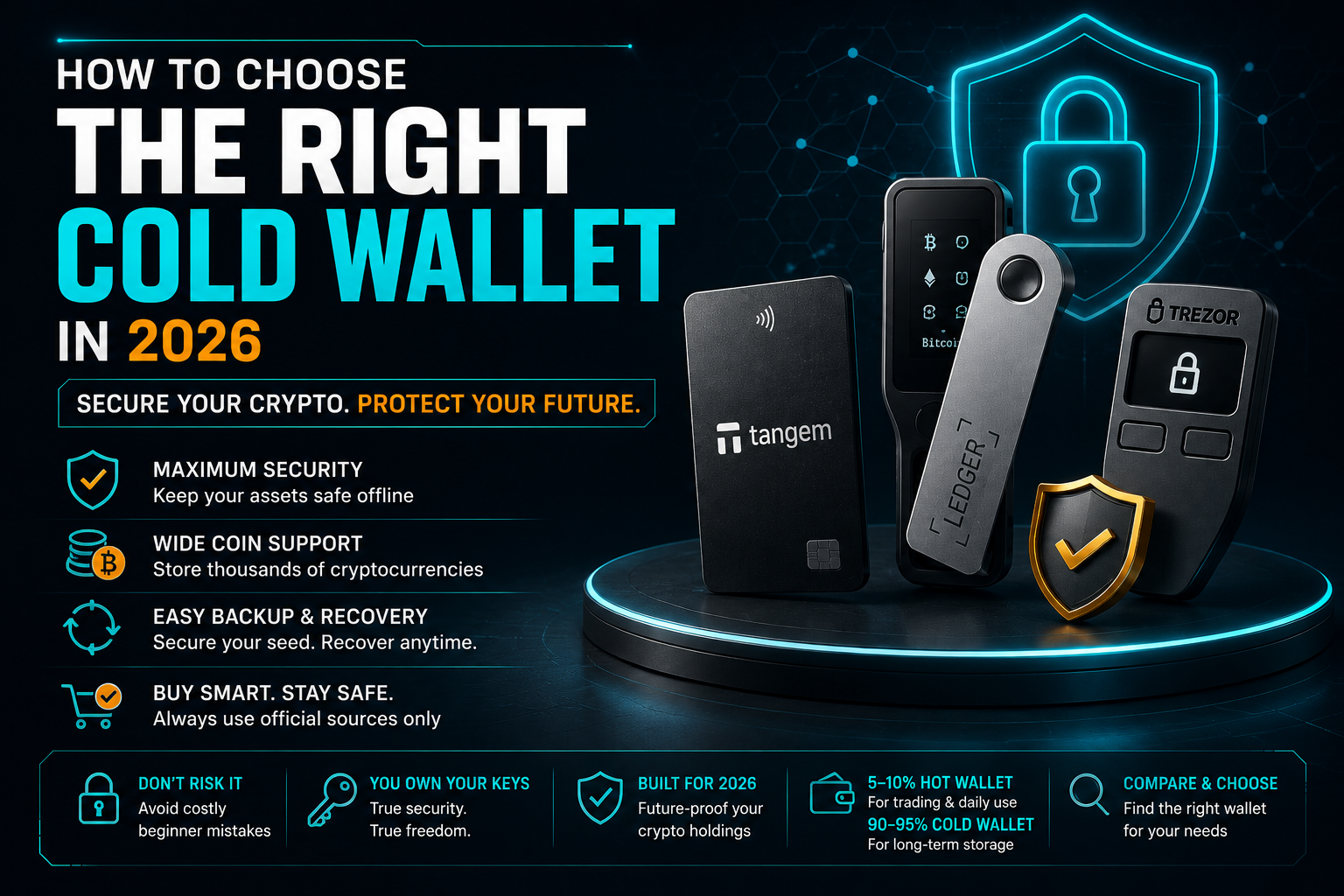
Examples of manufacturing brands: Ledger, Trezor, Tangem.
The Golden Rule for Crypto Portfolio Allocation Between Hot and Cold Wallets
The Golden Rule: Put 5% to 10% of your cryptocurrency investment in a Hot Wallet for trading ease (buying and selling), and the rest in a Cold Wallet for secure storage.
3 Essential Criteria for Choosing the Best Cold Wallet
Cryptocurrency Support and Coin Compatibility
Not all wallets support the same cryptocurrencies; some support only Bitcoin, while others support thousands of coins.
Gather a list of all the currencies you want to hold, then go to the wallet’s website, search for your currency in the supported currencies section, and check its compatibility with the currency you wish to invest in.
Security Features That Define a Reliable Hardware Wallet
Everyone who wants to buy a Cold Wallet certainly wants security for their investments and money in the near and distant future, especially when we hear stories of people who lost thousands of Bitcoin or others who were exposed to fraud through Hot Wallets. You must carefully choose industry standards for the wallet, and we are here to help you through 4 important points:
- Transparent Backup Option (Seed Phrase)
Most Cold Wallets generate a recovery phrase that can be written down and kept safe. This phrase is the master key to accessing all your currencies.
If you lose the wallet, it is safe; without this recovery phrase, whoever finds it will not be able to steal your funds.
Having the recovery phrase is crucial for restoring your wallet from any other device.
- Protection via PIN or Password
The wallet must have a system to prevent anyone from using it if they get their hands on it. If you encounter a wallet without a PIN, that is a disaster.
- Secure Element Chip (SE Chip)
This is a chip similar to those found in bank cards. Its function is to protect secrets from hacking in the Cold Wallet, safeguarding private keys from remote or direct attacks.
This technology is named: EAL5+ or EAL6.
This system determines the level of security scrutiny, and the higher the number, the greater the security.
- Device Compatibility (Mobile vs Desktop Support)
Some wallets only work with smartphones, others with computers, and some with both. You will choose which is best for you.
Team Review: Top 3 Best Cold Wallet Brands in 2026
| Wallet | Best For | Security Level | Ease of Use | Connectivity | Price Range |
|---|---|---|---|---|---|
| Tangem | Beginner | High (No Seed Exposure) | Very Easy | NFC (No cable) | $69 – $159 |
| Ledger Flex / Nano | Advanced | Very High (SE Chip) | Medium | USB + Bluetooth | $79 – $465 |
| Trezor Safe Series | Home Use | High (Open Source) | Medium | USB (Desktop) | $49 – $249 |
Each wallet caters to a different kind of crypto user.
Tangem is all about speed and simplicity—perfect if you want to manage your assets with a quick tap. Ledger shines if you’re looking for a massive ecosystem and the flexibility to do almost anything with your coins. Meanwhile, Trezor is the go-to for those who value open-source transparency and long-term peace of mind.
Hardware Wallet Security Warnings: Mistakes Every Crypto User Must Avoid
Why You Should Never Buy Hardware Wallets from Amazon or Unofficial Stores
Buying a wallet from a third party may expose you to an attack called a Supply Chain Attack, and you could lose all your crypto investments. Be very cautious; it is best to look for a secure source to buy your wallet.
Examples of risks when buying from a third party:
- A wallet that was previously opened.
- Chip reprogramming.
- Pre-made PCI Seed (instant theft).
- Fake QR code.
Best Option:
Buy directly from the official company website only. Our website provides the official links to the websites of most trusted Cold Wallets on the Cold Wallet page.
A Critical Beginner Mistake When Using Seed Phrases
A Fatal Mistake Made by Most Beginners: When importing the Seed Phrase into more than one wallet, the user forgets to delete the phrase from the old device. This opens the door to future theft.
A rule you must remember:
If you import the phrase onto a new device, delete it from the old one immediately. This is for your protection.
Summary
After testing dozens of devices and seeing how easily things can go sideways, we’ve boiled it down to one simple truth: Your security is only as strong as your strategy.
At ASICmining360, we recommend a "split-defense" approach. Keep a small amount—around 5% to 10%—in a hot wallet for your daily trades and quick moves. Everything else? That goes into cold storage for the long haul.
Choosing your hardware is personal:
-
Tangem if you want zero-friction simplicity.
-
Ledger if you need an all-in-one powerhouse for a massive portfolio.
-
Trezor if you demand total open-source transparency for your home setup.
But here is the non-negotiable part: Never, under any circumstances, buy from a third party. A "deal" on a used or discounted wallet isn't worth losing your entire life savings to a supply chain attack. Buy directly from the official manufacturer. (We’ve verified and listed the official links on our Cold Wallet page to keep you safe).
One final, critical rule: If you ever migrate your seed phrase to a new device, delete it from the old one immediately. Don't leave a backdoor open.
Stay smart, stay cold, and keep your keys yours.
👉 Explore and compare official hardware wallets safely on our verified Cold Wallet page.
FAQ: Best Cold Wallets and Hardware Wallet Security
Q1: What is the best cold wallet for cryptocurrency in 2026?
The best cold wallet in 2026 depends on your needs. Tangem is ideal for beginners due to its NFC setup and simple interface, Ledger offers strong ecosystem support and multi-device compatibility, while Trezor is trusted for its long track record and open-source philosophy. Each wallet balances security, ease of use, and supported cryptocurrencies differently.
Q2: Are cold wallets safer than hot wallets?
Yes. Cold wallets are generally safer because they store private keys completely offline. This means hackers cannot access them through the internet. Hot wallets are convenient for trading but are more vulnerable to phishing, malware, and exchange breaches.
Q3: Which cryptocurrencies are supported by hardware wallets?
Most modern hardware wallets support thousands of cryptocurrencies, including Bitcoin, Ethereum, and many altcoins. However, support varies by manufacturer and model. Always check the official compatibility list on the wallet’s website before purchasing to ensure it supports the coins you plan to hold.
Q4: What happens if you lose your hardware wallet?
If you lose your hardware wallet, your funds are still safe as long as you have your recovery phrase (Seed Phrase). You can restore your wallet and access all your cryptocurrencies using a new device by entering the same recovery phrase.
Q5: Is it safe to buy a hardware wallet from Amazon?
It is not recommended. Buying from unofficial stores or marketplaces increases the risk of Supply Chain Attacks, where devices may be tampered with before delivery. The safest option is to purchase directly from the official manufacturer’s website.
Q6: How much crypto should be stored in a cold wallet?
A common strategy is to keep 5%–10% of your crypto in a Hot Wallet for trading and daily use, while storing the remaining 90%–95% in a Cold Wallet for long-term security. This balance provides both accessibility and strong protection against online threats.