Introduction
In 2026, choosing the wrong ASIC manufacturer is no longer a minor mistake — it’s a direct threat to your entire mining operation. One bad decision doesn’t just reduce efficiency; it can lock you into unstable firmware, impossible-to-find spare parts, and a machine that becomes worthless the moment something breaks.
This is the reality most miners ignore: you’re not just buying a machine—you’re betting on the company behind it. And in a market shaped by rising electricity costs, aggressive global competition, and geopolitical tensions that can instantly inflate hardware prices by 20–25%, that bet defines your long-term profitability.
Because in today’s mining landscape, hashrate alone means nothing. The real advantage comes from something deeper—engineering maturity, supply chain strength, and the ability of a manufacturer to survive multiple market cycles without disappearing.
This guide breaks down the top ASIC manufacturers in 2026 from a real-world perspective—combining efficiency, reliability, geopolitical exposure, and long-term ROI—to help you make a decision that doesn’t just work today, but still makes sense years from now.
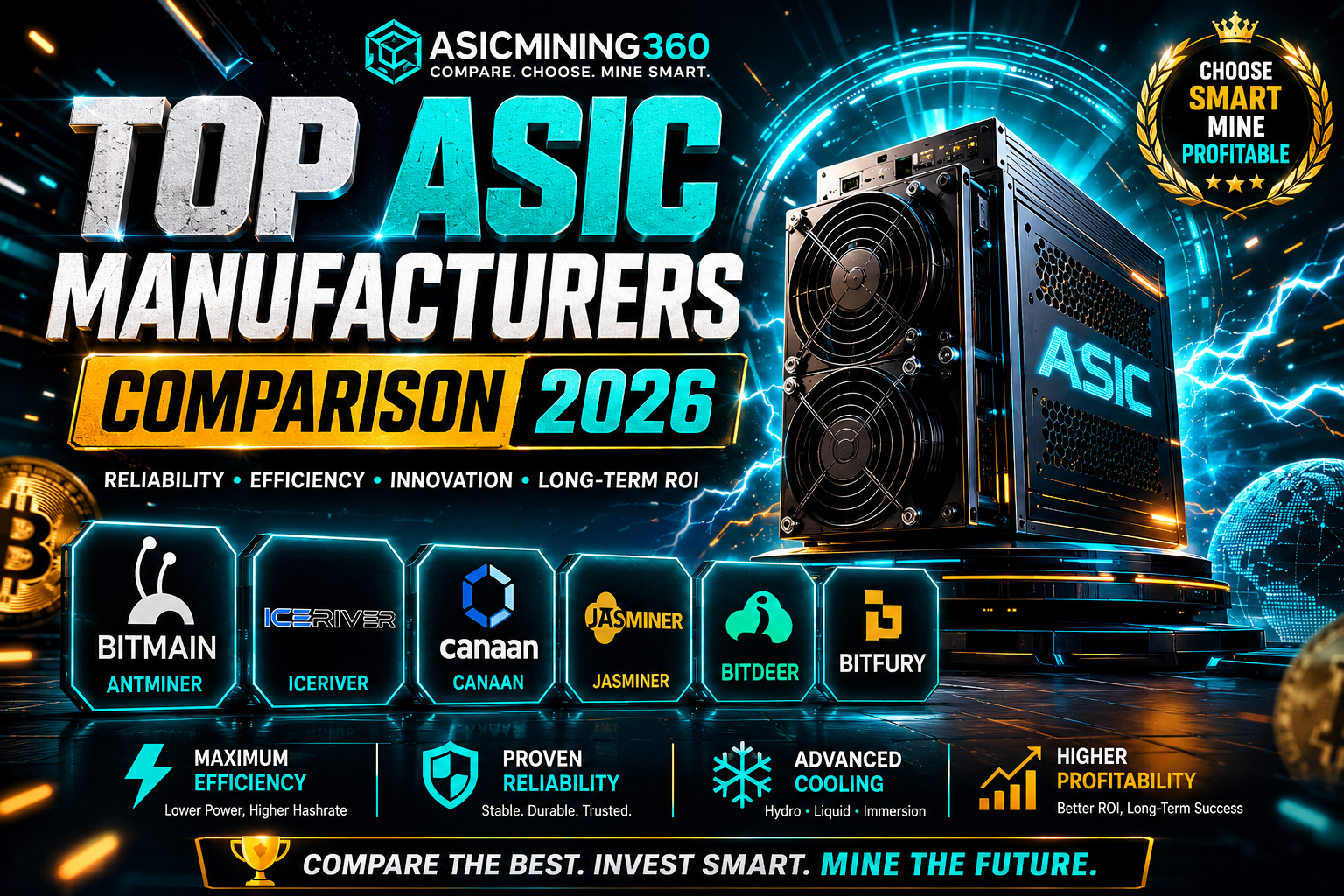
| Manufacturer & Origin | Entry Year | Models Count | Full Latest Model Name (2026) | Reliability | Final Rating |
|---|---|---|---|---|---|
 BITMAIN China BITMAIN China | 2013 ⭐⭐⭐⭐⭐ | +60 ⭐⭐⭐⭐⭐ | Antminer S23H Hydro ⭐⭐⭐⭐⭐ | ⭐⭐⭐⭐⭐ | 5.0 |
| MICROBT China | 2016 ⭐⭐⭐⭐ | +35 ⭐⭐⭐⭐⭐ | Whatsminer M79S Immersion ⭐⭐⭐⭐⭐ | ⭐⭐⭐⭐⭐ | 4.8 |
| CANAAN China | 2013 ⭐⭐⭐⭐⭐ | +40 ⭐⭐⭐⭐ | Avalon A1566HA Liquid ⭐⭐⭐⭐ | ⭐⭐⭐⭐ | 4.2 |
 BITDEER Singapore BITDEER Singapore | 2024 ⭐⭐ | 2 ⭐⭐ | Sealminer A2 Pro Liquid ⭐⭐⭐⭐ | ⭐⭐⭐⭐⭐ | 3.2 |
| JASMINER China | 2021 ⭐⭐⭐ | +12 ⭐⭐⭐⭐ | Jasminer X16-Q High-Throughput ⭐⭐⭐⭐ | ⭐⭐⭐⭐ | 3.7 |
| ICERIVER China | 2023 ⭐⭐ | +15 ⭐⭐⭐⭐ | IceRiver KS5 Pro Max ⭐⭐⭐⭐ | ⭐⭐⭐ | 3.2 |
| GOLDSHELL China | 2017 ⭐⭐⭐⭐ | +25 ⭐⭐⭐⭐ | Goldshell AL-Box II Plus ⭐⭐⭐ | ⭐⭐⭐⭐ | 3.7 |
 BITFURY Netherlands BITFURY Netherlands | 2011 ⭐⭐⭐⭐⭐ | +10 ⭐⭐ | Bitfury Tardis B8+ v2 ⭐⭐⭐ | ⭐⭐⭐⭐ | 3.5 |
 IBELINK Hong Kong IBELINK Hong Kong | 2016 ⭐⭐⭐⭐ | +15 ⭐⭐⭐ | iBeLink BM-KS Pro II ⭐⭐⭐ | ⭐⭐⭐ | 3.2 |
 HEATBIT USA HEATBIT USA | 2021 ⭐⭐⭐ | 2 ⭐ | Heatbit Duo Pro 2 ⭐⭐ | ⭐⭐⭐⭐⭐ | 2.7 |
| ALPHAPEX China | 2023 ⭐⭐ | 3 ⭐⭐ | AlphaPex DG-1 Pro ⭐⭐⭐ | ⭐⭐⭐ | 2.5 |
 VOLCMINER B. Virgin Islands VOLCMINER B. Virgin Islands | 2024 ⭐⭐ | 2 ⭐⭐ | VolcMiner V1 Smart-Cooling ⭐⭐⭐ | ⭐⭐⭐ | 2.5 |
Final ratings are based on weighted criteria: reliability (30%), efficiency (25%), market longevity (25%), and support infrastructure (20%).
How to Evaluate ASIC Manufacturers in 2026: Engineering Quality, Energy Efficiency & Long-Term Stability
Looking at a mining hardware maker involves more than just comparing hashrate numbers. This requires understanding engineering quality, long-term performance, and the factors that determine whether a machine remains profitable over time. For the 2026 market, we are evaluating these large companies based on four principles.
The Four Core Pillars of ASIC Manufacturer Performance
- Technological Efficiency (J/TH Ratio) and Advanced Energy Optimization
A manufacturer's true capability is clear in how much they can produce with the least energy. We call this the Joules per Terahash (J/TH) ratio. Major computing companies, like Bitmain and MicroBT, are investing heavily in chip designs that use 3nm and 4nm technology. This helps companies keep their equipment profitable for a considerable time, especially with rising global electricity costs.
- Cooling Innovation in 2026: Hydro-Cooling vs Immersion Mining Systems
By 2026, we anticipate a shift in the industry as it moves beyond traditional air cooling solutions. Our discussion will concentrate on hydro-cooling and immersion cooling. Manufacturers creating these technologies often report better ratings because their systems can actually extend a crypto mining rig's lifespan by up to 30%. Safe overclocking is a standard feature in leading models such as the Antminer S23H and Whatsminer M79S; this helps with performance.
- Supply Chain Reliability, Spare Parts Availability & Global Maintenance Networks
Mining equipment runs around the clock in challenging settings. It's clear that the caliber of soldering and a hashboard's ability to handle heat are really important. Well-established companies such as Canaan and Bitmain do quite well in this area. They have global technical support networks and spare parts that are easily accessible. This is often an issue for companies that are newer and still getting their hardware proven.
- Algorithm Diversification Strategy: Bitcoin ASICs vs Altcoin-Specific Miners
Smart manufacturers know better than to bet everything on Bitcoin. Companies like IceRiver and Goldshell have found their edge by focusing on Altcoin algorithms like Kaspa and Alephium. It’s a move that shows they’re agile enough to pivot whenever the market’s difficulty or profitability shifts.
Market Longevity & Mining Security in 2026: Why Veteran ASIC Brands Still Dominate
In the chaotic world of crypto mining, a manufacturer's real value isn't just about the 'raw power' of their newest rig—it’s about a decade of field experience. The companies that have been standing since the early days of 2013 bring something more than just hardware to the table; they bring engineering maturity that you only get from surviving every market cycle.
The Three Core Advantages of Market Longevity
- Firmware Stability & Long-Term Operational Reliability
When it comes to firmware, there’s no substitute for time. The big players have code that’s been battle-tested over millions of hours, meaning their machines don't just crash for no reason. It’s a huge contrast to startups that rush for speed but overlook the bugs that can literally fry a hashboard.
- Manufacturing Integrity & Hardware Durability Under Extreme Conditions
Experience matters. The top brands have spent years ironing out design weaknesses, improving thermal tolerance, and building hardware that can withstand power instability and extreme heat over the long term. And because they’re established, you’re never stranded—they have the reach to support you anywhere.
- Financial Resilience Through Bitcoin Halving Cycles & Bear Markets
Resilience in Bear Markets: Companies that have stood for over a decade have proven their financial and technical stamina through multiple "Halving" cycles and market crashes. Investing in a legacy brand mitigates the risk of "losing support" or company bankruptcy during market downturns.
Summary: The Real ASIC Game in 2026 Is Not Hardware—It’s Manufacturer Survival
At the end of the day, ASIC mining in 2026 isn’t a hardware game—it’s a survival game. The machines may look similar on paper, but the companies behind them are not. And that difference is where profits are made—or completely destroyed.
Choosing a manufacturer like Bitmain or MicroBT isn’t just about performance; it’s about betting on stability, proven engineering, and a support ecosystem that will still exist when your machine needs it most. On the other hand, chasing newer or unproven brands might offer short-term gains—but it exposes you to risks that most miners only understand after it’s too late.
Because here’s the truth most people don’t say: your ROI is not determined the day you buy the machine… it’s determined months later, when something goes wrong.
Will you find spare parts?
Will firmware updates still exist?
Will the company even be alive?
That’s the real equation.
In a market where margins are razor-thin and electricity costs dominate everything, the smartest miners aren’t the ones chasing the highest hashrate—they’re the ones minimizing risk, maximizing uptime, and choosing manufacturers built to survive the next cycle, not just the next launch.
Make the right choice, and your ASIC becomes a long-term asset. Make the wrong one, and it becomes expensive e-waste faster than you think.
FAQ: Best ASIC Manufacturers in 2026 & Long-Term Mining ROI
Q1: Which ASIC manufacturer is best in 2026 for long-term mining ROI?
Manufacturers with long market presence, strong firmware stability, and global support infrastructure tend to offer better long-term ROI. Companies with proven reliability and advanced cooling technologies reduce downtime, extend hardware lifespan, and maintain resale value, which directly improves total return on investment over multiple market cycles.
Q2: How does geopolitical risk affect ASIC mining profitability?
Geopolitical risk can significantly impact ASIC mining profitability through import tariffs, trade restrictions, and supply chain disruptions. Hardware manufactured in countries facing trade tensions may incur additional customs duties, increasing upfront costs by 20–25% or more and extending delivery times, which can delay ROI realization.
Q3: Is J/TH (Joules per Terahash) more important than hashrate?
Yes, in most cases J/TH is more critical than raw hashrate. Energy efficiency determines ongoing operational costs, which typically account for 70–90% of mining expenses. A miner with slightly lower hashrate but superior efficiency can generate higher net profits over time, especially in regions with rising electricity prices.
Q4: Are hydro-cooling and immersion systems worth it in 2026?
Hydro-cooling and immersion systems are increasingly valuable in 2026. They improve thermal management, enable safe overclocking, and can extend equipment lifespan by up to 30%. For large-scale or institutional miners, these technologies often justify the higher initial investment through reduced hardware failure rates and improved performance stability.
Q5: Should miners choose legacy brands or emerging ASIC manufacturers?
Legacy brands typically offer stronger firmware maturity, global support networks, and financial resilience during bear markets. Emerging manufacturers may provide innovative or highly specialized models, especially for altcoins. The optimal choice depends on your risk tolerance, algorithm focus, and long-term mining strategy.
Q6: What factors matter most when comparing ASIC manufacturers?
The most important factors include technological efficiency (J/TH), cooling innovation, supply chain reliability, spare parts availability, algorithm diversification, and market longevity. Evaluating these pillars together provides a more accurate picture of sustainable mining profitability than focusing on specifications alone.