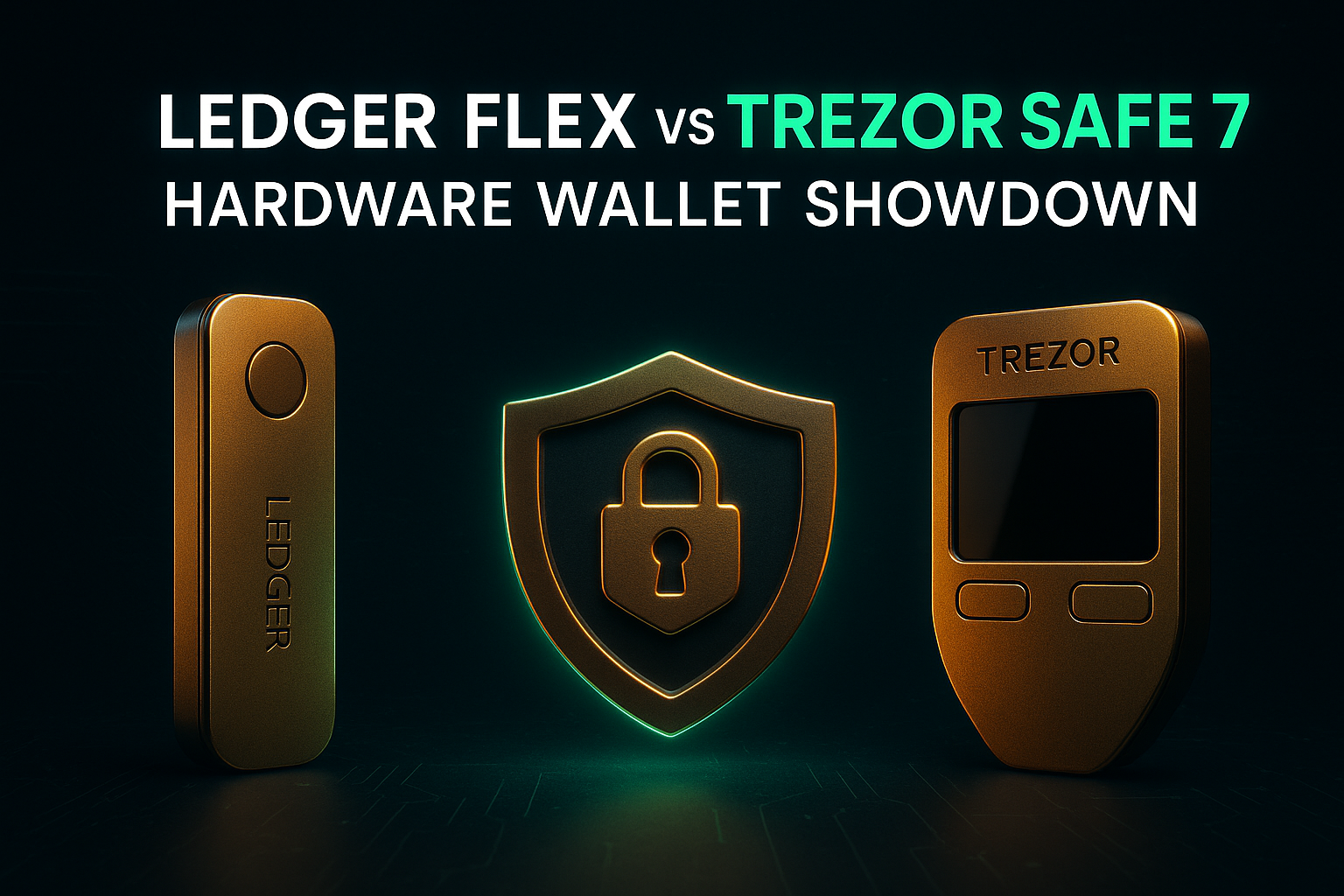
The 2026 Hardware Dilemma: Ledger Flex or Trezor Safe 7?
In 2026, the old mantra "not your keys, not your coins" isn't just a warning—it’s a survival rule. Leaving your assets on an exchange today feels less like convenience and more like a high-stakes gamble. As the ecosystem matures, the move to cold storage has shifted from a "niche hobby" to a mandatory practice for anyone holding more than pocket change.
If you’re looking at the top-tier options this year, two names are dominating the conversation: the Ledger Flex and the Trezor Safe 7.
On paper, they seem to be chasing the same goal. They both boast modern USB-C and NFC connectivity, support virtually every chain worth mentioning, and promise to keep your private keys far away from the reach of the internet. But once you actually get them in your hands, the "personality" of each device starts to show.
The Ledger Flex feels like it was built for the mobile-first world. It’s sleek, incredibly thin, and uses an E-Ink display that stays readable even when the battery is low. It’s the device for the practitioner who is constantly moving, checking balances, and signing transactions on the fly.
The Trezor Safe 7, however, takes a different path. It leans heavily into the "fortress" philosophy. It’s built for the user who prioritizes advanced recovery—like Shamir Backup—and wants that extra layer of open-source transparency that Trezor has spent a decade perfecting.
This isn't about which wallet is "better"—it's about which one fits your specific workflow. This guide is a deep dive into the real-world trade-offs between portability and paranoia, helping you decide which of these 2026 titans deserves to hold your keys.
Hardware Wallet Comparison 2026: Ledger Flex vs Trezor Safe 7 Security, Features, and Ratings
| Category | Ledger Flex | Rating | Trezor Safe 7 | Rating | Notes |
|---|---|---|---|---|---|
| Security | Pin & passphrase, Secure Element, NFC & Bluetooth | ⭐⭐⭐⭐☆ | Tropic01 + ST33K1M5, EAL6+, Partial Open Source, Post-Quantum, Shamir | ⭐⭐⭐⭐⭐ | Trezor 7 offers stronger multi-layer security |
| User Experience | 2.84" E-Ink Touchscreen, USB-C, Mobile/Desktop app | ⭐⭐⭐⭐☆ | 2.5" Color Touchscreen, USB-C, Bluetooth, NFC, High-res display | ⭐⭐⭐⭐⭐ | Trezor 7 has a more interactive and high-quality interface |
| Supported Coins | 5000+ coins, Multi-chain support | ⭐⭐⭐⭐⭐ | Most major coins, frequent updates | ⭐⭐⭐⭐⭐ | Both support a wide range of cryptocurrencies |
| Extra Features | NFC, Bluetooth, E-Ink, LED feedback | ⭐⭐⭐⭐☆ | Tor, Shamir backup, Post-Quantum crypto, IP67 | ⭐⭐⭐⭐⭐ | Trezor 7 includes advanced extra security features |
| Build & Design | Aluminum & plastic, compact | ⭐⭐⭐⭐☆ | Aluminum, rugged, IP67 water/dust resistant | ⭐⭐⭐⭐⭐ | Trezor 7 is more durable and weather-resistant |
| Portability | 78.4×56.5×7.7 mm, 57.5 g | ⭐⭐⭐⭐☆ | 44.5×75.4×8.3 mm, 45 g | ⭐⭐⭐⭐⭐ | Trezor 7 is smaller, lighter, and easier to carry |
| Price | $249 | ⭐⭐⭐⭐⭐ | $249 | ⭐⭐⭐⭐⭐ | Same price, fair rating for both |
| Connectivity | USB-C, NFC, Bluetooth | ⭐⭐⭐⭐⭐ | USB-C, NFC, Bluetooth | ⭐⭐⭐⭐⭐ | Both support modern connectivity options |
| Total / Average | 4.71 / 5 → ⭐⭐⭐⭐⭐ | 4.86 / 5 → ⭐⭐⭐⭐⭐ |
Security Architecture Comparison: Secure Element vs Open-Source + Post-Quantum Protection
Let's discuss what these specifications mean in practice, especially as we consider specific use cases.
Security Features Breakdown: Secure Element, Shamir Backup & EAL6+ Explained
When we look at security, Ledger and Trezor have different ways of doing things. Ledger's devices, for example, have a Secure Element, which is a specialized chip designed for protection. Trezor, in contrast, emphasizes its open-source design allowing the community to inspect it. Trezor also includes features such as Shamir Backup and post-quantum cryptography. It's useful to consider which user profile best fits each approach—perhaps a casual user would prefer one, while a more experienced individual might lean toward the other.
User Experience & Interface: E-Ink vs Color Touchscreen in Daily Use
When thinking about how these devices perform in daily life, several things come to mind. You’ll want to check the display quality, for example, and how responsive it is to your interaction. The initial setup process is also a part of that, as is how easily it pairs with mobile phones. It's often the case that the Flex offers a good experience for portable use. In contrast, the Safe 7 is usually the better option when you need to review things in more detail over a longer period.
Portability vs Home Cold Storage: Which Use Case Fits You Best?
When picking a device, it often comes down to figuring out if portability or home use is more important. Take the Ledger Flex, for example. It is quite a light device, comes with an E-Ink display, and has a battery that lasts a long time. These qualities make it a solid choice for daily activities and for when you are traveling. Then there's the Trezor Safe 7. This is a larger device with a color touchscreen. It is best suited as a digital vault you keep at home.
Backup & Recovery Options: Shamir Backup vs Standard Recovery Seed
It’s good to talk about backup and recovery options. Shamir Backup offers a strong feature set for people with many crypto assets, or for anyone looking to avoid a single point of vulnerability. You can compare this to typical recovery seed methods.
Software Ecosystem Comparison: Ledger Live vs Trezor Suite
It's helpful to consider the software ecosystems, specifically Ledger Live and Trezor Suite. For people new to hardware wallets, Ledger Live generally offers a simpler interface. On the other hand, Trezor Suite gives more detailed control, which can be good for those already familiar with digital asset management.
Who Should Buy Ledger Flex or Trezor Safe 7 in 2026?
To summarize for our readers, if mobile use and a focus on simplicity are your priority, the Ledger Flex could be a good fit. For those who value trust through transparent design, advanced security capabilities, and reliable long-term cold storage, the Trezor Safe 7 might be the better choice.
Final Verdict: Which One Should Actually Guard Your Keys?
At the end of the day, choosing between the Ledger Flex and the Trezor Safe 7 isn’t about finding a "winner"—it’s about choosing the right tool for your specific workflow. Both devices are industry titans for a reason, but they speak to two very different types of crypto holders.
If your life happens on your phone and you’re constantly signing transactions, moving assets, or checking your portfolio while grabbing a coffee, the Ledger Flex is the obvious choice. It’s built for the mobile-first practitioner who values a sleek, E-Ink interface and the kind of daily convenience that doesn't feel like a chore. It’s "security on the go" perfected for 2026.
However, if you view your crypto less like a checking account and more like a high-security vault, the Trezor Safe 7 is where you belong. It’s designed for the "hold-and-forget" crowd—the users who prioritize open-source transparency and advanced recovery features like Shamir Backup. It’s built for those who sleep better knowing their long-term protection has multiple, customizable layers.
Both of these devices will keep your private keys off the grid. The real difference isn't their level of security—it's their philosophy. So, before you hit "buy," stop asking which device is technically superior and start asking yourself:
Do I need a "digital wallet" for daily flexibility, or a "digital safe" for long-term peace of mind? Once you answer that, your choice is already made.
If you're ready to secure your crypto properly, choosing the right hardware wallet today could save you from major losses tomorrow.
FAQ – Ledger Flex vs Trezor Safe 7 (2026)
Q1: Is Ledger Flex more secure than Trezor Safe 7?
Both devices offer strong security, but they use different philosophies. Ledger relies on a Secure Element chip, while Trezor emphasizes open-source verification, Shamir Backup, and post-quantum cryptography. The better choice depends on whether you prefer hardware-based isolation or transparent, community-audited architecture.
Q2: Which wallet is better for long-term cold storage?
Trezor Safe 7 may appeal more to users focused on long-term cold storage due to its advanced backup options and layered security features. However, Ledger Flex also provides strong protection suitable for long-term holding.
Q3: Does Ledger Flex support more cryptocurrencies?
Ledger devices traditionally support a very wide range of coins and tokens (5000+). Trezor also supports most major cryptocurrencies and frequently updates compatibility. For most users, both wallets cover all major assets.
Q4: Is Shamir Backup better than a standard recovery seed?
Shamir Backup allows users to split their recovery phrase into multiple shares, reducing the risk of a single point of failure. This can be advantageous for users managing larger portfolios or institutional-level funds.
Q5: Which hardware wallet is better for mobile use?
Ledger Flex may be more convenient for mobile-focused users thanks to its lightweight design, E-Ink display, and emphasis on portability. Trezor Safe 7 is often better suited for home-based management and detailed review sessions.
Q6: Are both wallets worth $249 in 2026?
At the same price point, both devices offer premium features, modern connectivity (USB-C, NFC, Bluetooth), and advanced security. The decision comes down to personal use case rather than price difference.