Overview of the Bitdeer SealMiner A2 Series and Hardware Positioning
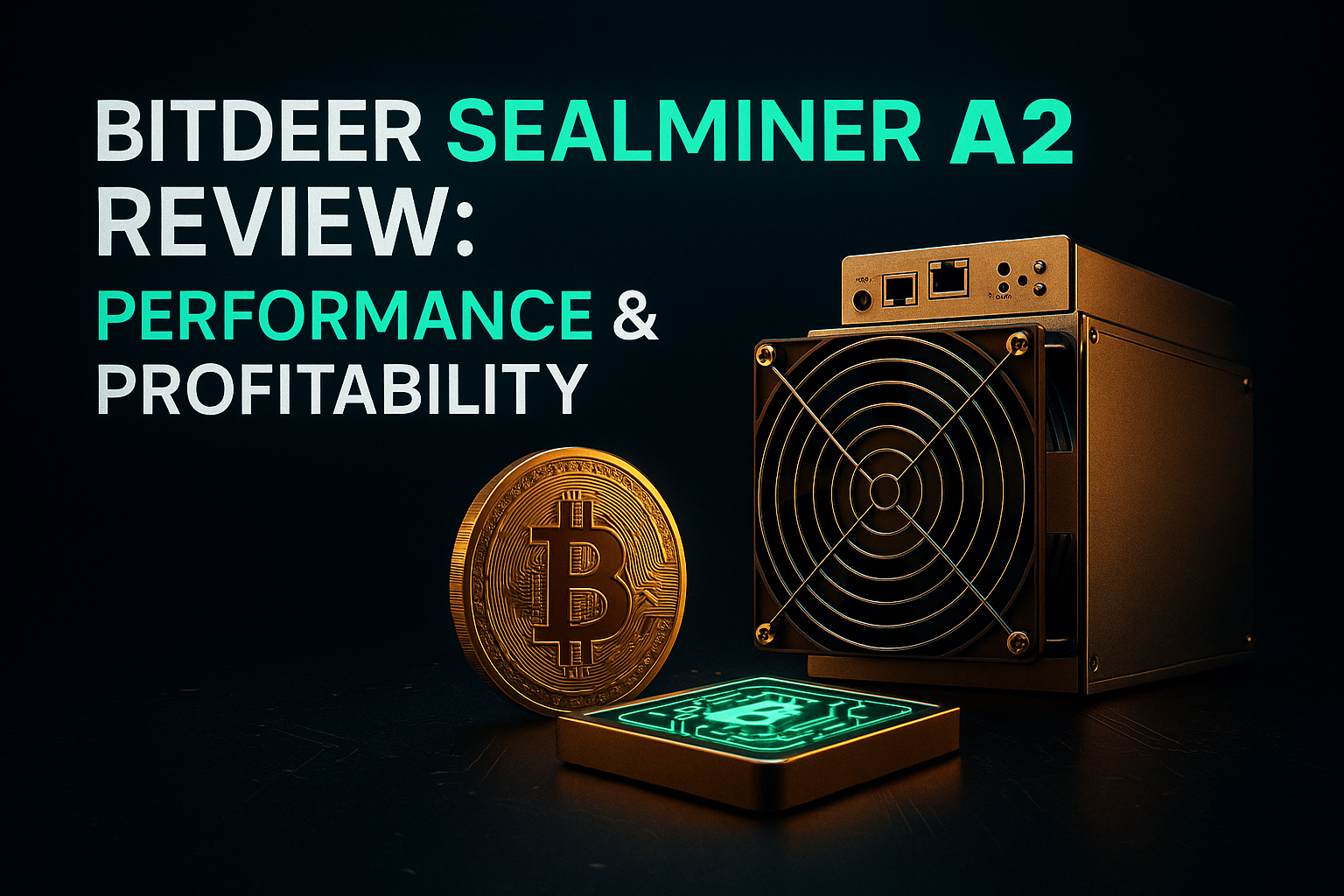
The SealMiner A2, which enters the market with a declared power of 226 Terahash, represents a strategic release from Bitdeer as it stands alongside four distinct versions within the SealMiner series, tiered from the most powerful high-end units to the more standard models: A2 Pro Hyd (500 Th), A2 Hyd (446 Th), A2 Pro Air (255 Th), and finally the A2 (226 Th). This specific model, which was extensively reviewed by the ASICMINING360 team, showcases the sophisticated engineering results derived from Bitdeer’s acquisition of the Desiwee factory, ultimately providing a user experience that departs radically from the traditional architectures found in conventional hardware currently available on the market.
Internal Engineering and Hardware Architecture of the SealMiner A2
Internal Engineering and Advanced Design Details
Chassis Construction and Industrial Build Quality
The exterior is finished with a specialized gray "Powder Coated" layer that offers superior protection against environmental wear and physical scratches, presenting a more durable alternative to the standard aluminum shells used in Bitmain devices.
Control Board Architecture and System Layout
The hardware utilizes a Taurus_air control board manufactured by Pango, issued in November 2024. It is distinguished by its practical and unique layout featuring the Ethernet port on the side (an unusual location), along with a Micro SD slot and a Reset button, all positioned for seamless network integration.
Power Distribution and Connectivity Systems
The design implements a modern power distribution system using new 4-pin fan headers for the cooling fans and an updated P13 (C19) power input, while the overall unit maintains its connection to the Power Distribution Unit (PDU) via a standard high-capacity C19 cable.
Maintenance Accessibility and Internal Hardware Layout
This device is extremely easy to maintain. The top cover can be opened very quickly and without any complexity by loosening a single hand screw to reveal an organized internal layout consisting of 3 Hashboards connected via ribbon cables and a meticulously structured Bus bars system.
Cooling System, Noise Management, and User Interface Experience
Operational Experience and Intelligent Cooling System
Acoustic Performance and Fan Configuration
Although the device emits a very high noise level during the initial startup phase, it quickly transitions into a "Whisper Quiet" state once it enters the active mining stage, positioning it as one of the quietest units in its performance class. With an official noise rating of approximately 75 dB, the device utilizes 120mm fans which operate with significantly lower acoustic output compared to the larger 140mm fans found in competing models like the S21XP.
Intelligent Noise Management System
The SealMiner A2 is equipped with an intelligent noise management system that dynamically responds to operational status; it begins with a loud "Screaming" phase at boot-up, quickly settles into a "Whisper" during the configuration stage, and remains at a low, highly acceptable level once the "Fine Tuning" process is fully stabilized.
Advanced Web GUI and Monitoring Features
The device features a highly sophisticated user interface (accessible via the default seal/seal credentials) that offers unique functionalities such as external LED lighting control and real-time monitoring of Ambient, PCB, and Outlet temperatures, while providing a live status update of the tuning process.
Real-World Performance Testing of the SealMiner A2
Real-World Performance (At the Wall)
Throughout the live testing phase, which involved a tuning period of approximately 40 minutes, the device demonstrated impressive results:
Effective Hashrate Performance
The unit stabilized at a consistent 233 TH/s, which actually exceeds the manufacturer's declared specification of 226 TH/s.
Power Consumption and Environmental Impact
The actual power draw was measured at 3,888 Watts in an ambient environment of 29°C, surpassing the advertised 3,730 Watts. This discrepancy highlights that energy efficiency is heavily influenced by the surrounding environment.
Mining Profitability Analysis for the SealMiner A2 in 2026
2026 Financial Analysis and Technical Recommendations
Let’s be brutally honest: at $0.08/kWh, you’re not mining—you’re subsidizing the network.
Based on a standard purchase price of $3,880 and an average Bitcoin price stabilized around $95,000, we analyzed two primary economic scenarios:
-
Scenario A: Electricity at $0.08/kWh
Under these conditions, the device generates a daily revenue of $11.10, but the electricity costs consume approximately $7.50 of that total. Consequently, a net profit of only $3.60 does not justify the capital risk.
-
Scenario B: Electricity at $0.04/kWh (Recommended Range)
In environments where electricity costs are sharply reduced, the net daily profit rises to a stable $5.00, which makes the investment far more logical and rewarding for long-term operations.
Final Evaluation of the Bitdeer SealMiner A2 ASIC Miner
The Bitdeer SealMiner A2 is undeniably a superior piece of engineering that excels in maintenance accessibility, build quality, and operational silence, yet it remains a high-stakes investment that requires access to low-cost power to be truly viable. While the machine’s efficiency of 16.5 J/TH is top-tier for 2026, the ultimate success of the operation will always be dictated by the local electricity tariff.
FAQ: Bitdeer SealMiner A2 Mining Performance and Profitability
Q1: What is the hashrate of the Bitdeer SealMiner A2?
The Bitdeer SealMiner A2 is officially rated at 226 TH/s. However, real-world testing conducted by ASICMINING360 showed the miner stabilizing around 233 TH/s during live operation. This slightly higher performance demonstrates the device’s ability to exceed its nominal specification under optimal tuning and stable environmental conditions.
Q2: How efficient is the SealMiner A2 compared to other ASIC miners in 2026?
The SealMiner A2 operates with an efficiency of approximately 16.5 J/TH, which places it among the most efficient air-cooled Bitcoin miners released in 2026. This efficiency level allows the device to remain competitive with other leading SHA-256 miners when electricity costs are kept relatively low.
Q3: Is the Bitdeer SealMiner A2 profitable for Bitcoin mining?
Profitability depends primarily on electricity prices. At $0.08/kWh, the daily net profit is relatively small. However, at lower electricity rates such as $0.04/kWh, the miner can produce a more sustainable profit margin, making it a better option for industrial mining farms or regions with inexpensive power.
Q4: How loud is the SealMiner A2 during operation?
The SealMiner A2 has an official noise rating of around 75 dB. Although it starts with a loud sound during the boot process, the miner quickly stabilizes into a quieter operating state. Thanks to its optimized cooling system and 120mm fans, it operates more quietly than several comparable high-performance ASIC miners.
Q5: What makes the SealMiner A2 different from traditional ASIC miners?
One of the key differences is its internal design philosophy. The device emphasizes easy maintenance, organized internal layout, and modern control board architecture. Its powder-coated chassis, improved power distribution system, and intuitive web interface reflect Bitdeer’s attempt to modernize ASIC miner engineering.
Q6: Who should consider buying the SealMiner A2?
The SealMiner A2 is best suited for miners who have access to low electricity costs and want a high-efficiency SHA-256 ASIC with strong build quality. It may also appeal to operators looking for an alternative to traditional manufacturers such as Bitmain and Whatsminer.
Note: Mining profitability figures mentioned in this article are approximate and may not reflect real-time results. Cryptocurrency prices and network difficulty change continuously, while electricity costs remain relatively fixed. Because of these fluctuations, actual mining income can vary significantly. For the most accurate and updated profitability estimates for each mining device, we recommend using the profitability calculator available on our website, which analyzes current network data, electricity costs, and hardware performance.