Introduction: How to Choose the Best ASIC Miner in 2026
Let’s be honest for a moment—mining in 2026 is a completely different beast.
There was a time when you could just plug in a machine, join a pool, and watch the rewards stack up. It was almost easy. But today? One bad call—a sub-par ASIC, a slightly too high electricity rate, or even just jumping in at the wrong time—and you aren't just looking at lower profits; you’re watching your capital evaporate.
The game hasn't just changed; it’s evolved. It’s no longer a raw arms race for the highest hashrate. Now, it’s about the surgical details: joules per terahash (J/TH), localized power costs, fluctuating network difficulty, and spotting the gaps where the real money is hiding. And surprisingly? Those gaps aren't always found in Bitcoin anymore.
Right now, the smartest players in the industry are quietly pivoting. While some are doubling down on next-gen Bitcoin hardware, others are finding massive "blue ocean" opportunities in altcoins like Aleo or Scrypt-based projects, where the competition is still manageable and the margins can actually be much healthier.
This guide isn’t about the hype or the marketing specs. It’s a practical look at which ASICs actually make sense for your bottom line right now. We’re looking at real-world performance and actual operational costs—because in this market, guessing is a luxury no one can afford. The right choice, however, still changes everything.
Top 5 Best ASIC Miners for Bitcoin, Litecoin, Dogecoin & Aleo Mining in 2026
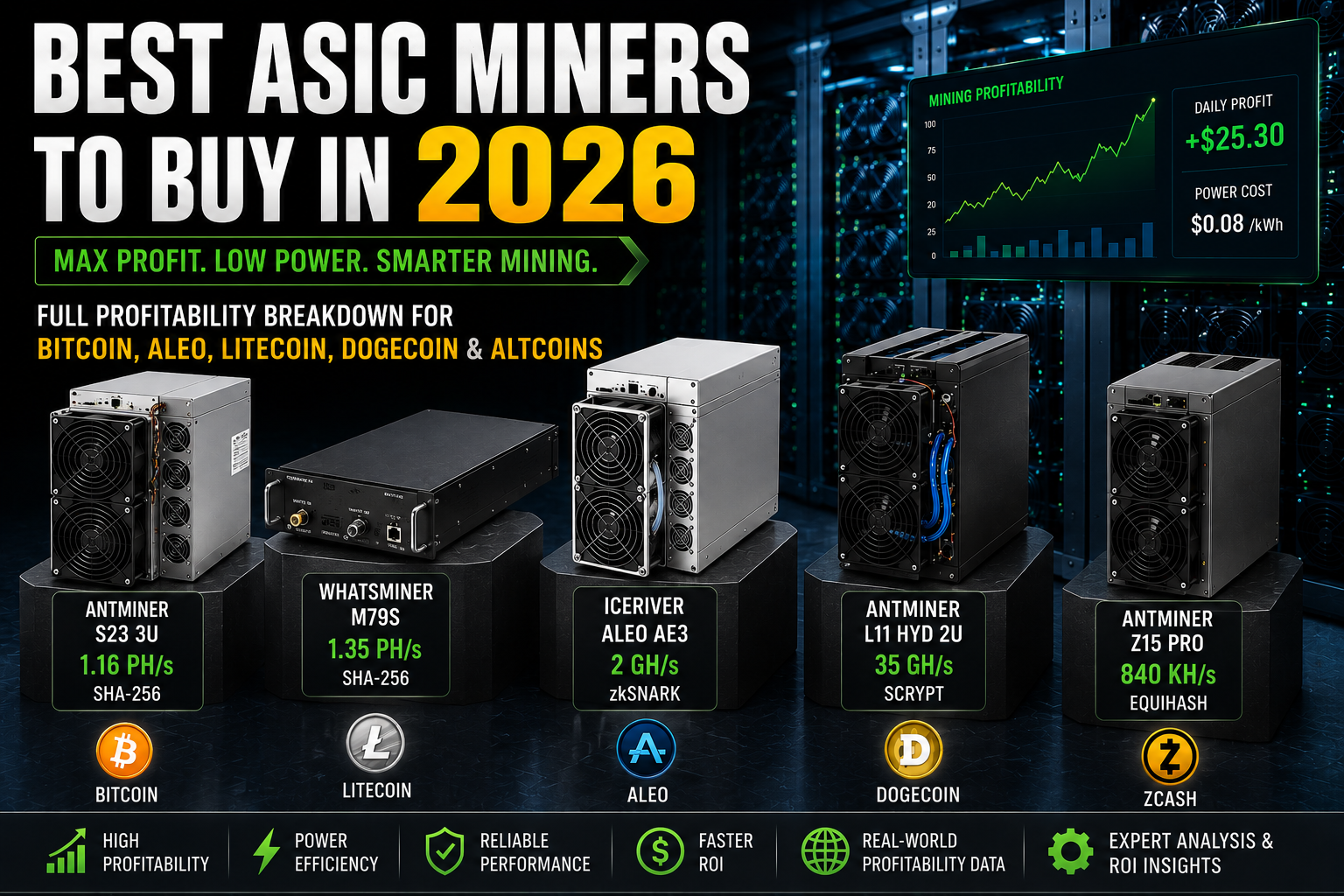
Here’s a list of the 5 best ASIC mining devices for 2026:
Bitmain Antminer S23 3U Review 2026: 1.16 PH/s SHA-256 Bitcoin Miner Profitability, Power Consumption, and ROI Analysis
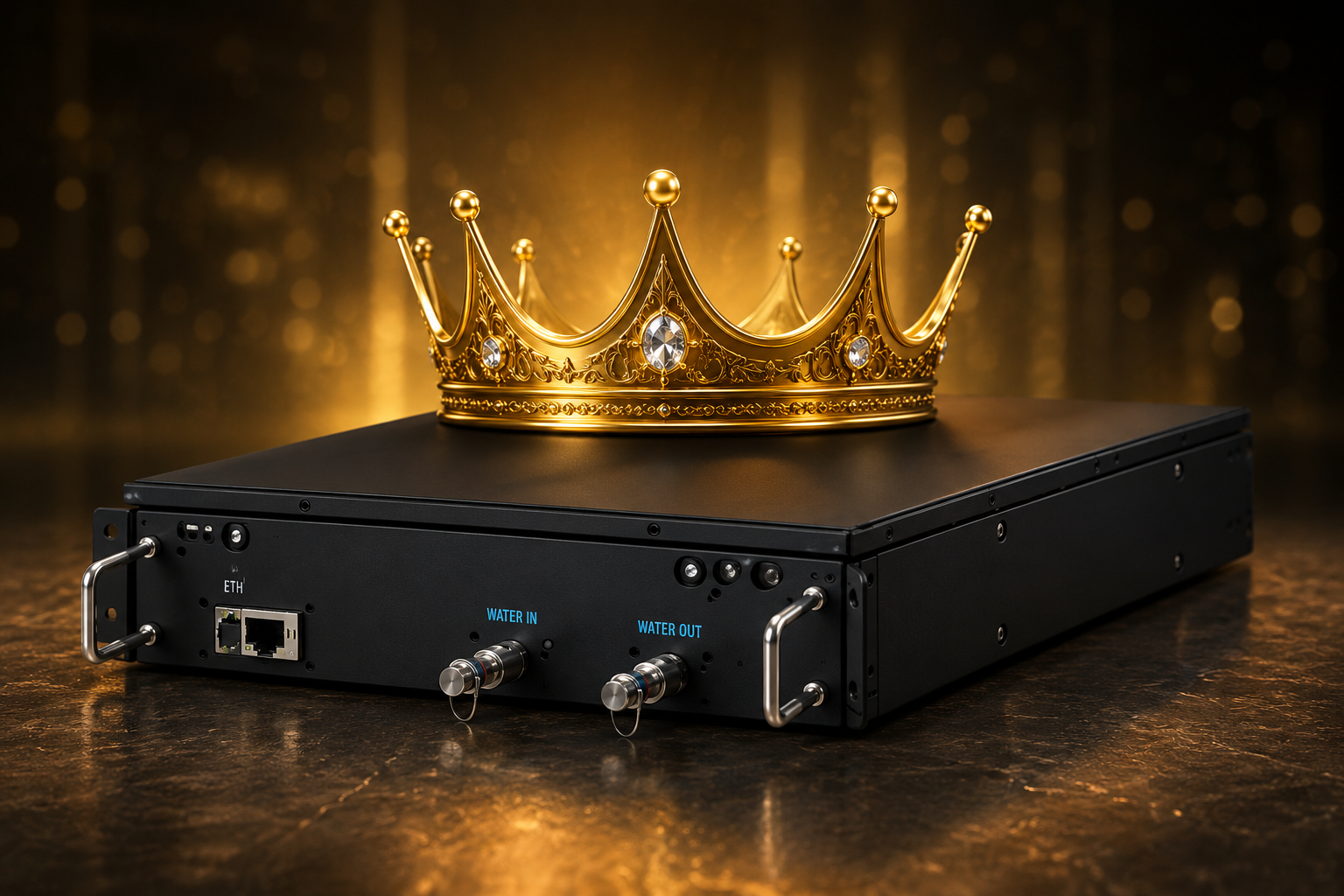
The Bitmain Antminer S23 3U is the current flagship of the SHA-256 market. It hits a massive 1.16 PH/s hashrate, utilizing an advanced hydro-cooling system that ensures silent operation and thermal stability.
The Reality Check: This machine is a power-hungry titan. Unless you have a direct contract with a power plant or a massive solar array, the operational overhead could eat your margins faster than the hashrate can build them.
While it is a performance beast, your net take-home depends heavily on your setup. At $0.08 per kWh, you’re looking at roughly $25 in daily profit, but for those with industrial-scale energy optimization, that figure could climb toward $37 as the network stabilizes throughout 2026.
MicroBT WhatsMiner M79S Review 2026: 1.35 PH/s Bitcoin Miner Profitability, Power Consumption, and Efficiency Analysis
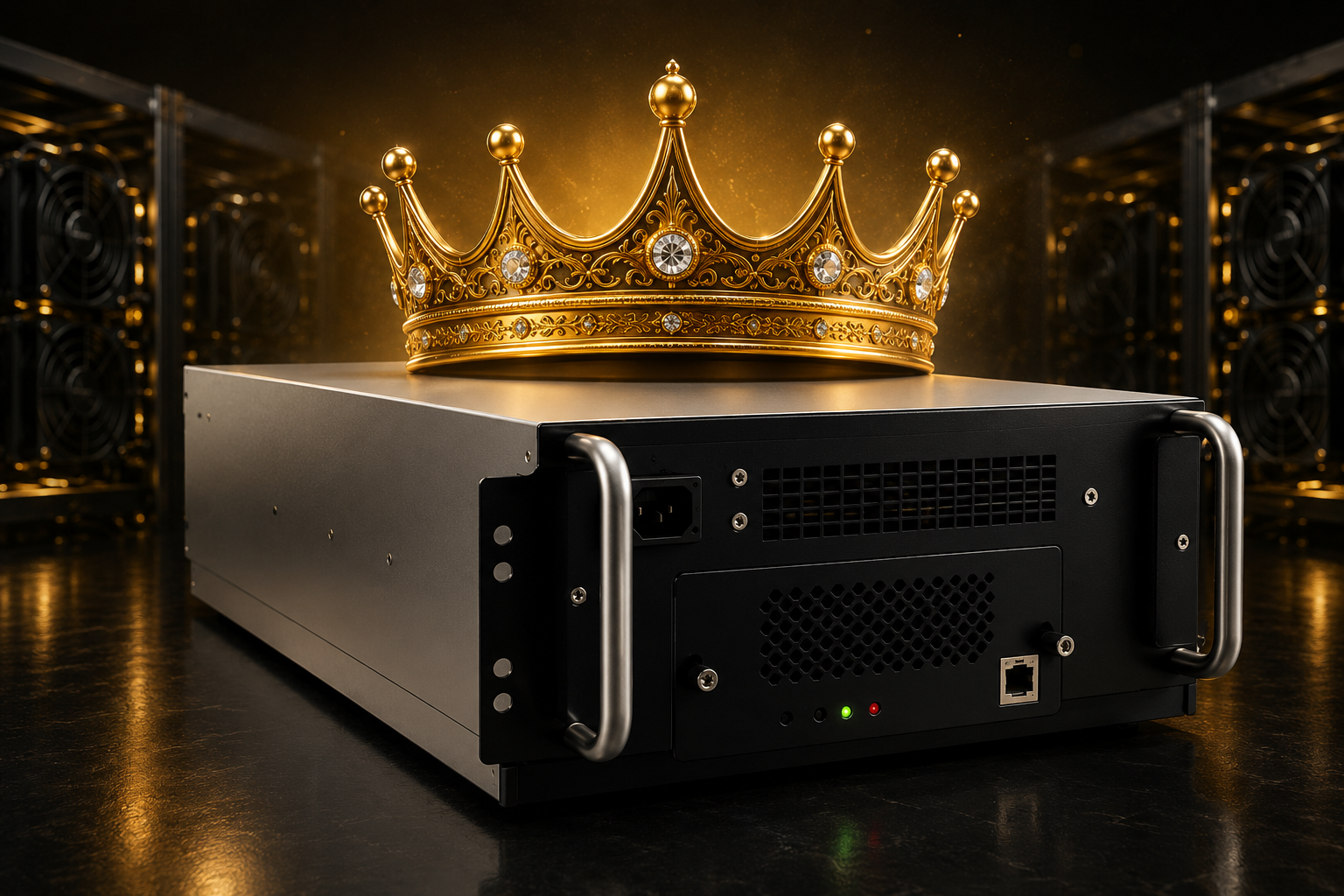
The MicroBT WhatsMiner M79S is an industrial-grade powerhouse, pushing the boundaries of the SHA-256 algorithm with a staggering 1.35 PH/s hashrate. This eighth-gen machine is built for endurance, utilizing a sophisticated water-cooling architecture to maintain peak performance during 24/7 operations.
Expert Warning: The M79S is less of a miner and more of a small power substation. With a massive 20,000W appetite, this is not a "plug-and-play" device for home setups. If your electrical infrastructure isn't specifically rated for this level of sustained industrial load, you'll be dealing with tripped breakers and melted cables rather than mined blocks.
Because of its extreme power requirements, the M79S is strictly for large-scale mining farms with direct access to wholesale energy. At a cost of $0.08 per kWh, the daily profit sits around $14—a figure that may seem modest compared to its size, but in the world of industrial mining, the M79S is valued for its stability and longevity in high-heat environments rather than just short-term gains.
IceRiver ALEO AE3 Review 2026: 2 GH/s zkSNARK ASIC Miner Profitability, Power Consumption, and Aleo Mining Performance
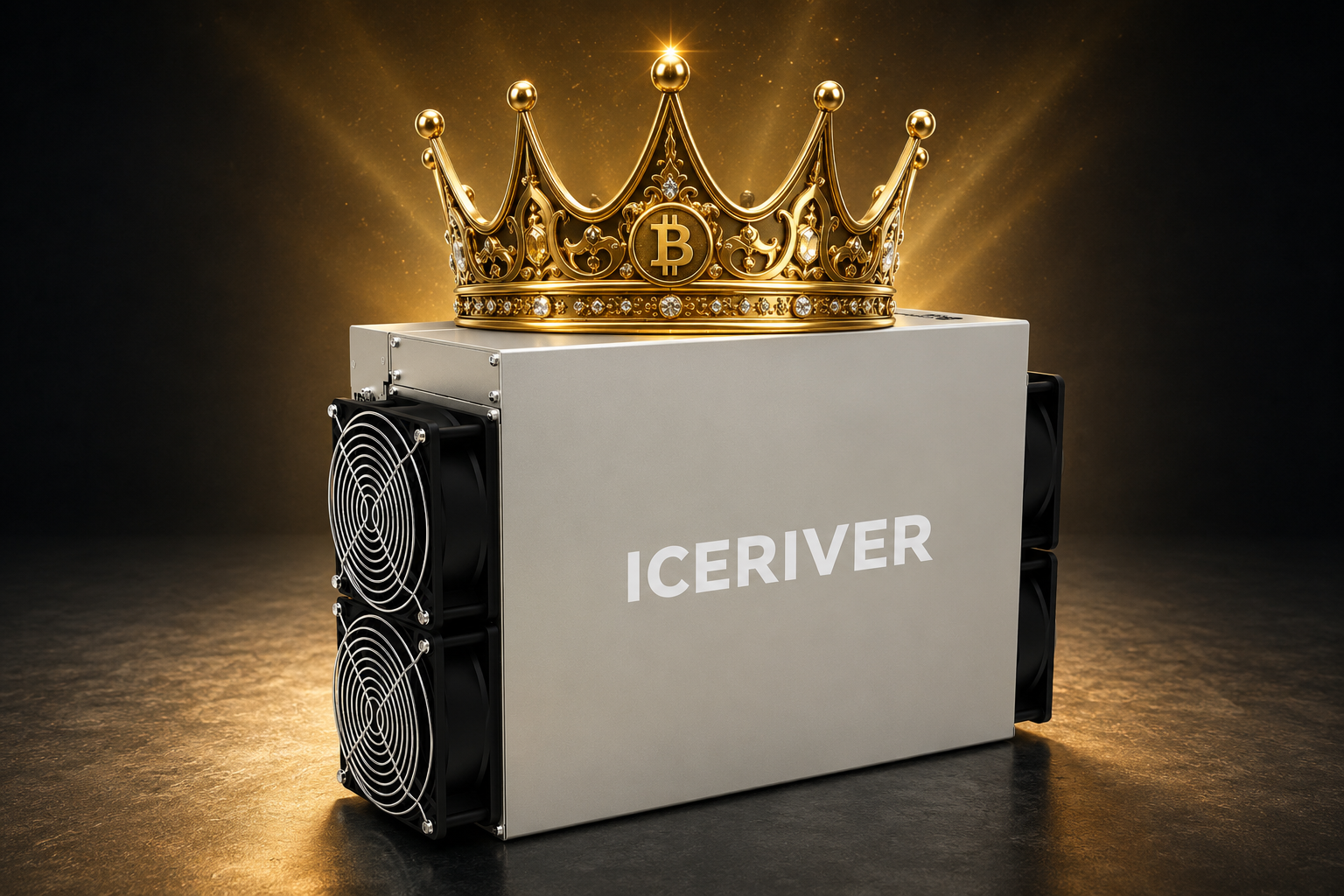
The IceRiver ALEO AE3 is a third-generation ASIC miner built for Aleo (ALEO) using the zkSNARK algorithm. Released in November 2025, it delivers 2 GH/s and consumes about 3,400W of power. This miner is ideal for large operations with cheap electricity (under $0.10 per kWh). It connects via Ethernet and works best in temperatures between 5 and 40°C. At $0.08 per kWh, daily profits are around $25.
Bitmain Antminer L11 Hyd 2U Review 2026: 35 GH/s Scrypt ASIC Profitability, Power Consumption, and Litecoin & Dogecoin Mining Performance
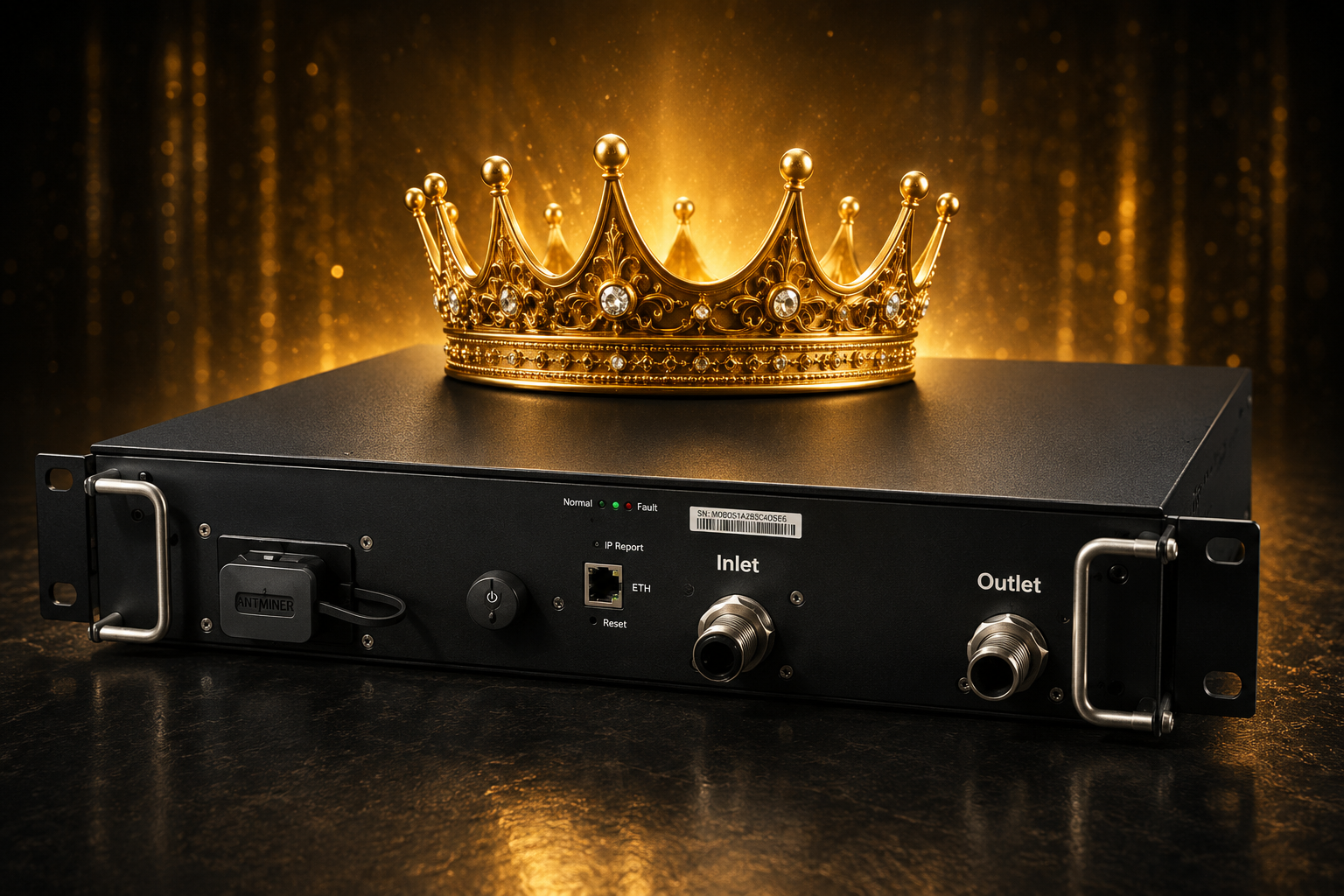
The Bitmain Antminer L11 Hyd 2U is the newest ASIC miner, out in December 2025. It's built for Scrypt coins like Litecoin and Dogecoin. This machine runs at 35 GH/s, uses 5,775W, and has water cooling to keep things quiet and running well, at about 50 dB. It's a 2U Rackmount, so it fits right into server racks. If electricity costs $0.08 per kWh, you're looking at about $15 in daily profits, which makes it a good pick for big mining operations.
Bitmain Antminer Z15 Pro Review 2026: Equihash ASIC Miner Profitability, Power Consumption, and Zcash Mining Performance
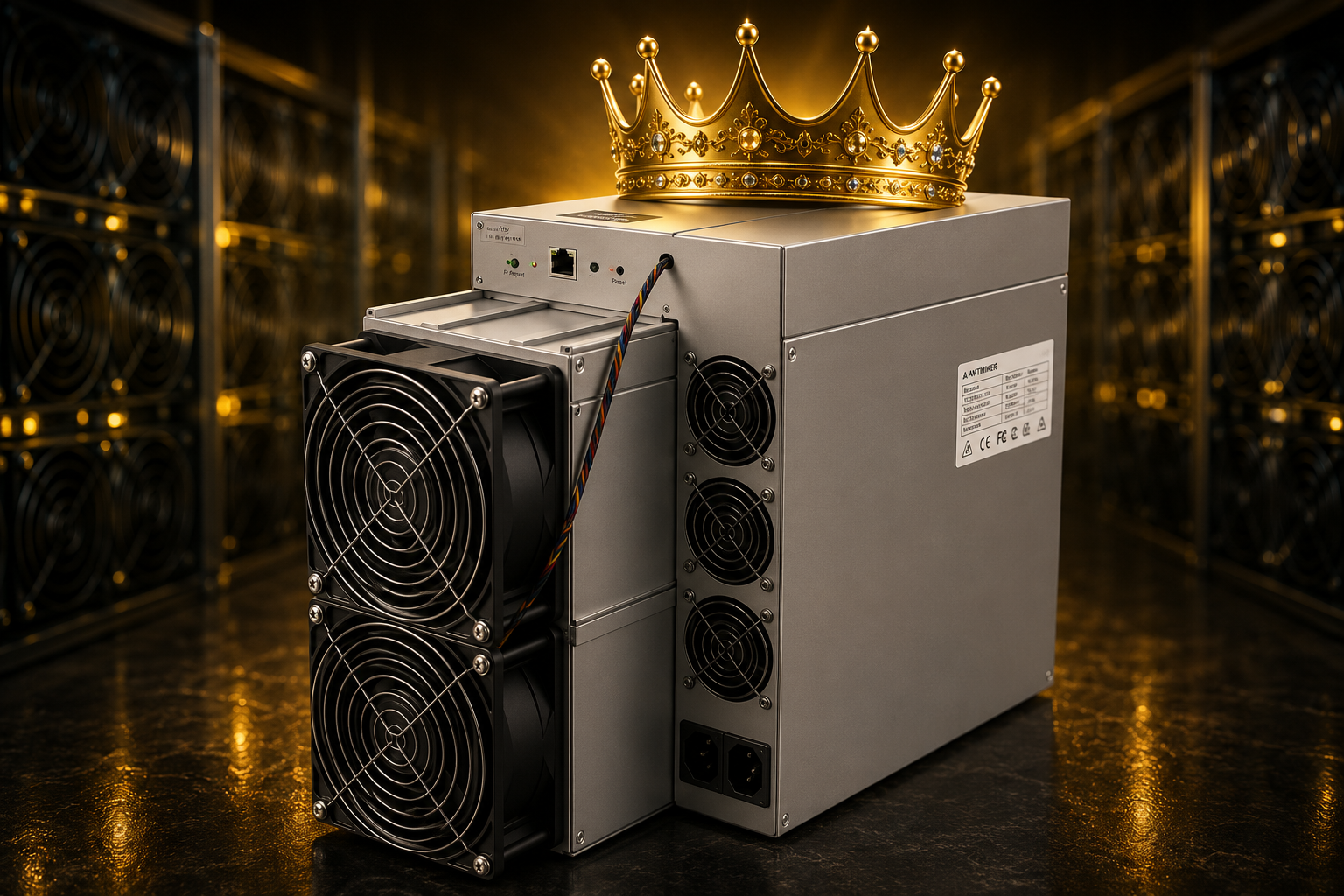
Then there's the Bitmain Antminer Z15 Pro. It's an older one from 2023, but it's gotten popular again because Zcash prices went up. It mines Equihash coins like Zcash and Horizen. It does 840 KH/s and uses 2,780W, so it's good for mining all the time, especially if you have good air circulation. With the same electricity cost of $0.08 per kWh, it makes about $30 a day. This one is great for smaller or medium-sized mining setups that need steady performance.
| ASIC Miner | Algorithm | Hashrate | Power Consumption | Estimated Daily Profit* |
|---|---|---|---|---|
| Bitmain Antminer S23 3U | SHA-256 | 1.16 PH/s | 11,020W | $25 – $37 |
| MicroBT WhatsMiner M79S | SHA-256 | 1.35 PH/s | 20,000W | $14 |
| IceRiver ALEO AE3 | zkSNARK | 2 GH/s | 3,400W | $25 |
| Bitmain Antminer L11 Hyd 2U | Scrypt | 35 GH/s | 5,775W | $15 |
| Bitmain Antminer Z15 Pro | Equihash | 840 KH/s | 2,780W | $30 |
Real-World Mining Profitability Scenarios (2026 Breakdown)
- **🟢 Bull Market Scenario:** High crypto prices + stable difficulty → profits can increase by **30%–80%**
- **🟡 Neutral Market:** Stable prices → profits remain close to estimates in this article
- **🔴 Bear Market:** Price drop + rising difficulty → profits can fall by **40%–70%**
- 💰 Cryptocurrency prices (Bitcoin, Aleo, etc.)
- 📊 Network difficulty (mining competition level)
- ⚡ Electricity costs in your region
Best ASIC Miner 2026: Which Mining Machine Offers the Highest ROI?
At the end of the day, there is no such thing as a "perfect" ASIC in 2026—only the one that aligns with your specific strategy.
It really comes down to your environment. If you’re sitting on cheap electricity and playing the long game, the latest high-efficiency SHA-256 machines remain the gold standard for stability. But if you’re looking to maximize short-term ROI and don't mind a bit of market turbulence, the emerging opportunities in altcoins like Aleo or Scrypt-based projects are offering profit margins that are hard to ignore.
The real winners in today’s market aren’t necessarily the ones with the most hardware—they’re the ones who know exactly when and where to deploy it. Profitability has become a moving target; it shifts constantly with price action, difficulty spikes, and energy fluctuations.
So, before you pull the trigger on a purchase, don’t get blinded by raw hashrate or those "estimated daily profit" charts. Look deeper. Crunch your actual operational costs, be honest about your risk tolerance, and choose a machine that fits your goals—not the one that has the most hype behind it.
Because in 2026, successful mining isn’t just about running hardware... it’s about executing a strategy.
ASIC Mining FAQ: Profitability, ROI, Power Consumption & Best Mining Hardware (2026)
Q1: What is the most profitable ASIC miner in 2026?
The most profitable ASIC miner in 2026 depends on electricity costs, cryptocurrency prices, and network difficulty. High-performance models like the Bitmain Antminer S23 3U and MicroBT WhatsMiner M79S are among the top Bitcoin miners, while specialized miners like the IceRiver ALEO AE3 can be very profitable when mining emerging coins such as Aleo.
Q2: How much electricity do ASIC miners use?
ASIC miners typically consume between 2,000W and 20,000W depending on the model and algorithm. High-end Bitcoin miners often require more than 10,000W. Electricity cost is the biggest factor affecting mining profitability, which is why many mining farms operate in regions with cheap power.
Q3: Are ASIC miners still profitable after the Bitcoin halving?
ASIC mining can remain profitable after a Bitcoin halving if the miner has high efficiency and low electricity costs. Profitability often shifts toward newer and more energy-efficient machines. Some miners also switch to alternative coins like Litecoin, Dogecoin, or Aleo to maintain profitability.
Q4: Can you mine multiple cryptocurrencies with one ASIC miner?
Most ASIC miners are designed for a specific mining algorithm. For example, SHA-256 miners mine Bitcoin and similar coins, while Scrypt miners mine Litecoin and Dogecoin. Some miners can mine multiple coins that use the same algorithm, but they cannot switch to completely different algorithms.
Q5: What factors affect ASIC mining profitability?
Several factors influence ASIC mining profitability including electricity price, hardware efficiency, mining difficulty, cryptocurrency market price, and cooling costs. Operational factors such as uptime, maintenance, and mining pool fees can also affect overall returns.
Q6: Is ASIC mining better than GPU mining?
ASIC mining is generally more powerful and efficient than GPU mining for specific algorithms like SHA-256 or Scrypt. However, GPUs are more flexible because they can mine many different cryptocurrencies, while ASIC machines are optimized for a single algorithm.