Market Cycle Insight: Why Bear Markets Create the Best Mining Opportunities
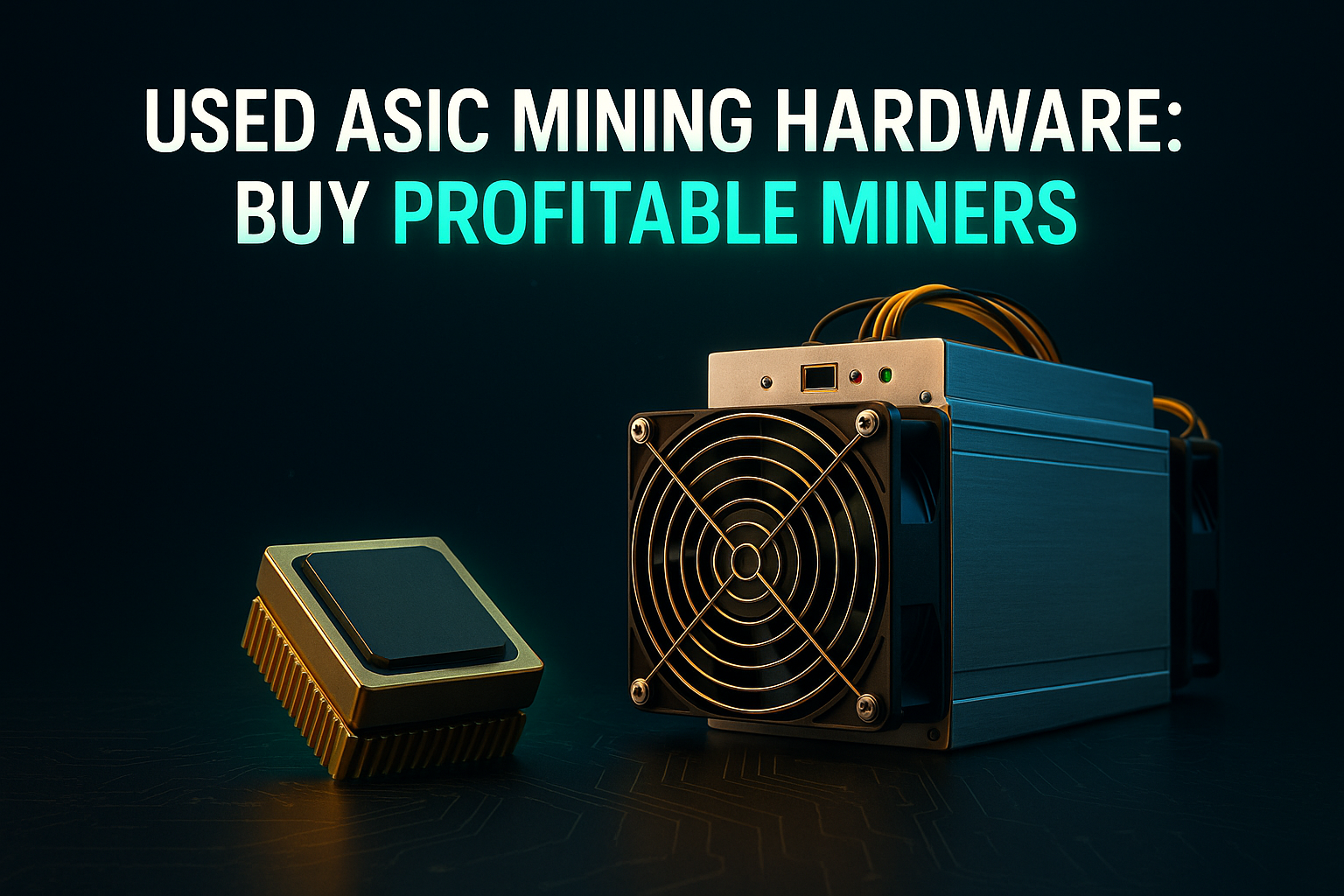
In 2026, the smartest Bitcoin miners are not buying new machines — they are buying used ASICs at 40–60% discounts.
In the cyclical world of cryptocurrency, the most significant fortunes are rarely made during the peak of a bull run; they are forged in the quiet, often painful depths of a bear market. As we move through early 2026, the mining industry is currently navigating a period of intense hashrate consolidation. Following the 2024 halving and the subsequent price corrections of late 2025, the market is witnessing a mass exodus of inefficient operators.
For the disciplined investor, this capitulation phase presents a rare window: the ability to acquire elite-tier ASIC hardware at a fraction of its original MSRP. While many see used hardware as obsolete, a professional practitioner sees it as a compressed spring—an asset with a low entry cost that is ready to explode in profitability the moment network difficulty stabilizes or coin prices rebound.
Bitcoin Mining Economics 2026: Electricity Costs, Hashrate Pressure, and Profitability
Why Rising Energy Costs Are Forcing Miners to Sell Hardware
The current 2026 market is defined by a paradox. On one hand, we have some of the most efficient machines ever built—such as the Antminer S21 XP and the MicroBT M70 series. On the other hand, global industrial electricity rates in the U.S. have climbed to an average of $0.06 to $0.08/kWh in traditional hubs.
When Bitcoin’s price dips, miners paying "retail" or mid-tier energy prices find their daily rewards falling below their operational expenses (OPEX). They aren't selling because the machines are broken; they are selling because they can no longer afford to keep the lights on.
Used ASIC Mining Hardware Deals: Understanding the 2026 Opportunity Gap
How Discounted Mining Hardware Lowers Your Break-Even Cost
Currently, new hardware prices have plummeted alongside market sentiment. However, the secondary market for used units is seeing discounts of 40% to 65% compared to mid-2025 prices. By purchasing "distressed" hardware now, you are effectively lowering your break-even point ($/TH) to a level that even a modest price recovery will turn into a high-margin operation.
Best Used ASIC Miners to Buy in 2026 (Efficiency & ROI Focus)
Top SHA-256 ASIC Models for Bitcoin Mining in the Secondary Market
When evaluating used hardware in 2026, the focus must be on Joules per Terahash (J/TH). Any machine above 25 J/TH is effectively a "space heater" in the current environment. We are looking for the "Survival Class"—hardware that remains viable even under moderate stress.
- The Bitcoin SHA-256 Heavyweights
The current market is flushing out several top-tier models from MicroBT and Bitmain. Here is what you should be looking for in the secondary market:
| Hardware Model | Original MSRP (Est.) | Used Discount | Efficiency |
|---|---|---|---|
| MicroBT WhatsMiner M76+ / M78S | $5,500+ | -45% | ~17–19 J/TH |
| Bitmain Antminer S21 XP / XP Imm | $6,000+ | -40% | ~13.5 J/TH |
| Bitdeer SealMiner A3 Air | $4,500 | -50% | ~12.5 J/TH |
- Daily Profit: $12–$18
- Monthly Profit: $360–$540
- Estimated ROI: 12–15 months
MicroBT M70 Series at $0.05/kWh:
- Daily Profit: $9–$14
- ROI: 14–18 months
-
MicroBT M70S/M73S Series: These are the workhorses of 2026. While slightly less efficient than the S21 XP, their build quality is legendary. In the used market, these are often available from large-scale farms that are upgrading to sub-10 J/TH units, making them a "best-buy" for those with electricity under $0.05/kWh.
-
Bitmain S21 XP (Immersion/Air): This remains the gold standard. The immersion version (Imm) is particularly valuable because it has likely been spared the thermal stress of air-cooled environments, meaning the silicon longevity is superior.
-
Bitdeer SealMiner A3: A newcomer that has disrupted the market. Its simplified architecture makes it easier to repair—a critical factor when buying used units without a factory warranty.
The Scrypt Renaissance: DOGE & LTC
Mining Dogecoin (merged with Litecoin) has proven to be a surprisingly resilient hedge in 2026. Because the Scrypt algorithm is less "crowded" than SHA-256, used Scrypt ASICs often offer a faster ROI.
-
VolcMiner D1 Pro: A high-performance unit that entered the market with a splash. Used units are currently appearing as small-scale home miners realize the 75dB noise isn't "home-friendly."
-
Antminer L11 / L11 Pro: Bitmain’s successor to the legendary L7. These units are highly sought after. If you find an L11 at a 35% discount, it is a high-conviction buy.
Professional Advice: The Practitioner’s Checklist
Buying used ASICs is not like buying a used car; it’s like buying a used jet engine. It has been running at 100% capacity, 24/7, in a high-heat environment. To succeed, you must follow these rules:
- Hashboard Health & Log Analysis
Never buy a unit without a "Kernel Log" export. I look for frequent "X" marks on the hashboards (indicating dead chips) or "Voltage Fluctuation" errors. In 2026, firmware like Luxor or Braiins is often pre-installed; check the history of the "tuning" to see if the previous owner over-clocked the machine into an early grave.
- The "Cleanliness" Factor
A machine caked in dust from a dry-air farm in West Texas has a shorter lifespan than one from a filtered, humidity-controlled facility in Scandinavia or a hydro-cooled setup. Request photos of the intake fans and heat sinks.
- Power Supply (PSU) Integrity
The PSU is the most common failure point. In the 2026 generation (like the S21), the PSU is often integrated. Ensure the used seller is providing the original manufacturer PSU, as third-party replacements often fail to provide the stable voltage required for high-efficiency mining.
Risk Considerations: The Cold Reality
Mining is a brutal game of margins. Before investing, you must acknowledge the following:
-
The Difficulty Ribbon: As prices go up, more people turn their machines back on. This increases network difficulty, which thins your profit. Used hardware is the first to be "priced out" when difficulty spikes.
-
Maintenance Overhead: Expect to spend 5-10% of your time or budget on repairs. Unlike new hardware, a used ASIC might need a fan replacement or a thermal paste refresh within the first three months.
-
Electricity Volatility: If your electricity contract isn't fixed, a 2-cent hike in power costs can turn your "bargain" S21 into a liability overnight.
Strategic Conclusion: The Move to Make Now
The window to buy "distressed" hardware in 2026 is narrow. We are currently seeing a 30% to 50% reduction in the price-per-terahash for used flagship models. This is a classic "Buy when there's blood in the streets" scenario for the mining industry.
My Professional Guidance:
If you have access to electricity at $0.06/kWh or lower, I recommend allocating 60% of your capital to used Antminer S21 XP or SealMiner A3 units and 40% to MicroBT M70 series. This blend gives you a high-efficiency floor with the rugged reliability of MicroBT.
Don't wait for the "Green Candles" on the Bitcoin chart to start buying. By then, the secondary market will have already adjusted, and the bargain-basement prices we see today will be gone.
FAQ: Used ASIC Mining Hardware in 2026
Q1: Is buying used ASIC miners profitable in 2026?
Yes, buying used ASIC miners can be highly profitable if electricity costs are low (ideally below $0.06/kWh). The key advantage is a reduced entry cost, which lowers the break-even point. When Bitcoin prices recover or network difficulty stabilizes, these machines can generate strong margins compared to new hardware purchases.
Q2: What is the best used ASIC miner to buy in 2026?
Top choices include the Antminer S21 XP, MicroBT M70 series, and SealMiner A3. These models offer excellent efficiency (low J/TH), making them viable even in competitive conditions. The best option depends on your electricity rate and cooling setup, especially if immersion systems are available.
Q3: How do I check the condition of a used ASIC miner?
Always request kernel logs, inspect hashboard health, and review firmware tuning history. Look for errors like dead chips or voltage instability. Additionally, ask for clear photos of fans and heat sinks to evaluate dust buildup and overall maintenance conditions before purchasing.
Q4: What is a safe electricity cost for mining profitability?
In 2026, a safe electricity cost for used ASIC mining is $0.05–$0.06 per kWh or lower. Above $0.08 per kWh, profitability becomes unstable, especially during high network difficulty periods. Lower energy costs provide a critical buffer against market volatility and difficulty increases.
Q5: Are used Scrypt miners a good investment in 2026?
Yes, used Scrypt ASICs like the Antminer L11 or VolcMiner D1 Pro can offer faster ROI compared to Bitcoin miners. The Scrypt ecosystem is less competitive, and merged mining (Dogecoin + Litecoin) provides additional revenue streams, making it an attractive alternative strategy.