
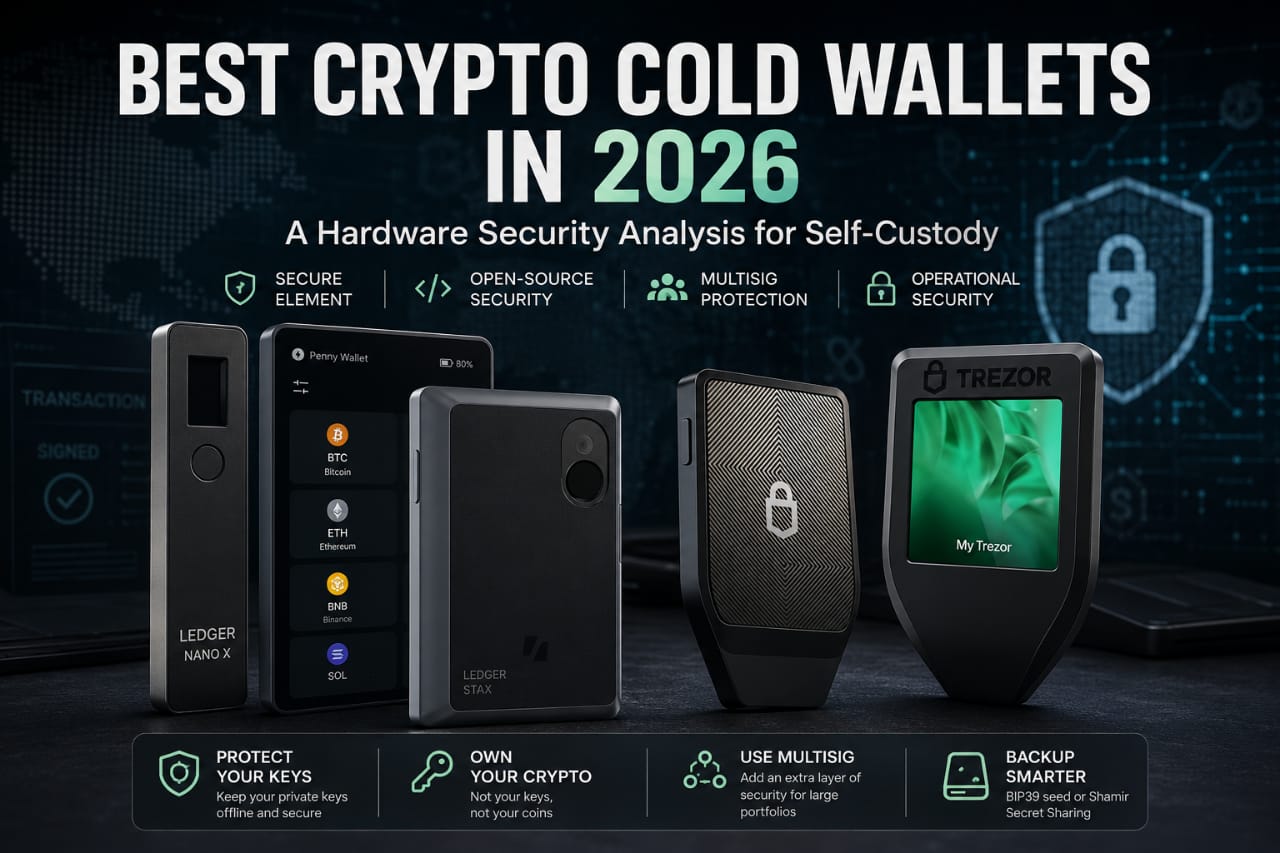
Achieving Financial Sovereignty Against Advanced Crypto Security Threats in 2026
In 2026, the illusion of buying security has vanished. The question is no longer which hardware wallet to own, but whether a human can still outmaneuver attackers who have weaponized artificial intelligence and microscopic hardware exploits. We’ve moved beyond simple malware; we are now defending against silent supply chain compromises that target the very soul of a device's architecture.
Today, a cold wallet is more than a disconnected drive—it is a philosophical choice. It represents a fundamental tension between two security religions: Ledger’s closed-door, hardened silicon and Trezor’s open-source radical transparency.
This is not a product review. It is a cold dissection of risk. We are stripping away the marketing promises to ask the only question that matters: when the world is designed to find your weakness, which security model actually keeps you sovereign?
⚠️ Security Note:
Cold wallet security does not depend only on hardware specifications. The strongest protection comes from operational discipline, including secure backup storage, supply chain verification, and proper use of recovery phrases. Even the most advanced device can be compromised by poor user practices.
The Evolution of the 2026 Crypto Cold Wallet Landscape and Hybrid Custody Models
The not your keys, not your coins mantra has moved from a niche hobbyist slogan to a standard institutional requirement. In 2026, self-custody is no longer an all-or-nothing proposition. Many investors now utilize a hybrid custody model, splitting assets between regulated custodians and personal cold wallets.
However, for those seeking total sovereignty, the hardware wallet remains the gold standard. The market is currently split into two primary architectural philosophies:
- The "Secure Element" (SE) Model: Using specialized, tamper-resistant chips (similar to those in passports).
- The "Transparent/Open" Model: Prioritizing fully auditable, open-source code on general-purpose microcontrollers.
Hardware Wallet Security Architecture: Comparing Secure Element vs Open-Source Models
When evaluating these devices, we use a six-tier framework to determine their security debt—the inherent risks you accept when using the product.
| Security Audit | Ledger (Nano X/Stax) | Trezor (Safe 5/7) |
|---|---|---|
| Chip Architecture | Secure Element (EAL6+) | Optiga™ Secure Chip |
| Firmware Code | Closed Source (BOLOS) | 100% Open Source |
| Physical Security | Military Grade Anti-Tamper | SE + Pin Protection |
| Connectivity | USB-C & Bluetooth | USB-C & Bluetooth |
| Backup Method | BIP39 Seed Phrase | Shamir Secret Sharing |
| Privacy Level | Ledger Live Tracking | Privacy-First (No KYC) |
Ledger Nano X Deep Dive: Evaluating the Security of the Closed-Source Secure Element Fortress
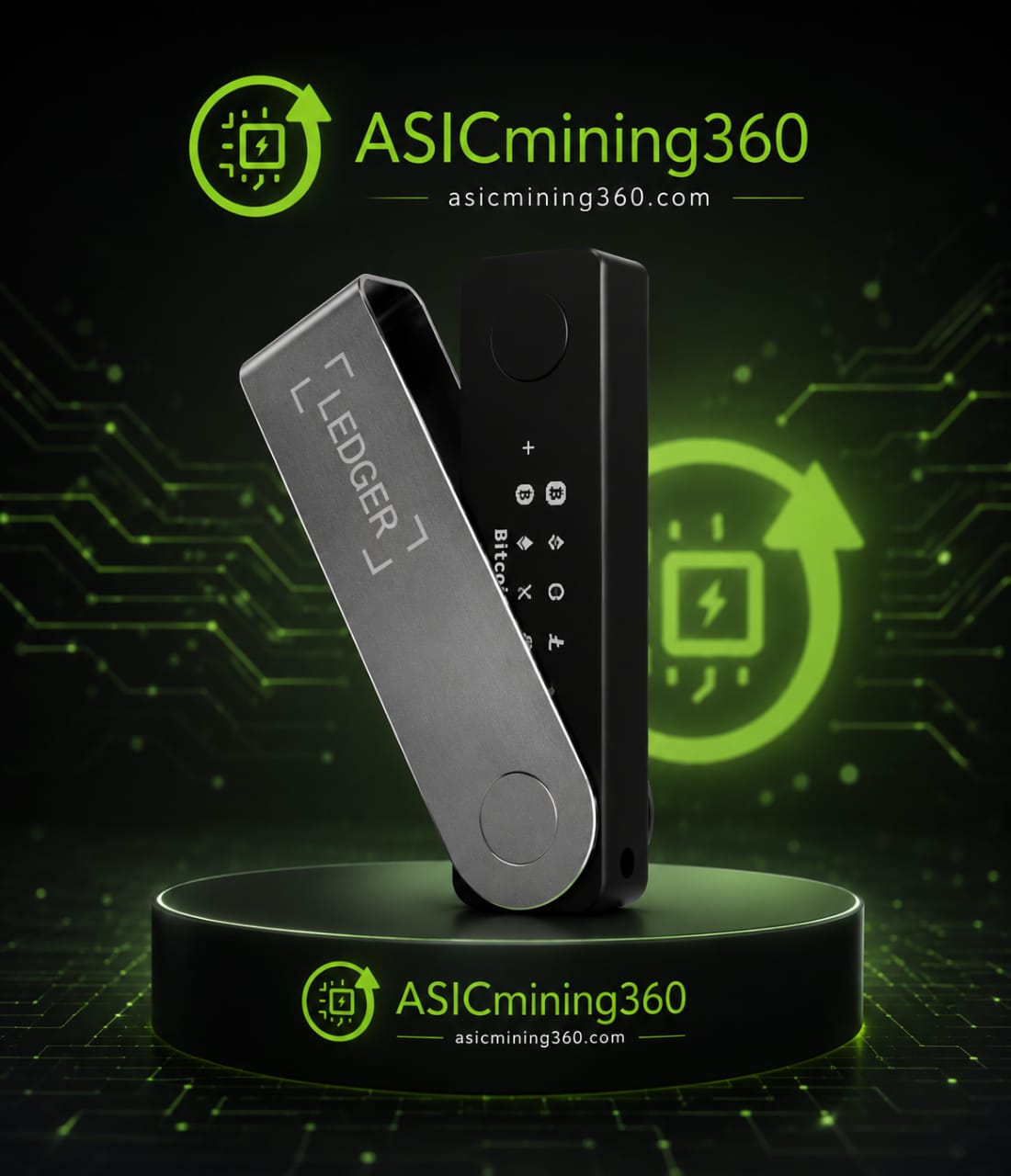
Ledger’s design philosophy is rooted in hardware-level resistance. By utilizing a Secure Element (SE), Ledger creates a specialized vault for the private key that is separate from the device’s general processor.
Key Security Strengths of Ledger’s Hardware-Level Attack Resistance
-
Physical Attack Resistance: The SE is designed to withstand fault injection and "side-channel attacks," where a hacker with physical access tries to measure power consumption or use lasers to leak the key.
-
Secure Screen Technology: Ledger’s architecture ensures that the screen you see is driven directly by the SE. This prevents malware on your computer from spoofing the address shown on the device.
-
Asset Versatility: Ledger supports over 5,500 assets, making it the most practical choice for diversified portfolios, including newer chains like Solana and various EVM L2s.
Ledger Risk Analysis: Weighing Closed-Source Firmware and Supply Chain Vulnerabilities
-
Closed Source Firmware: You are trusting Ledger’s internal audits. While they have a stellar track record, the code is not community-verifiable.
-
The "Recover" Controversy: In late 2023, Ledger introduced an opt-in firmware feature that could technically export encrypted key shards. While secure in theory, it proved that the firmware can access the private keys, which challenged the previous keys never leave the device marketing.
-
Supply Chain: Ledger's popularity makes it a prime target. Always verify the attestation through the Ledger Live app to ensure the firmware hasn't been tampered with before it reached your doorstep.
Trezor Safe Series Deep Dive: The Open-Source Standard for Crypto Hardware Security
Trezor is the OG of the space, built on the principle that security cannot exist without transparency. Their latest models, the Safe 5 and Safe 7, have finally bridged the gap by adding a secure element while maintaining their commitment to open-source code.
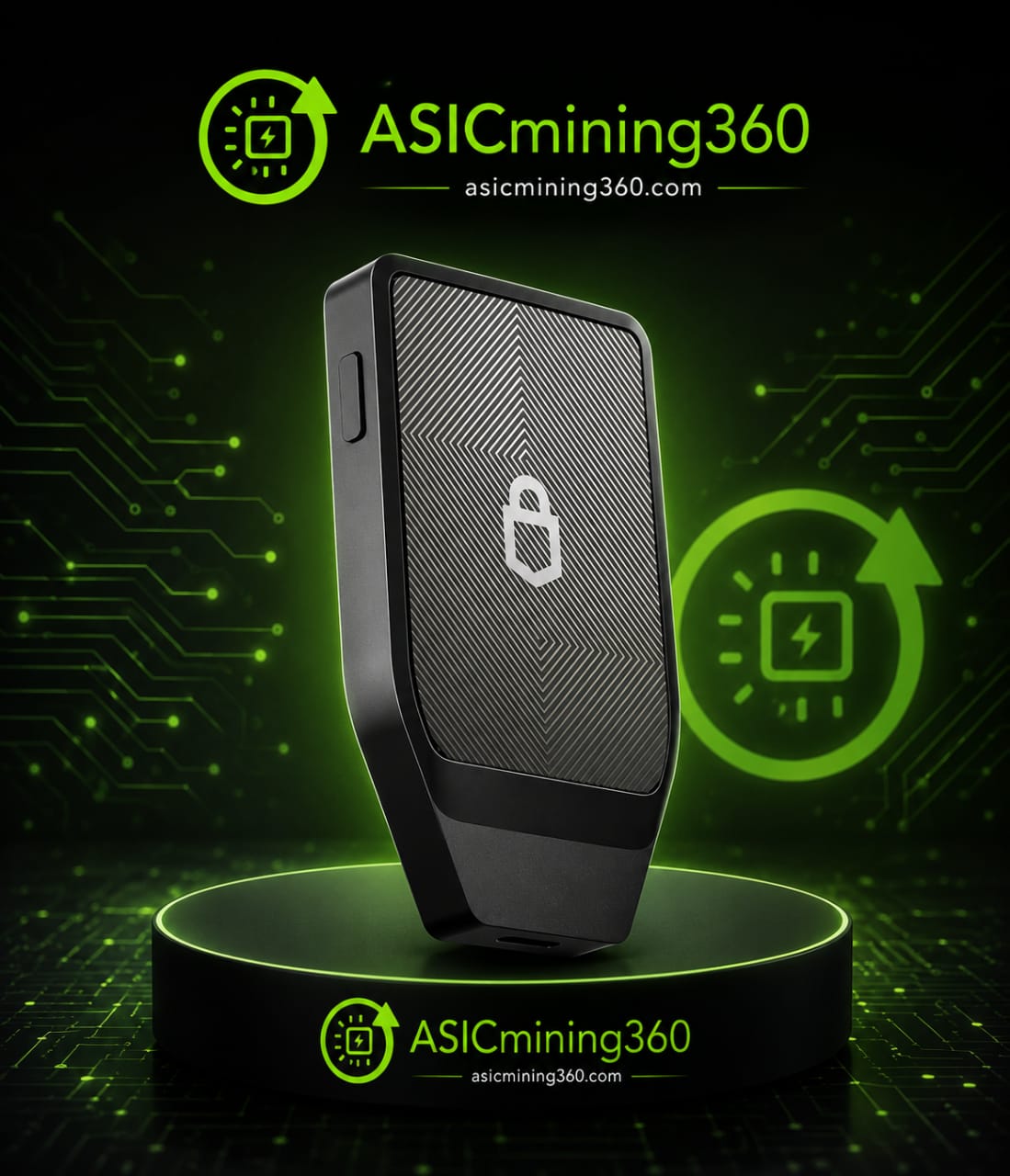
Primary Security Strengths of Trezor’s Fully Auditable Code and Shamir Backups
-
Auditability: Every line of code running on a Trezor can be audited by the public. For security maximalists, this eliminates "backdoor" fears.
-
Advanced Backups (Shamir Secret Sharing): Trezor supports SLIP-39, allowing you to split your recovery phrase into multiple "shares" (e.g., a 2-of-3 setup). This protects you if one backup location is compromised or destroyed.
-
Passphrase Entry: Entering your passphrase directly on the device’s touchscreen (rather than a keyboard) is a critical defense against keyloggers.
Trezor Risk Analysis: Assessing Physical Vulnerability History and Altcoin Limitations
-
Physical Vulnerability History: Older Trezor models (One/Model T) were susceptible to physical "glitching" attacks that could extract the seed. While the Safe 3/5/7 models use a secure element to mitigate this, the brand's legacy architecture required a passphrase for true physical safety.
-
Limited Ecosystem: While Trezor covers the heavy hitters (BTC, ETH, SOL), its native support for obscure altcoins lags behind Ledger.
-
Complexity: Features like Shamir Backup are powerful but can lead to "user-induced" loss if a beginner doesn't fully grasp the math behind the shares.
Air-Gapped vs USB Hardware Wallets: Which Connectivity Method Provides Superior Crypto Security?
In 2026, we see more "Air-Gapped" wallets using QR codes (like the Keystone or NGRAVE). While the Ledger and Trezor models we’ve discussed rely on USB or Bluetooth, are they "less safe"?
The Reality
A USB connection is not a tunnel to your keys. The hardware wallet acts as a gatekeeper; it only sends the signature back to the computer, never the key.
However, air-gapped devices do reduce the communication surface, making them slightly more resilient to highly advanced USB-based exploits.
For 99% of investors, the USB/Bluetooth models of Ledger and Trezor provide more than enough security when combined with Multisig.
Essential Operational Security (OpSec) Best Practices for Protecting Your Cold Wallet
Even the best cold wallet is a brick if your operational security is weak. As a specialist, I recommend the following:
-
Supply Chain Verification: Only purchase directly from the manufacturer. In 2026, sophisticated man-in-the-middle attacks involve intercepting packages to install malicious components. If the shrink-wrap looks suspicious, or if the device comes with a "pre-generated" seed phrase, it is compromised.
-
The "Burn-In" Test: Before moving significant funds, generate a seed, send a tiny amount, wipe the device, and recover it using your backup. If you can't recover $10, don't trust the device with $10,000.
-
Multisig for Large Portfolios: If you are securing a life-changing amount, do not rely on one device. Use a 2-of-3 multisig setup (e.g., one Ledger, one Trezor, and one software-based key like Casa or Unchained). This ensures that even a manufacturer-level exploit cannot drain your funds.
Cold Wallet Purchasing Guide: Should You Choose Ledger or Trezor for Your Crypto Portfolio?
Choose the Ledger Nano X (or Stax) if:
You prioritize a seamless mobile experience, trade a wide variety of assets (DeFi, NFTs, Altcoins), and prefer a "security by hardware" approach. It is the most user-friendly entry point into high-level security.
Choose the Trezor Safe 7 if:
You are a transparency advocate who wants a fully auditable system. If your primary goal is long-term "HODLing" of Bitcoin and Ethereum and you want the added protection of Shamir Backups, Trezor is the superior choice.
⚠️ Final Risk Note:
The hardware is only 50% of the equation. The remaining 50% is how you store your 24-word recovery phrase. Never take a photo of it, never type it into a computer, and consider a steel backup plate for fire and water resistance.
Final Verdict on Cold Wallet Security in 2026: The Real Role of User Discipline in Crypto Asset Protection
In the end, choosing a cold wallet in 2026 is not a question of which device is safer, but which set of risks you are willing to fully understand and live with.
Ledger and Trezor do not represent good versus bad security—they represent two different philosophies of trust. One relies on hardened, closed hardware designed to minimize physical attack surfaces. The other relies on transparency, where security comes from visibility and collective verification rather than secrecy.
But here is the part most users miss: the device is never the weakest link. The user is.
A perfectly designed wallet can still fail against poor operational security—compromised backups, careless storage of recovery phrases, or supply chain negligence. In contrast, a disciplined user with basic tools and strict habits can achieve a level of security that far exceeds the “spec sheet” of any device.
So the real conclusion is simple:
Cold storage in 2026 is not a product decision. It is a system design choice between technology, behavior, and discipline. And only those three working together define whether your assets are truly safe—or just technically protected.
FAQ: What the Community is Actually Asking
Q1: I keep hearing Ledger is 'backdoor' territory now. Should I smash my device?
Look, the internet loves a good panic. The drama around the Ledger Recover update was a massive PR disaster because it proved that firmware can technically touch your private keys. However, your device isn't "compromised" by default. If you don't opt into their recovery service, your keys stay put.
If you’re a "Don’t Trust, Verify" purist, you’ll probably sleep better with a Trezor. But for 95% of people, a Ledger used with common sense is still miles ahead of any exchange.
Q2: Trezor is open-source, but didn’t someone hack it with a screwdriver and a soldering iron?
You’re likely thinking of the old "glitching" attacks on the Model T. It’s true—older Trezors lacked a Secure Element chip, meaning a hacker with physical possession and a lab could extract keys.
But in 2026, the Trezor Safe 7 has fixed this. It now uses a dedicated secure chip to guard against physical tampering while keeping the firmware open-source.
The "screwdriver" era of hacking Trezors is effectively over.
Q3: Can I just buy a used one on eBay or Amazon to save $40?
This is the number one way people get drained.
Scammers are brilliant at pre-seeding wallets—they set up the recovery phrase, put a scratch-off card in the box, and wait for you to deposit life-changing money before they sweep the wallet.
In 2026, supply chain attacks are sophisticated. If the box isn't coming directly from the manufacturer’s warehouse in France or Czechia, don't trust your life savings with it.
Q4: What happens if the manufacturer goes bankrupt? Do my coins vanish?
This is the most common "newbie" fear, and the answer is a relieving No. Your coins live on the blockchain, not in the plastic device. As long as you have your 24-word recovery phrase, you can plug those words into any other wallet (even a competitor’s device or a software wallet) and your funds will reappear instantly.
You aren't married to the company; you're married to your seed phrase.