
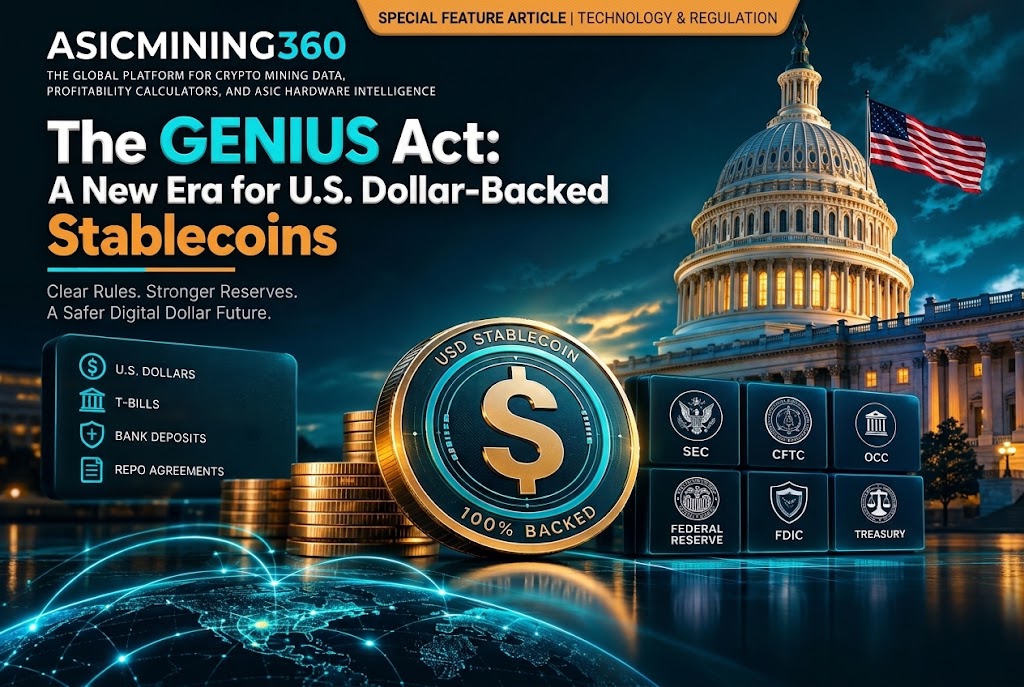
The GENIUS Act: A New Era for U.S. Dollar-Backed Stablecoins
By the end of 2025, the "Wild West" era for U.S. dollar-backed stablecoins finally hit a wall. The introduction of the GENIUS Act—formally the Guiding and Establishing National Innovation for U.S. Stablecoins Act—completely redrew the map for the industry. It wasn't just another layer of red tape; it was a massive federal overhaul designed to dictate exactly how these coins are issued and, more importantly, how their reserves are managed.
This move was a huge deal for anyone holding digital assets. For the first time, we had a clear, unified rulebook that prioritized transparency over "trust us" promises. By cleaning up market conduct and putting real teeth into investor protections, the Act aimed to fix the cracks that had been showing in the U.S. financial system for years. Essentially, it traded the old-school uncertainty for a structured environment where systemic risks are actually monitored, not just ignored.
Federal Oversight Structure Under the GENIUS Act: SEC, CFTC, and Treasury Roles in Stablecoin Regulation
The GENIUS Act is more than just a set of rules; it is a definitive structure for financial and accounting compliance. It establishes a clear division of authority between major federal entities such as the Securities and Exchange Commission (SEC) and the Commodity Futures Trading Commission (CFTC). This ensures that oversight is perfectly aligned with the nature of the stablecoin, its market volume, and its impact on both domestic and international financial stability.
The law clearly defines the categories of entities authorized to issue "payment stablecoins." It mandates that these issuers must be federally licensed, whether they are insured depository institutions (banks) or non-bank entities holding specialized federal charters. Furthermore, the Act permits foreign entities to operate within the U.S. market provided they receive approval from the U.S. Treasury, reflecting a strategic move to expand the legal digital economy while curbing the risks associated with unregulated shadow banking. Conversely, the Act strictly prohibits any unlicensed party from issuing or circulating stablecoins, with violations resulting in severe financial penalties and criminal prosecution.
100% Reserve Requirements and Transparency Rules for U.S. Dollar-Backed Stablecoins
A cornerstone of the GENIUS Act is the requirement for financial reserves. The law dictates that all issuers must back every stablecoin unit 100% with high-quality liquid assets. These assets typically include U.S. Dollars, deposits in insured banks, short-term Treasury bills, or repurchase agreements backed by Treasuries. To maintain market confidence, the Act enforces mandatory, periodic, and transparent public disclosures of these reserves. This level of transparency is designed to ensure value stability and prevent "bank runs" or liquidity crises that could harm the broader financial ecosystem.
Dual Federal and State Regulatory Model: Tiered Oversight and Compliance Standards
The Act introduces a tiered oversight model based on the scale of the issuer. Large-scale issuers with over $10 billion in circulation are subject to full federal supervision. Meanwhile, the law allows individual U.S. states to regulate smaller entities, provided their state-level standards are equivalent to federal rules and approved by a specialized committee. This balance creates a flexible environment that accommodates various institution sizes. Additionally, all issuers are classified as financial institutions, requiring strict adherence to Anti-Money Laundering (AML) and Know Your Customer (KYC) protocols to prevent illicit activities and enhance market integrity.
Consumer Protection, Legal Classification, and Stablecoin Exemption from Securities Laws
The GENIUS Act strengthens consumer protection by requiring full transparency regarding redemption mechanisms, fee structures, and operational risks. It also establishes legal safeguards in the event of issuer insolvency and prohibits misleading branding that could imply government guarantees.
Implementation Timeline and Enforcement Authorities: OCC, Federal Reserve, FDIC, and Treasury
The GENIUS Act kicks off once the president signs it. First, we'll create clear rules for licensing and reserves, starting with registration for qualifying groups, followed by regular checks.
About a year or two after the law is active, we'll assess its impact on financial innovation and stability.
| Phase | Period | Key Developments | Market Impact |
|---|---|---|---|
| Regulatory Pressure Emerges | 2022 – 2023 | Post-crypto crisis environment leads to increased scrutiny on stablecoins and systemic risk discussions in U.S. Congress. | Rising demand for federal regulation |
| Early Legislative Discussions | 2023 – 2024 | Debates over classification, oversight (SEC vs CFTC), and stablecoin definitions begin shaping draft proposals. | Regulatory uncertainty persists |
| GENIUS Act Proposal | Q1 2025 | Introduction of a structured federal framework targeting payment stablecoins and reserve transparency. | Positive signal for institutional adoption |
| Legislative Refinement | Q2 – Q3 2025 | Inclusion of 100% reserve requirement, AML/KYC compliance, and dual federal-state regulatory model. | Improved investor confidence |
| Legislative Approval Phase | Late 2025 | Finalization and adoption of the framework by U.S. lawmakers (subject to formal enactment procedures). | Regulatory clarity established |
| Initial Implementation | 2026 | Launch of licensing processes, reserve audits, and federal oversight by key agencies. | Institutional entry accelerates |
| Market Integration Phase | 2026 – 2027 | Stablecoins integrate deeper into financial systems with regulatory monitoring and performance evaluation. | Expansion of regulated digital dollar economy |
Market Impact: Winners and Losers
-
Winners:
-
Regulated stablecoins
-
Banks
-
Institutional investors
-
-
Losers:
-
Offshore stablecoins
-
Unregulated issuers
-
Algorithmic coins
-
This timeline reflects a policy-driven evolution based on legislative proposals and regulatory trends. Actual implementation timelines may vary depending on final enactment and agency-level execution.
Several bodies will work together to implement the Act:
The OCC will handle licensing for bank issuers. The Federal Reserve will watch for systemic risks and liquidity. The FDIC will protect deposits tied to approved stablecoins. The Treasury will manage foreign approvals and financial crime enforcement. The SEC and CFTC will ensure stablecoins follow market conduct rules.
Conclusion: Why the GENIUS Act Sets a New Benchmark for Stablecoin Regulation in the United States
The GENIUS Act is an important first move toward managing the digital asset market in our country. The United States is really setting a new benchmark for stablecoin regulation. They're doing this by focusing on investor protection and making sure reserves are transparent. This clarity, along with established federal and state control, puts the American market forward in digital financial dealings.
FAQ: U.S. GENIUS Act and Stablecoin Regulation
Q1: What is the GENIUS Act in simple terms?
The GENIUS Act is the first comprehensive federal law in the United States specifically designed to regulate U.S. Dollar-backed stablecoins. It establishes clear rules for licensing, reserve backing, oversight, and consumer protection.
Q2: Does the GENIUS Act require stablecoins to be fully backed?
Yes. The law requires that every stablecoin unit be backed 100% by high-quality liquid assets such as U.S. Dollars, insured bank deposits, short-term Treasury bills, or Treasury-backed repurchase agreements.
Q3: Are stablecoins considered securities under the GENIUS Act?
No. Stablecoins that comply with the Act’s requirements are exempt from being classified as securities or commodities, reducing regulatory uncertainty from the SEC and CFTC.
Q4: Who regulates stablecoin issuers under the GENIUS Act?
Regulation depends on the size and structure of the issuer. Federal agencies such as the SEC, CFTC, OCC, Federal Reserve, FDIC, and the U.S. Treasury share oversight responsibilities. Large issuers fall under full federal supervision, while smaller ones may be regulated at the state level if standards match federal requirements.
Q5: Can foreign stablecoin issuers operate in the U.S.?
Yes, but only with approval from the U.S. Treasury. Foreign entities must meet federal standards to legally issue or circulate stablecoins in the U.S. market.
Q6: How does the GENIUS Act protect stablecoin users?
The Act requires transparent disclosure of redemption policies, fees, and reserve backing. It also provides legal protection if an issuer fails and prohibits misleading branding that suggests government backing.
Q7: Why is the GENIUS Act important for financial markets?
The law reduces systemic risk, increases transparency, and creates regulatory clarity. This strengthens investor confidence, supports financial innovation, and positions the United States as a global leader in stablecoin regulation.