
Introduction: How Flash Crashes Create Bitcoin Buying Opportunities
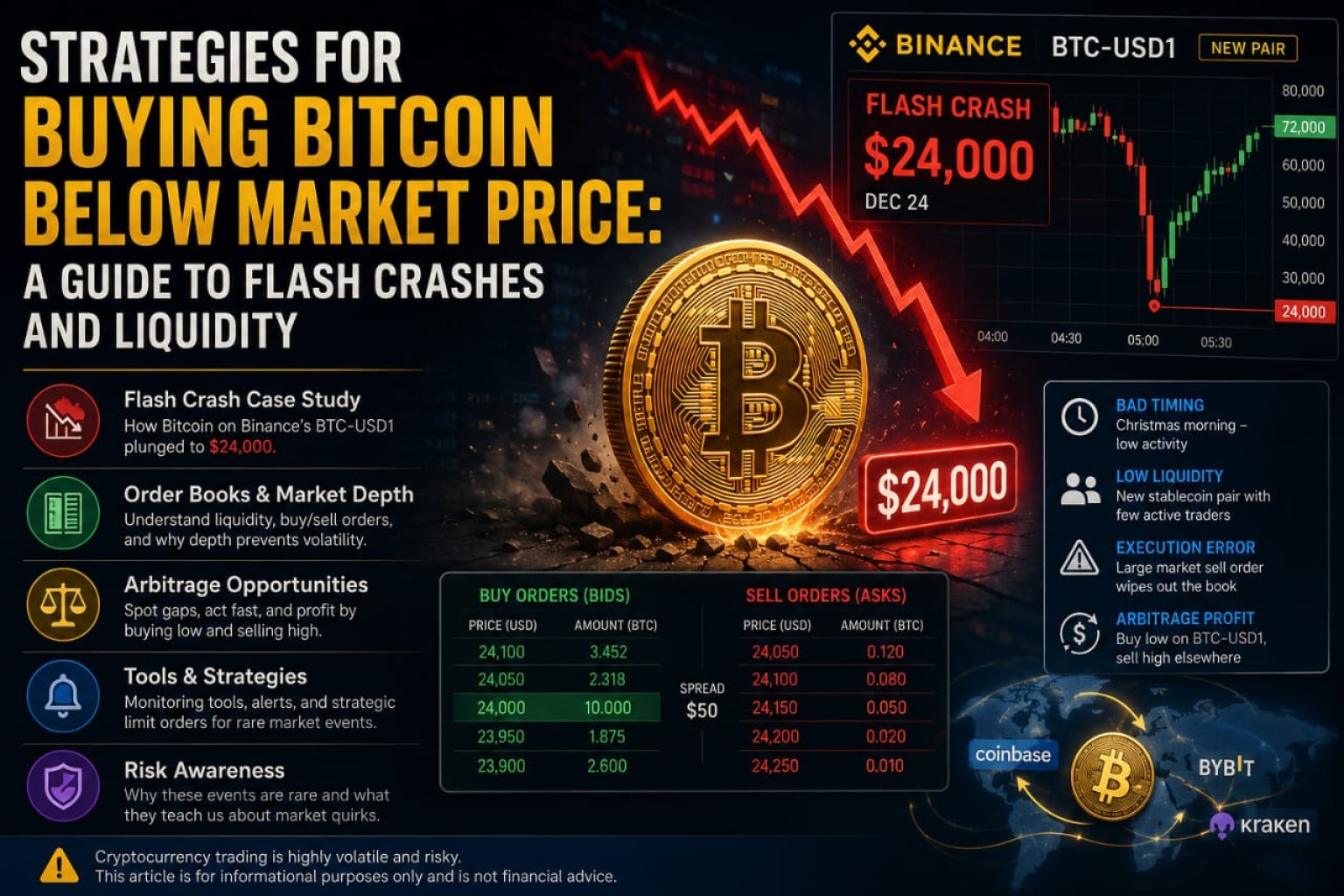
On December 24th, some traders got super lucky and bought Bitcoin for just $24,000 when it was actually worth three times that. About 70% of 1,040 BTC was snapped up by these folks who were in the right spot at the right moment. And get this: it wasn't even complicated; even new traders could have joined in if they were quick enough.
Binance Bitcoin Flash Crash Explained: What Happened and Why
Here's the scoop:
This all went down on Binance, the biggest crypto exchange out there, which usually has tons of trades happening. But this wasn't on the usual trading pairs like BTC/USD or BTC/EUR. Nope. It was on a new pair called BTC-USD1, using a stablecoin that had only been around for about 3-4 weeks.
The Role of Low-Liquidity Trading Pairs
The big problem was that BTC-USD1 didn't have many active trades. On a pair like BTC-USDT, you'd need to buy or sell 30-40 million euros worth of Bitcoin to move the price by just 2%. But with BTC-USD1, there were so few orders that even one big sell could tank the price without messing with Bitcoin's price anywhere else. And that's exactly what happened: while BTC-USD1 tanked to $24,000, Bitcoin's price on other major pairs stayed normal.
Understanding Bitcoin Order Books, Market Depth & Liquidity
To get why this happens, you need to understand how an order book works:
How Buy and Sell Orders Function
- Buy orders are on the left (people wanting to buy).
- Sell orders are on the right (people wanting to sell).
A trade happens instantly when a buyer and seller agree on a price. If not, the order just waits. The pricing you usually see is the average of the highest buy and lowest sell offers.
Why Market Depth Prevents Volatility
Usually, the further you get from the current price, the more orders pile up. This is what makes a market deep. In busy markets, big orders don't cause huge price shifts. But BTC-USD1 was thin and easily affected. A huge order could just wipe out all the buy orders, sending the price way down.
Why Bitcoin Prices Crash: Causes of Sudden Market Drops
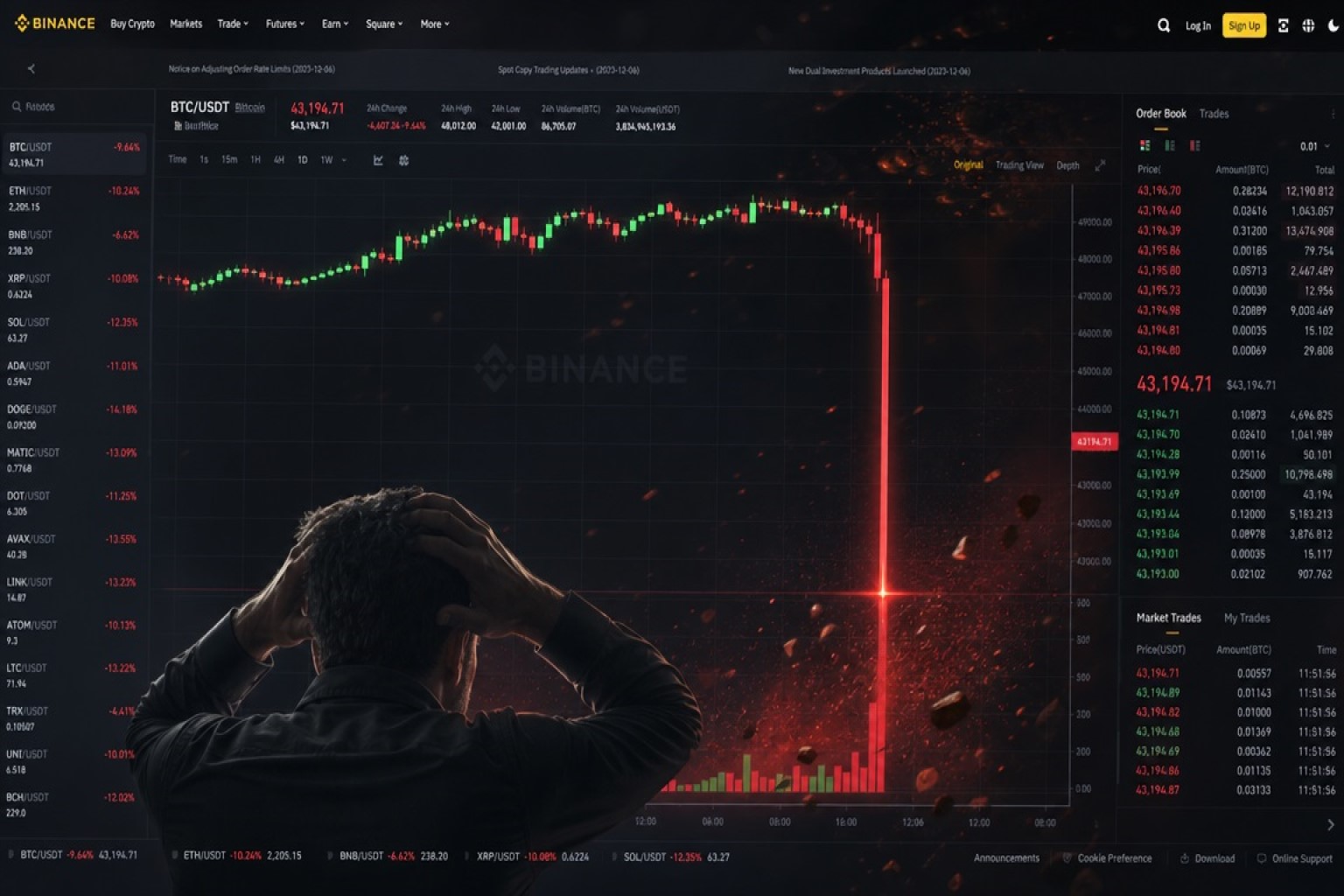
That's precisely what happened on December 24th. Someone made a massive market sell order, not a limit order. This means they sold everything right away, accepting whatever buyers were willing to pay. Think of it like someone selling hundreds of iPhones, starting at €900, then €850, €800, and so on, until all are gone. This causes a quick price crash. For BTC-USD1, that crash took it all the way down to $24,000.
Traders who were watching this pair, or had orders ready, could instantly grab Bitcoin at an amazing price. Within minutes, as more buyers jumped in, the price went back to normal. Many of those traders then sold their newly bought Bitcoin on other platforms at the regular market price, turning a few thousand dollars into huge profits.
How to Identify Bitcoin Liquidity Gaps for Better Trade Entries
Why did this all happen at that specific time?
-
Low Liquidity: Not many trades on a new stablecoin pair.
-
Timing: It was Christmas morning, so most investors weren't online.
-
Market Buzz: USD1 is linked to a project that gets a lot of talk, but that didn't change how the trading mechanics worked.
-
Execution Error: Looks like the seller messed up. They likely didn't see how big their order was compared to how few trades were happening for that item. That's probably why the price suddenly crashed.
Bitcoin Arbitrage Strategies: How to Profit from Price Differences
If you're looking for chances like this:
-
Spotting Gaps: You could buy Bitcoin for way cheaper than its actual price on these less busy pairs.
-
Arbitrage Execution: Then, you can sell it at the regular price on other platforms for a nice profit.
-
Monitoring Tools: Use tools and alerts to quickly spot weird price movements.
-
Strategic Limit Orders: Set up orders beforehand on these vulnerable pairs. That way, if a big sell or other odd event happens, you can act within seconds.
It's also worth noting that these events, though rare, show where new or less active markets are weak. They don't happen on popular pairs like BTC-USDT because there's so much trading going on that one person can't move the price that much.
Final Thoughts on Market Quirks
The December 24th event was a good reminder: new stablecoins, slow trading, and weird market timings can actually open up some neat opportunities. Folks who are prepared, react fast, and are really watching things can use these quick market quirks to make some good money. For everyone else, they just get to see the market smooth itself out again.