Introduction: Why Self-Custody and Hardware Wallet Security Matter in 2026
In 2026, keeping your crypto on an exchange is no longer a risk—it’s a liability. We're looking at tougher rules in the U.S., more big players getting involved, and attacks becoming much more clever. This means that serious investors really need to take self-custody seriously. Hardware wallets are still the best way to keep your digital assets safe. The SafePal S1 keeps proving itself to be one of the most affordable cold wallets out there, offering excellent security.
I've had the chance to try out quite a few hardware wallets over time, from older established models like Ledger and Trezor to some of the newer air-gapped ones. The SafePal S1 really stands out in a particular area: it provides top-tier offline security and keeps its price low, all without making things too complicated.
About SafePal: Company Background, Binance Backing, and Ecosystem Strategy
SafePal began in 2018 in Singapore. Its main goal is to make sure that anyone can safely manage their own cryptocurrency. Being supported early on by Binance helped its growth, even though SafePal works as an independent business.
Unlike brands that focus solely on hardware, SafePal built a full ecosystem consisting of:
- Hardware wallets (S1, S1 Pro, X1)
- A multi-chain mobile app
- Integrated DeFi, NFT, and DApp access
This ecosystem approach is important in 2026, as users increasingly expect cold wallets to interact safely with modern Web3 applications.
Design and Build Quality: Compact, Lightweight, and Fully Air-Gapped by Design
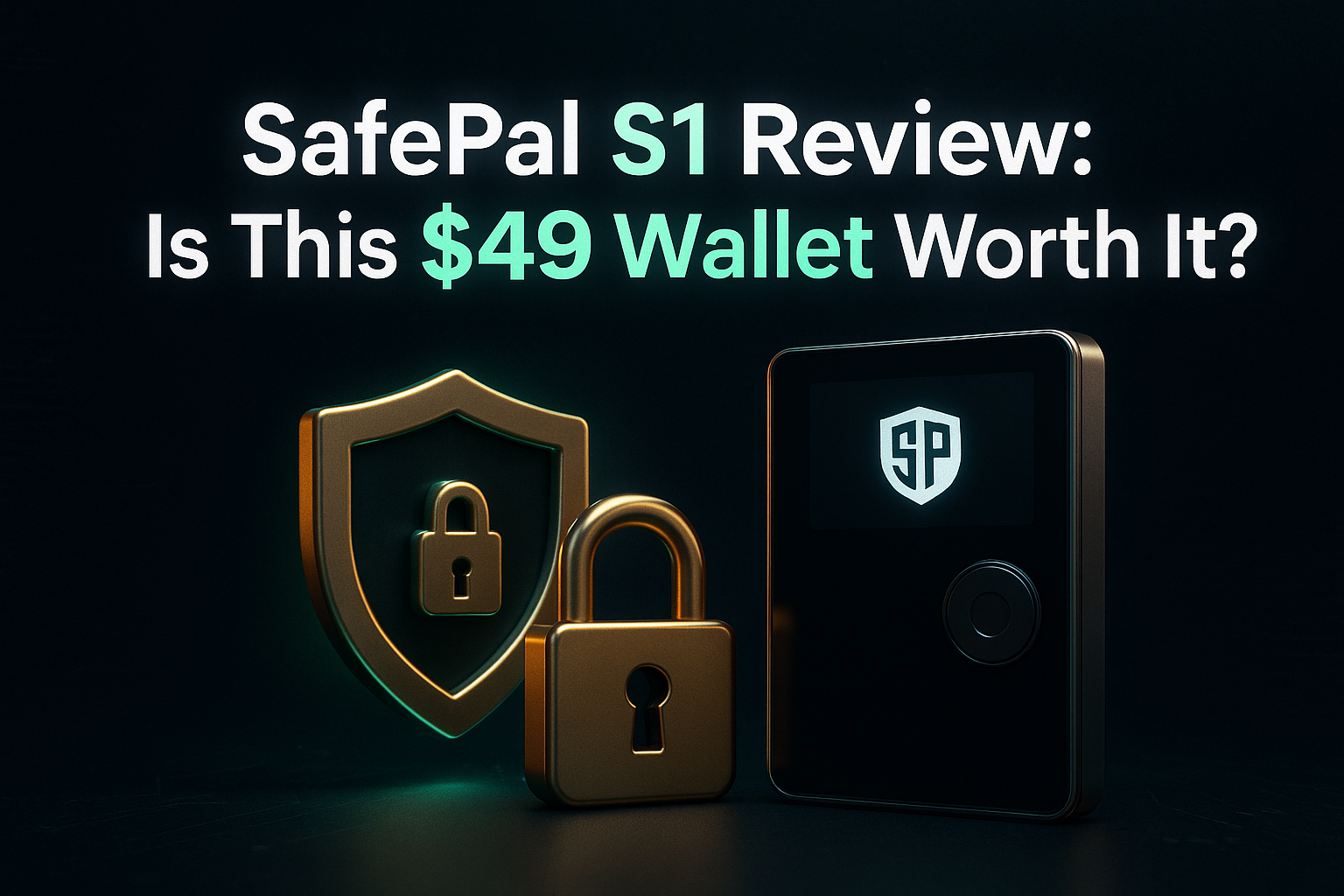
The SafePal S1 follows a credit-card-sized design, weighing only about 38 grams, making it one of the most portable hardware wallets on the market. It features:
- A 1.3-inch IPS color display
- A built-in camera for QR code scanning
- No USB, Bluetooth, NFC, or Wi-Fi modules
From a security engineering perspective, this minimalist design is intentional. Fewer components mean a smaller attack surface. While the plastic body does not feel “premium” like metal-cased wallets, it aligns with SafePal’s goal: security first, cost efficiency second.
Security Architecture Explained: Air-Gapped QR Transactions and EAL 5+ Secure Element
Security is the S1’s strongest selling point. This wallet is designed with air-gapped security, meaning it won't connect to other devices, physically or wirelessly. You sign all transactions offline with QR codes, which really helps reduce the chance of remote attacks.
Here are some important security features:
- It uses an EAL 5+ Secure Element, the same kind of certification you see in banking and government hardware.
- There's an anti-tampering self-destruct feature that wipes sensitive data if someone tries to physically mess with the device.
- Firmware authentication keeps any old or unauthorized firmware from being installed.
- All key generation and storage happen offline, so your private keys never actually leave the device.
While Kraken Security Labs identified vulnerabilities in early firmware versions back in 2021, those issues were patched years ago. As of 2026, no real-world theft of funds from a properly updated SafePal S1 has been documented.
Supported Coins, Tokens, NFTs, and DeFi Compatibility
The SafePal S1 supports:
- 30,000+ tokens
- 100+ blockchains
- Major assets like BTC, ETH, SOL, BNB, XRP
- ERC-20, BEP-20, SPL, and other standards
NFT support across Ethereum, BSC, Polygon, Solana, and TON is fully integrated via the SafePal App, allowing users to sign NFT transactions securely while keeping keys offline.
For DeFi users, the S1 functions as a secure signing device while interacting with DApps—something that was rare at this price point just a few years ago.
Price Analysis (2026): Pros and Cons of the $49 SafePal S1
At a glance, SafePal S1 clearly sacrifices convenience for maximum isolation and affordability.
| Feature | SafePal S1 | Ledger | Trezor |
|---|---|---|---|
| Security Type | Air-Gapped (QR) | USB / Bluetooth | USB Only |
| Connectivity | ❌ None | USB + Bluetooth | USB |
| Secure Element | EAL 5+ | EAL 5+ | ❌ No (Open Source) |
| Ease of Use | Medium | Easy | Easy |
| Mobile App | ✅ Yes | ✅ Yes | ⚠️ Limited |
| NFT & DeFi Support | ✅ Strong | ✅ Strong | ⚠️ Moderate |
| Build Quality | Plastic | Premium | Premium |
| Price (2026) | $49 | $149+ | $79–$219 |
| Best For | Max Security / Low Cost | Convenience + Ecosystem | Open-source lovers |
Pros – What SafePal S1 Does Well
- Fully isolated design with no physical or wireless connections
- EAL 5+ secure element
- Strong multi-chain and NFT support
- Extremely competitive price
- Lightweight and travel-friendly
Cons
- No direct USB or Bluetooth (less convenient for some)
- Requires recharging
- Slight learning curve for absolute beginners
- Plastic build may feel basic
| Specification | Details |
|---|---|
| Wallet Type | Air-Gapped QR Code Signing Hardware Wallet |
| Connectivity | No USB • No Bluetooth • No NFC • No Wi-Fi |
| Display | 1.3-inch IPS Color Screen |
| Camera | Built-in Camera for Secure QR Scanning |
| Secure Element | EAL 5+ Certified Secure Chip |
| Key Storage | Offline Generation & Storage (Keys Never Leave Device) |
| Anti-Tamper Protection | Self-Destruct Mechanism with Automatic Data Wipe |
| Supported Assets | 30,000+ Tokens • 100+ Blockchains |
| Major Coins |
BTC
ETH
SOL
BNB
XRP
|
| NFT Support | Ethereum • BSC • Polygon • Solana • TON (via SafePal App) |
| DeFi & DApps | Supported via SafePal App (Offline Signing) |
| Weight | ~38 grams |
| Build Material | Lightweight Polycarbonate (Plastic) |
| Price (2026) | $49 |
Final Verdict: Who Should Buy the SafePal S1 Hardware Wallet?
In 2026, the SafePal S1 is not trying to compete with premium wallets—and that’s exactly why it succeeds.
It is ideal for:
- Beginners entering self-custody
- Long-term holders prioritizing security over convenience
- Investors seeking a low-cost backup cold wallet
- Users who want NFT and DeFi access without hot-wallet risk
If your priority is maximum offline security at the lowest possible cost, the SafePal S1 remains one of the smartest hardware wallet purchases available today.
FAQ: SafePal S1 (2026) – Common Questions Answered
Q1: Is the SafePal S1 really secure in 2026?
Yes. The SafePal S1 uses a fully air-gapped architecture, meaning it has no USB, Bluetooth, Wi-Fi, or NFC connections. Transactions are signed offline using QR codes, and it includes an EAL 5+ secure element and anti-tamper mechanisms. When updated properly, it remains one of the most secure budget hardware wallets available.
Q2: What coins and tokens does the SafePal S1 support?
The SafePal S1 supports 30,000+ tokens across 100+ blockchains, including major assets like BTC, ETH, SOL, BNB, and XRP. It also supports ERC-20, BEP-20, SPL tokens, and NFT standards across Ethereum, BSC, Polygon, Solana, and TON through the SafePal App.
Q3: Does the SafePal S1 support NFTs and DeFi?
Yes. Through the SafePal mobile app, users can securely sign NFT transactions and interact with DeFi DApps while keeping their private keys offline. The device acts as a secure signing tool, reducing hot-wallet exposure risks.
Q4: Is the SafePal S1 good for beginners?
The SafePal S1 is suitable for beginners entering self-custody, especially those who prioritize security and affordability. While there is a slight learning curve due to QR-based signing, the mobile app interface helps simplify the experience.
Q5: Is $49 too cheap for a secure hardware wallet?
Price does not automatically determine security. The SafePal S1 reduces costs by using a plastic build and eliminating connectivity modules, not by compromising core security architecture. Its air-gapped design and secure element certification make it a strong value option at this price point.
Q6: How does the SafePal S1 compare to Ledger or Trezor?
Compared to Ledger and Trezor, the SafePal S1 focuses on air-gapped QR-based security instead of USB or Bluetooth connectivity. It may be less convenient but offers stronger isolation from remote attacks. It is also significantly more affordable, making it attractive as a primary or backup cold wallet.