The Future of Bitcoin Mining in 2026
Let’s be clear: in 2026, the future of Bitcoin mining is no longer just about efficiency—it’s about infrastructure.
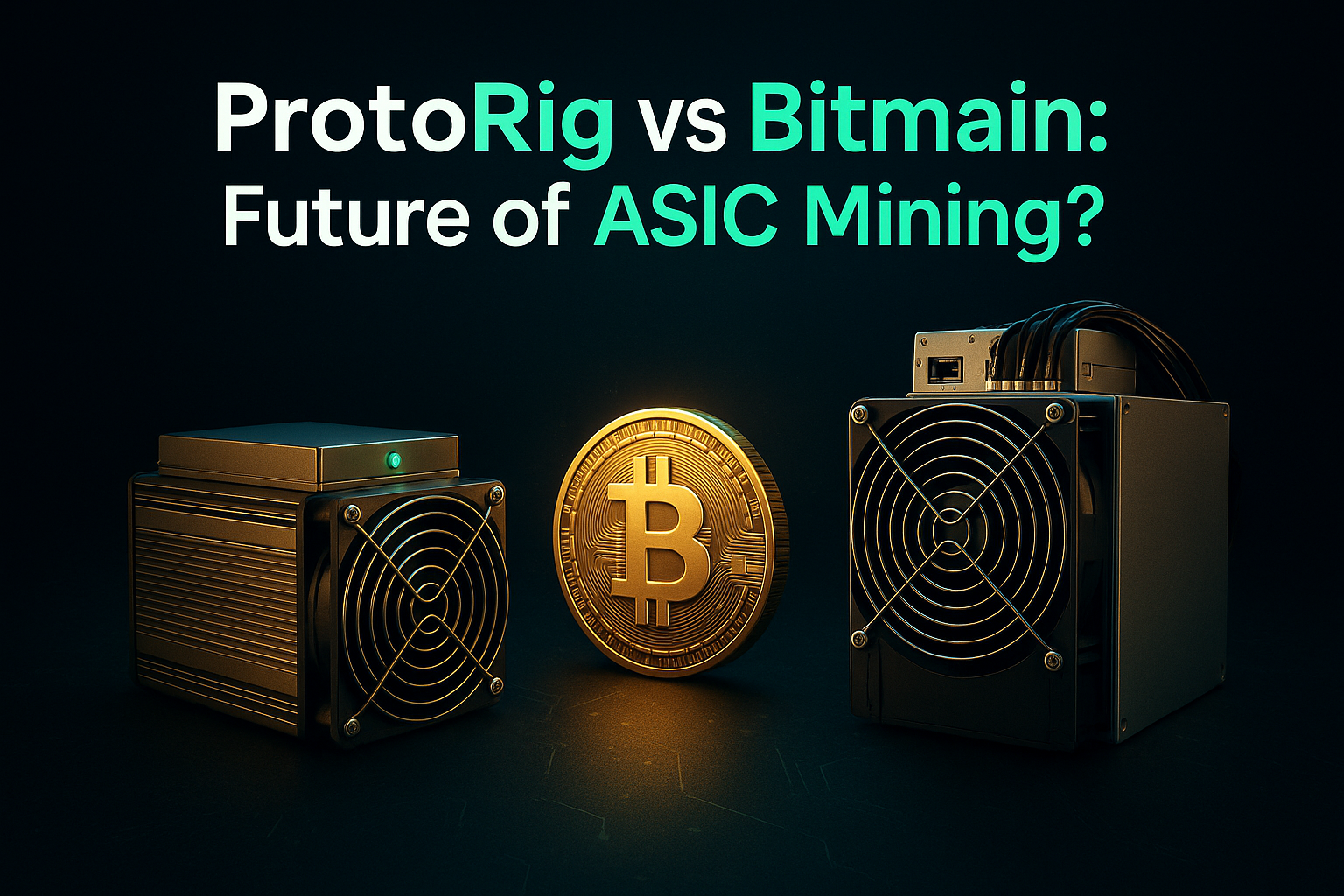
The battle is no longer Bitmain vs competitors. It’s short-term hardware vs long-term systems. The Bitcoin mining sector is currently witnessing a historic confrontation between raw power and operational intelligence. Jack Dorsey, through his company Block, has officially entered the arena with the ProtoRig device. Most trusted vendors and websites are noting that this manufacturer is relatively new, and the verification process for its work is still incomplete due to a lack of information; however, this statement is expected to be removed soon. This is not just another ASIC mining device; it is a radical shift from "disposable" hardware to a 10-year infrastructure model. While giants like Bitmain continue to push the boundaries of electrical efficiency, ProtoRig is betting on modular design, open-source software, and long-term sustainability to win the market.
ASIC Efficiency vs Power Density: How ProtoRig Competes With Bitmain Miners
There is a lot of buzz regarding technical specifications. Dorsey claims that the ProtoRig operates at an efficiency of 14.1 Joules per Terahash (J/TH).
The Efficiency Gap Between ProtoRig and Bitmain ASIC Miners
The Efficiency Gap: Critics and mining specialists point out that Bitmain devices, such as the Antminer S21 Pro or the new S23 series, achieve much better efficiency, ranging from 9.5 to 11 J/TH. (Note: The S23 series belongs to the 9th generation of ASIC Bitcoin miners).
Power Density Advantage: Packing More Hashrate Into Mining Racks
The Counter-Argument: ProtoRig focuses on Power Density. By delivering a massive power of 819 TH/s with a consumption of 12,000 watts, it places the power of three old devices into the space of only two. This 1.5x increase in power density allows industrial miners to increase current rack capacity without the need for costly facility modifications, which is a remarkable achievement.
Modular Bitcoin Mining Hardware: The 90-Second Repair Concept
One of the most revolutionary features of ProtoRig is its modular design, engineered by former Apple engineers. Traditional mining devices are known for long periods of downtime; if a hashboard fails, the entire unit must often be shipped to a repair center, leading to weeks of lost profits.
ProtoRig solves this problem with a "Pull and Replace" philosophy:
Modular Hashboard Architecture for Continuous Mining
Modular Hashboard System: The device contains 8 to 9 independent motherboards. If one fails, the others continue to work, and the device will not go out of service.
Tool-Free On-Site ASIC Repair in Under 90 Seconds
Tool-free Repair: You can replace the faulty board on-site in less than a minute and a half without the need for a technical specialist or a repair technician—on your own, using tools available in your maintenance kit.
Lower Operational Costs and Reduced Downtime
42% Cost Savings: By eliminating shipping costs for repairs and significantly reducing downtime, operators can save up to 42% in operational losses compared to legacy systems.
Mining Profitability Analysis: ProtoRig Hashrate and Solo Mining Potential
The high hash rate of a single ProtoRig unit (819 TH/s) changes the calculations for small and medium-sized miners.
Estimated Daily Bitcoin Mining Profitability
Daily Profits: At standard electricity prices ($0.08 per kWh), a ProtoRig device generates about $35 worth of Bitcoin daily. After deducting electricity costs of $24, the net profit stands at $11. In comparison, an S23 device achieves a net profit of approximately $4.80, according to the profitability calculator on our website, ASICMINING360. This means you would need approximately three S23 devices to match the daily profit of one ProtoRig.
Solo Mining Probability and Block Reward Opportunity
Solo Mining Lottery: ProtoRig provides a 1 in 22 annual chance to mine an entire Bitcoin block solo. If you own 10 devices, your odds jump to 1 in 3. This makes the device a true "lottery ticket" for miners chasing the block reward of 3.125 BTC, which at today's price is nearly $300,000.
Open-Source Mining Software and 10-Year Hardware Lifecycle
Historically, ASIC devices are considered "waste" after 3 to 5 years. However, Jack Dorsey's team designed ProtoRig to be an asset that lasts for 10 years.
Upgradeable Hashboards and Long-Term Mining Infrastructure
Future Proofing: Instead of replacing the entire device when a new chip appears, you simply buy and install new hashboards. This reduces upgrade costs by 15-20% in each cycle.
Proto Fleet: Open-Source Mining Management Software
"Proto Fleet" Software: Unlike proprietary software that costs thousands of dollars in licensing fees, the "Proto Fleet" software from Block is free and open-source, allowing for total transparency and saving large-scale mining farms tens of thousands of dollars.
U.S. Manufacturing Advantage: Why ProtoRig Appeals to American Mining Farms
For miners based in the United States, ProtoRig is a strategic force. Being manufactured locally means:
- Avoiding Import Tariffs on Chinese Mining Hardware
Zero Tariffs: Avoiding the 25% import tax often imposed on devices manufactured in China.
- Faster Logistics and Supply Chain Stability
Local Logistics: No international shipping delays or unexpected customs costs.
- ESG-Friendly Bitcoin Mining and Reduced Electronic Waste
Sustainable Mining: By reducing electronic waste through modular upgrades, it meets the growing demand for "green" mining operations that comply with Environmental, Social, and Governance (ESG) standards.
Final Analysis: Should Bitcoin Miners Choose ProtoRig or Bitmain?
ProtoRig is intended for the miner who thinks like an infrastructure investor. If you want a device that is easy to repair, stays on your racks for a decade, and provides a higher chance for solo mining glory, Dorsey’s vision is second to none. However, if your only concern is getting the lowest possible electricity bill per terahash, Bitmain’s hydro-cooling series remains a strong specialized alternative.
In a market where hardware becomes obsolete in years, the real question is simple: are you buying a machine—or building an infrastructure?
FAQ: ProtoRig vs Bitmain Bitcoin Mining Hardware
Q1: What is ProtoRig and who developed it?
ProtoRig is a new Bitcoin ASIC mining device developed by Jack Dorsey’s company Block. Unlike traditional mining hardware designed for short lifecycles, ProtoRig focuses on modular infrastructure, open-source management software, and a long-term 10-year operational model intended to reduce maintenance costs and electronic waste.
Q2: How efficient is ProtoRig compared to Bitmain miners?
ProtoRig operates at around 14.1 J/TH, while Bitmain devices like the Antminer S21 Pro and S23 series typically achieve between 9.5 and 11 J/TH. Although Bitmain currently leads in pure energy efficiency, ProtoRig emphasizes higher power density and infrastructure optimization rather than only electrical efficiency.
Q3: What makes ProtoRig’s modular design important for mining farms?
ProtoRig uses a modular hashboard architecture where individual boards can be removed and replaced in under 90 seconds. This significantly reduces downtime compared to traditional ASIC miners that often require full device repair or shipment to service centers when a single component fails.
Q4: Is ProtoRig profitable for Bitcoin mining?
According to the scenario described in the article, a ProtoRig unit generating 819 TH/s could produce about $35 in daily Bitcoin revenue at $0.08 per kWh electricity costs. After subtracting power costs, the estimated net daily profit is around $11, although actual profitability depends on Bitcoin price, mining difficulty, and electricity rates.
Q5: Can ProtoRig improve solo Bitcoin mining chances?
Yes. With a hashrate of 819 TH/s per device, ProtoRig significantly increases the probability of finding a block when solo mining. The article suggests roughly a 1 in 22 annual probability for a single unit, making it attractive for miners interested in high-reward solo mining opportunities.
Q6: Why is ProtoRig attractive for U.S. Bitcoin mining companies?
ProtoRig is manufactured in the United States, which allows mining operators to avoid import tariffs applied to Chinese ASIC hardware. Local production also improves logistics, reduces delivery delays, and supports regulatory compliance for ESG-focused mining operations.
Q7: How long is ProtoRig designed to last?
ProtoRig is designed as a long-term mining infrastructure platform with an expected operational life of around 10 years. Instead of replacing the entire machine, miners can upgrade individual hashboards as new chip generations become available, extending hardware lifespan and lowering capital expenditure.
Note: Mining profitability figures mentioned in this article are approximate and may not reflect real-time results. Cryptocurrency prices and network difficulty change continuously, while electricity costs remain relatively fixed. Because of these fluctuations, actual mining income can vary significantly. For the most accurate and updated profitability estimates for each mining device, we recommend using the profitability calculator available on our website, which analyzes current network data, electricity costs, and hardware performance.