The Current Landscape of Decentralized Ledger Technology
The current landscape of decentralized ledger technology (DLT) is undergoing a structural transformation. We are moving past the simple settlement phase of blockchain—where moving value from point A to B was the primary goal—and entering an era of high-utility, mission-critical infrastructure. As a practitioner who transitioned from the centralized architectural constraints of Meta (formerly Facebook) to the decentralized frontier with Mysten Labs and the Sui Network, I’ve seen firsthand how the requirements for security, privacy, and scalability have evolved.
In 2026, the industry is no longer just fighting for adoption; it is fighting for longevity. We are staring down the dual-ended barrel of Quantum Computing and the explosive growth of Agentic AI. For the professional investor and the global technologist, understanding the cryptographic engine under the hood is no longer optional—it is a prerequisite for risk management.
Modern Cryptography Architecture in 2026: The Three Pillars (E2EE, ZK, and PQC)
To understand where we are going, we must define what a cryptographer actually does. Derived from the Greek kryptós (secret) and gráphein (to write), cryptography is the science of secure communication. In 2026, this has expanded into three distinct technical domains:
End-to-End Encryption (E2EE) and Data Sovereignty in Wallets
Most users interact with encryption daily via WhatsApp or Signal. These systems utilize Public Key Infrastructure (PKI), where your device generates a private key that never leaves the hardware. While the 2014 acquisition of WhatsApp by Facebook raised eyebrows, the mathematical reality remains: if the keys are local, the intermediary cannot read the message. However, the next step is decentralized encryption.
- The Progress: We are integrating E2EE directly into wallet addresses. This allows for private receipts and on-chain messaging that satisfies AML (Anti-Money Laundering) audits without exposing your entire purchase history to the public.
Zero-Knowledge Proofs (ZK): Selective Disclosure for Institutions and Users
Privacy is often misunderstood as secrecy. In 2026, privacy is selective disclosure. Using Zero-Knowledge Proofs, a user can prove they are over 21 or have a specific credit score without revealing their birthdate or bank balance.
- The Utility: This is essential for the Super App evolution. It allows for the integration of traditional finance (TradFi) with on-chain liquidity while maintaining the privacy standards required by institutional regulators.
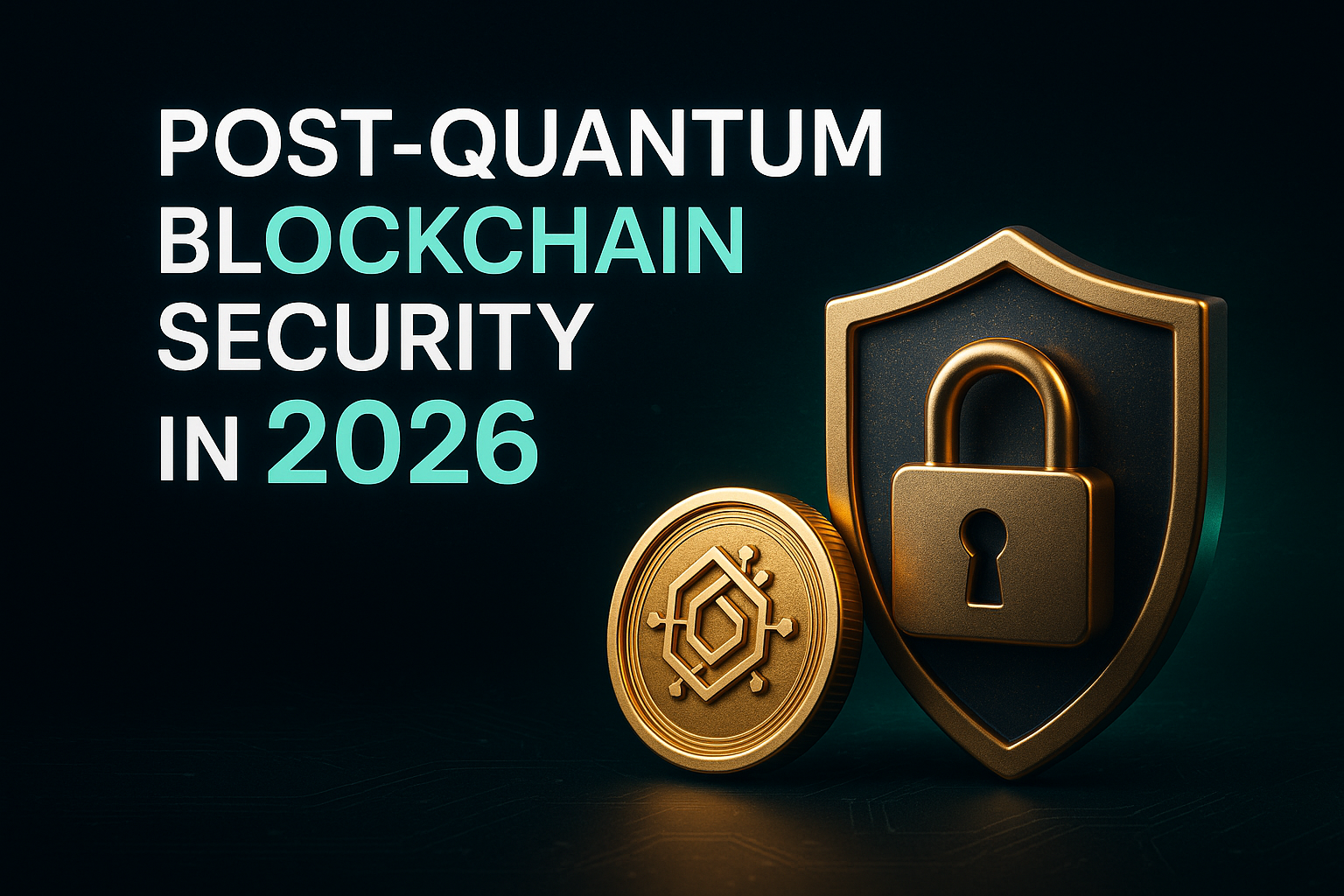
Post-Quantum Cryptography (PQC): Preparing Blockchains for Quantum Risk
The Quantum Doom narrative—the idea that a quantum computer will crack Bitcoin’s SHA-256 or ECDSA signatures—is a primary concern.
- The Reality: While we haven't reached the Satoshi-drain event yet, the threat is accelerating due to AI-assisted quantum research.
- The Solution: Networks like Sui are leading with EdDSA (Edwards-curve Digital Signature Algorithm), which is more robust and easier to migrate to quantum-safe structures than the legacy ECDSA used by Bitcoin and Ethereum.
2026 Threat Model: Quantum Computing, Black-Hat AI, Regulation, and Network Silos
As an expert, I must balance the optimism of our innovations with the reality of our risks. The following matrix outlines the current threat landscape for institutional and retail participants:
| Risk Factor | Impact Level | Practitioner's Outlook |
|---|---|---|
| Quantum Leap | High | Unlikely to break Bitcoin tomorrow, but proactive migration to Post-Quantum Cryptography (PQC) is mandatory for long-term holders. |
| Black-Hat AI | Critical | AI is a force multiplier for hackers. We are in a "war of the bots" where AI-driven security must outpace automated vulnerability detection. |
| Regulatory Conflict | Moderate | The tension between privacy (encryption) and transparency (compliance) remains. The solution lies in "Programmable Privacy." |
| Network Silos | Low | Industry is shifting toward general-purpose chains that support DeFi, Gaming, and Institutions simultaneously, reducing liquidity fragmentation. |
Practical 2026 Playbook: What Investors and Builders Should Prioritize
For those looking to allocate capital or build products in this cycle, the "move fast and break things" mantra of early Silicon Valley has been replaced by "engineer for the edge."
- Look for Seamless UX: The most successful networks in 2026 are those that reduce friction. Systems implementing zkLogin—allowing users to access the blockchain using Google or Apple credentials without sacrificing self-custody—are winning the adoption race.
- Robotic & AI Integration: The intersection of Robotics and Blockchain is where the "Super App" finally takes shape. Advanced networks now support larger block sizes (e.g., 130+ KB) to handle the data telemetry required by AI agents and robotic hardware.
- Programmable Tunnels: This innovation allows you to "rent" an AI agent or robot for a specific time, controlling it via digital signatures without paying a gas fee for every micro-movement.
Conclusion: Institutional-Grade Cryptography and the Next Decade of DLT
The transition from the centralized silos of the 2010s to the decentralized networks of 2026 was born out of necessity. Based on my experience witnessing the fragility of traditional banking systems, I view these technologies not as speculative assets, but as economic safeguards.
We are no longer building toys. We are building the infrastructure for a world where robots transact on behalf of humans, where your identity is proven but not exposed, and where math protects you better than a bank ever could. The networks that win will be the ones that prioritize high-fidelity engineering over marketing hype.
FAQ: Quantum-Resilient Blockchain Cryptography (2026)
Q1: What is post-quantum cryptography (PQC) and why does it matter for crypto investors?
Post-quantum cryptography refers to signature and encryption schemes designed to remain secure even if large-scale quantum computers emerge. For investors, PQC matters because long-horizon holdings depend on the future integrity of keys and signatures. The practical takeaway in 2026 is not panic, but preparedness: favor networks with credible migration paths and upgrade flexibility.
Q2: Will quantum computers break Bitcoin “soon”?
The immediate “Bitcoin breaks tomorrow” narrative is unlikely, but the long-term risk is real because signature security is a lifecycle problem. The bigger issue is migration timing and coordination—especially for dormant or un-upgraded addresses. In 2026, the prudent stance is to treat PQC readiness as a risk-management factor, not a headline.
Q3: What are Zero-Knowledge proofs used for in real products?
Zero-Knowledge proofs enable selective disclosure—proving a fact without revealing underlying data. In practical terms, this supports age checks, creditworthiness, residency, or compliance eligibility without exposing your full identity or financial history. For builders, ZK is foundational for “institutional-grade” apps that must satisfy regulators while preserving user privacy.
Q4: How does end-to-end encryption (E2EE) apply to wallets and on-chain messaging?
E2EE ensures only the intended parties can read a message, since the private key stays on the user’s device. Applied to wallets, E2EE can enable private receipts and secure on-chain communication. The key benefit in 2026 is “compliance without surveillance”: meeting audit requirements while avoiding public exposure of a user’s full transaction context.
Q5: What is “programmable privacy” and why is it a trend in 2026?
Programmable privacy is the ability to reveal exactly what’s required—no more, no less—based on rules, permissions, or proofs. It’s becoming essential because markets demand both privacy (users and institutions) and transparency (regulators and auditors). The strongest platforms in 2026 are those that can enforce this balance natively, not as an afterthought.
Q6: Why is Black-Hat AI considered a critical risk for blockchain systems?
AI accelerates attack discovery, social engineering, and automated exploitation by lowering the cost of finding and weaponizing vulnerabilities. This creates a war of the bots dynamic where defenders must deploy AI-driven monitoring, anomaly detection, and faster patch cycles. For investors, security maturity and incident response capability become key diligence criteria.
Q7: What should builders look for when choosing a chain for AI-agent or robotics use cases?
Builders should prioritize throughput, data-handling capacity, and developer tooling that supports telemetry-heavy workloads. In addition, identity, permissions, and signature controls must be robust enough to manage autonomous agents safely. The key idea is engineer for the edge: assume adversarial automation, frequent interactions, and the need for reliable verification.
Q8: How should long-term holders evaluate a network’s cryptographic longevity?
Focus on upgrade governance, cryptographic agility (ability to migrate primitives), and practical security tooling—not marketing claims. Assess whether the ecosystem has a realistic path to stronger signatures, better privacy primitives, and hardened infrastructure against automated attacks. In 2026, longevity is a product feature: chains that can evolve securely will outlast those that cannot.