
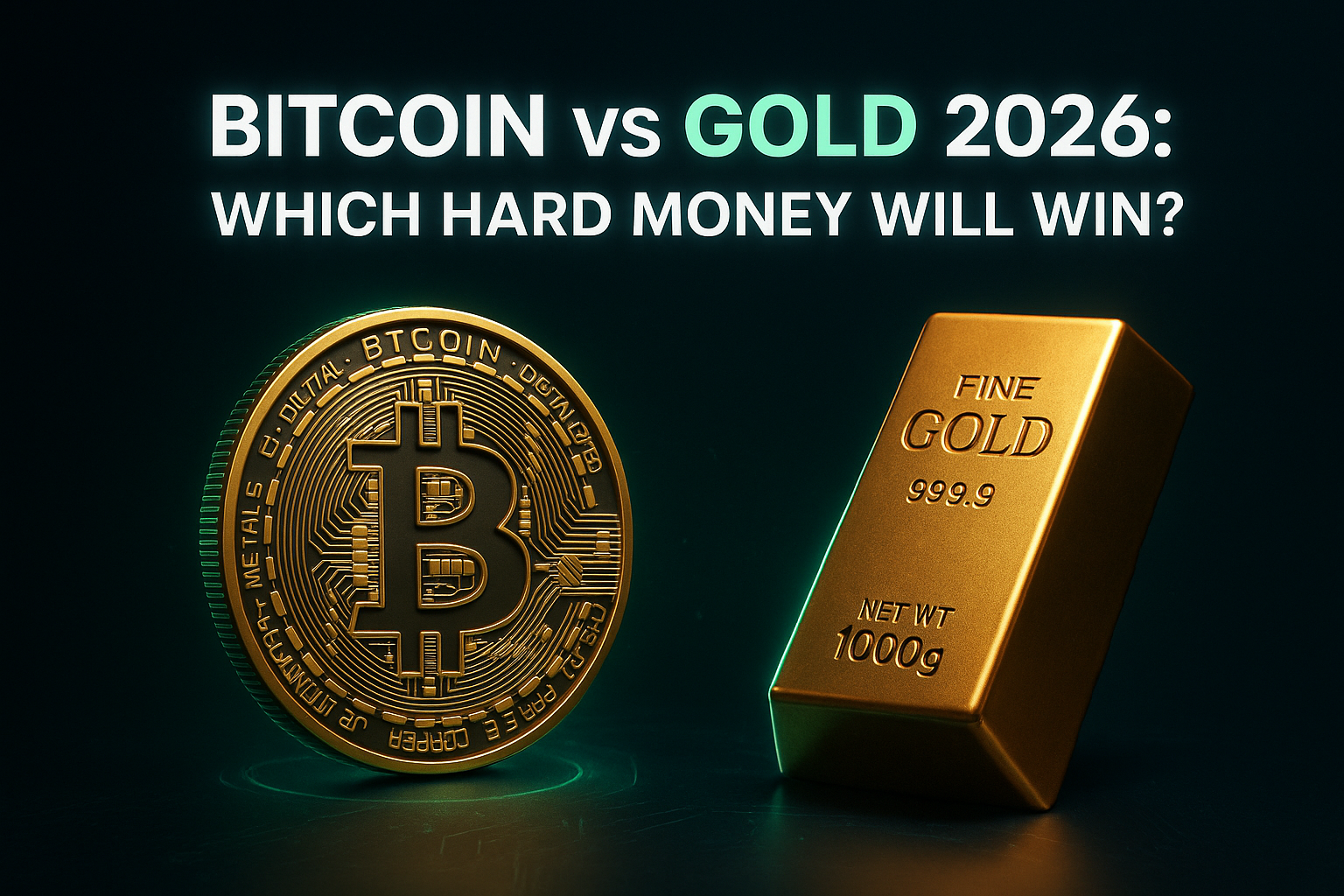
The Great Debate: Bitcoin vs. Gold
In a room charged with ideological electricity, the world’s two most prominent hard money advocates took the stage to debate a singular question: What will succeed the dying fiat dollar? On one side sat Peter Schiff, the veteran gold bug and vocal critic of all things crypto. On the other, Dr. Saifedean Ammous, the academic who literally wrote the book on the Bitcoin Standard.
Peter Schiff’s Case Against Bitcoin: The “Tokenized Nothing” and Intrinsic Value Argument
Peter Schiff wasted no time throwing a curveball. Rather than defending physical bullion alone, he championed Tether Gold, arguing that it marries the blockchain’s efficiency with gold’s millennia-old value. Schiff’s premise was blunt: Bitcoin is "digital fool’s gold." He argued that Bitcoin lacks the properties of a store of value because there is no underlying value to store.
"An image of a hamburger is not digital food," Schiff quipped, asserting that Bitcoin is a "tokenized nothing" compared to gold, which is a "tokenized something." To Schiff, Bitcoin’s price is driven purely by a "mass delusion" of speculators hoping to get rich, whereas gold possesses intrinsic utility in industry, electronics, and jewelry that provides a price floor.
Saifedean Ammous on Bitcoin as the Superior Monetary Technology
Saifedean Ammous responded with the surgical precision of an economist. He dismissed the "intrinsic value" argument as a misunderstanding of what money actually is. Money, Ammous argued, is not magic; it is a technology for moving value across space and time. Ammous conceded that he was once a gold bug, but he argued that gold is "inferior technology" in the modern age.
He pointed out that the 20th century proved gold’s fatal flaw: its physical weight and centralizability. Because gold is heavy, people stored it in banks; because it was in banks, governments could easily confiscate it or "hack" it by issuing more paper receipts than there was gold in the vault. Bitcoin, being weightless and decentralized, is "unhackable" by the state.
Bitcoin Supply Mechanics Explained: Halving, Stock-to-Flow, and Difficulty Adjustment
The debate intensified when discussing supply mechanics. Ammous highlighted two technical features that he believes make Bitcoin the ultimate predator:
-
The Halving and Bitcoin’s Declining Inflation Rate: While gold miners will bring roughly $700 billion of new gold to market this year (increasing supply by ~2%), Bitcoin’s inflation rate continues to drop every four years.
-
The Difficulty Adjustment: This is Bitcoin’s "secret sauce." If the price of gold rises, miners dig more, increasing supply and suppressing the price. If the price of Bitcoin rises, the network simply makes it harder to mine, ensuring that the supply remains capped at 21 million regardless of demand.
⚡ Key Insight:
Gold relies on trust in custody.
Bitcoin eliminates custody entirely.
That’s not an upgrade — it’s a paradigm shift.
Subjective Theory of Value vs Intrinsic Utility: What Gives Money Its Worth?
Schiff leaned heavily into the "use-case" argument. He claimed that if he owned all the gold in the world, he would be the wealthiest man on earth because everyone needs gold for something. If he owned all the Bitcoin, he would have nothing because Bitcoin has no utility outside of its own network.
Ammous countered by invoking the Subjective Theory of Value. He argued that people value Bitcoin precisely for what it allows them to do: teleport wealth across borders without a middleman.
"Demand generates value," Ammous stated. The fact that Bitcoin provides a censorship-resistant payment rail is its "utility," making it more useful than a metal that requires a Swiss vault and a third-party custodian (like Tether) to be portable.
Tether Gold vs Bitcoin: The Custodial Risk and Centralization Problem
Ammous pointed out the irony in Schiff’s promotion of Tether Gold. By using a digital token to represent gold, Schiff is essentially admitting that gold is too cumbersome for the 21st century. However, by relying on a custodian (Tether), Schiff’s solution reintroduces the very "third-party risk" that led to the collapse of the gold standard in 1971. Governments can shut down a vault in Switzerland; they cannot shut down a decentralized protocol.
Price Predictions and the “Number Go Up” Debate: Bubble or Digital Hard Money?
The debate reached its crescendo when Ammous challenged Schiff on his track record. Schiff has been calling Bitcoin a bubble since it was $1. Ammous asked: "At what price will you admit you were wrong?" Schiff remained defiant, claiming that price is irrelevant to value. He argued that Bitcoin is currently being propped up by "dumb money" and ETFs, and predicted a crash to $15,000 once major holders like MicroStrategy are forced to liquidate.
Ammous, conversely, stated that if Bitcoin ever fell to $50, he would admit the thesis failed—but as long as the network continues to produce blocks every ten minutes, it remains the world’s only "hard" digital currency.
Expert Analysis: Is Gold a Safe Haven or Is Bitcoin the Future of Hard Money?
As a journalist who has watched these two titans spar for years, the takeaway is clear:
- Schiff is betting on the past—a world where physical reality and history dictate what is "real."
- Ammous is betting on the future—a world where mathematics and code provide a level of scarcity and security that no physical element can match.
While Schiff offers the comfort of a 5,000-year track record, Ammous offers a solution to the "centralization trap" that gold fell into. In 2026, as fiat currencies continue to debase, the market is choosing its champion. Gold is a shield against the death of the dollar, but Bitcoin is a sword.
Conclusion
Bitcoin and gold aren't just competing assets; they represent two fundamentally different philosophies of what money should be.
Gold is rooted in history. It earned trust over thousands of years, survived empires, and still offers a sense of stability in uncertain times. It protects wealth — but it does so within a system that has already proven it can be controlled, centralized, and ultimately manipulated.
Bitcoin, on the other hand, doesn’t rely on history. It relies on code. It doesn’t ask for trust — it replaces it. What it offers isn’t just scarcity, but independence. A system where ownership, transfer, and verification exist without permission.
This is the real divide.
Not metal vs digital.
Not old vs new.
But trust vs verification.
In 2026, the question is no longer whether Bitcoin will survive. It already has.
The real question is whether the world is ready to move from a system it trusts…
to a system it can verify.
And once that shift happens, there’s no going back.
📊 Reality Check:
Still unsure where you stand?
Compare Bitcoin mining profitability, hardware efficiency, and real-world ROI using our latest tools and ASIC comparisons.
Frequently Asked Questions (FAQ): Bitcoin vs Gold
Q1: What is Peter Schiff's main argument against Bitcoin?
Peter Schiff argues that Bitcoin lacks "intrinsic value." He frequently calls it a "tokenized nothing" because, unlike physical gold which has real-world utility in electronics and jewelry, Bitcoin exists entirely as code. Schiff believes Bitcoin’s price is driven purely by speculation rather than fundamental utility.
Q2: Why does Saifedean Ammous call gold an "inferior technology"?
According to Ammous, money is simply a technology used to transfer value across time and space. Gold fails in the modern era because its physical weight makes it hard to transport, forcing people to rely on banks. This centralization makes gold vulnerable to government confiscation and inflation via paper receipts. Bitcoin, being weightless and decentralized, solves this exact problem.
Q3: Is Tether Gold a better investment than Bitcoin?
Tether Gold attempts to combine the digital speed of crypto with the physical backing of gold. However, it requires you to trust a centralized third party (the custodian holding the gold in a vault). Bitcoin advocates argue this reintroduces the very "third-party risk" that crypto was designed to eliminate. With Bitcoin, you hold the keys; with Tether Gold, you hold an IOU.
Q4: How does Bitcoin's supply mechanism differ from gold?
When the price of gold goes up, gold miners are incentivized to dig more out of the ground, which naturally inflates the supply. Bitcoin works differently. Thanks to its "Difficulty Adjustment," if more hash rate enters the network, the cryptographic puzzle simply becomes harder to solve. This ensures that new coins are issued on a strict schedule, making its 21-million hard cap absolute, regardless of how much energy or hardware is thrown at it.
Q5: Will Bitcoin ever crash to zero as critics predict?
Critics like Peter Schiff have predicted devastating crashes for years, arguing the asset is propped up by "dumb money" and institutional ETFs. However, proponents argue that price volatility is a natural phase of monetization. For advocates like Ammous, as long as the decentralized network continues to successfully produce blocks every ten minutes without failing, the underlying thesis of digital hard money remains completely intact.