INTRODUCTION
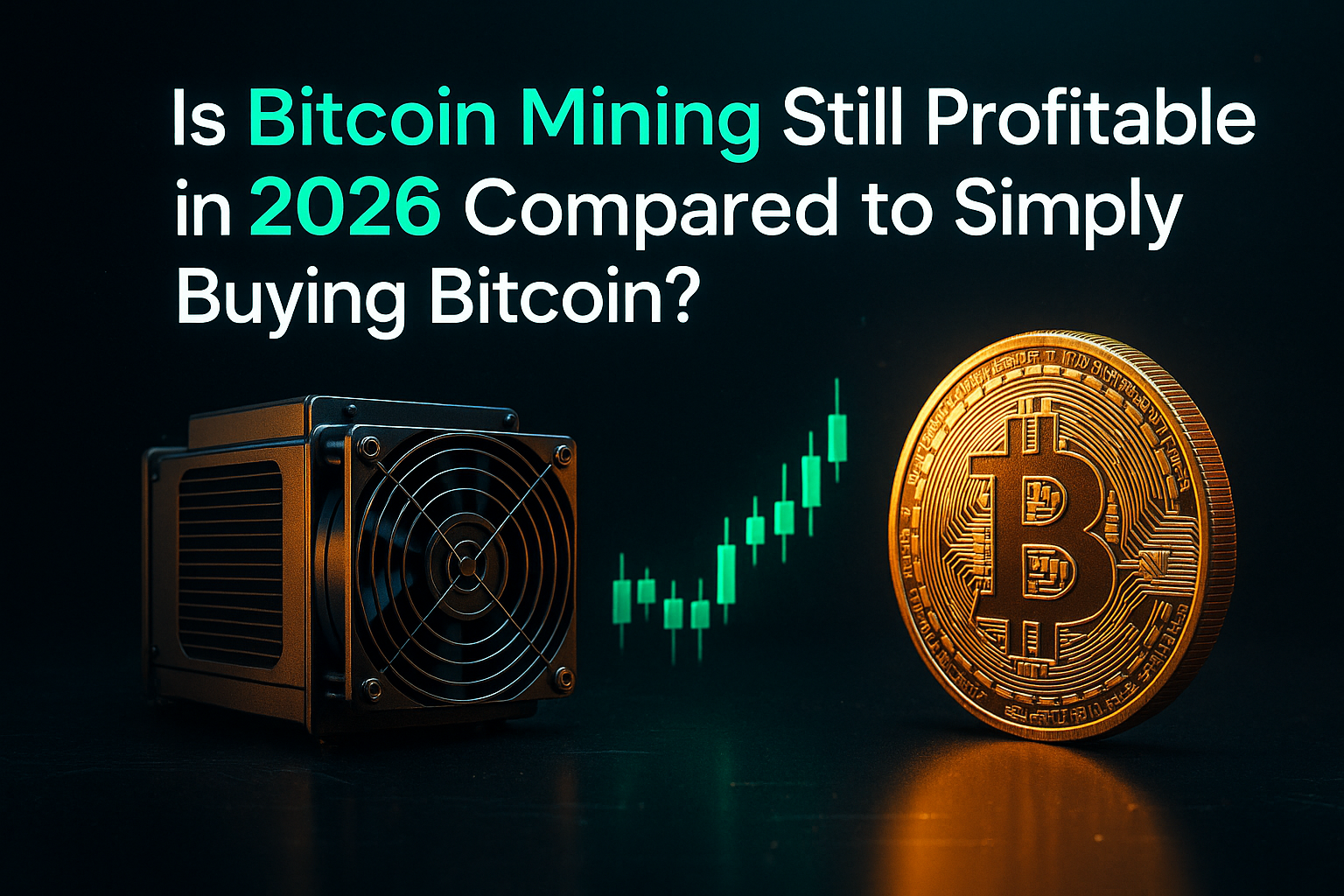
When you’re first dipping your toes into the crypto world, you eventually hit the same crossroads every investor does: Should I just buy some Bitcoin and hold it, or is it actually worth mining it myself?
It’s a classic debate, and honestly, there’s no "one-size-fits-all" answer. But if you want the real breakdown of how these two paths stack up in today's market, you’re in the right place.
(By the way, if you’re on the move, I’ve actually recorded a deep dive on this over on Spotify and Apple Podcasts. Toss it in your headphones for your next gym session or drive!)
The "Digital Gold Rush": How Mining Actually Works
We often hear mining described as this high-tech, abstract thing, but I like to think of it as a digital treasure hunt.
Back in the 1800s, you needed a sturdy pickaxe and a bit of luck to find gold nuggets. Today, we’ve swapped the shovels for ASICs (powerful, specialized computers). Instead of digging through dirt, these machines are essentially guessing the combination to a high-security digital padlock.
Why the "Guessing Game" Matters
Miners are constantly crunching numbers to find a specific value called a nonce. It’s a massive competition:
-
The Reward: The first person to "crack the code" gets to add a block to the blockchain and earns a Bitcoin reward.
-
The Security: This isn't just for show. This constant competition is exactly what makes the Bitcoin network the most secure computer network on the planet. The more "pickaxes" (miners) there are, the harder it is for anyone to mess with the system.
💡 Quick Comparison: Mining vs. Buying (8,500€ Investment)
Based on a Bitcoin price of 90,000€ and a 5-year hardware lifecycle.
| Feature | Direct Purchase (Buy & Hold) | ASIC Mining (Hardware Investment) |
|---|---|---|
| Initial Asset | 0.085 BTC (Instant ownership) | 0 BTC (Ownership builds over time) |
| Annual Yield | None (You only have what you bought) | ~0.07 BTC (Continuous accumulation) |
| 2-Year Total | 0.085 BTC | ~0.14 BTC (~12,600€ value) |
| 5-Year Potential | 0.085 BTC | ~0.35 BTC (~31,500€ value) |
| Passive Income | ❌ No | ✅ Yes (New BTC daily) |
| Risk Factor | Market Volatility | Hardware maintenance & Energy costs |
| Effort Level | Low (Set and forget) | Medium (Requires hosting/management) |
Why I Often Favor Mining Over Buying
Buying Bitcoin is easy, sure. You open an app, click a button, and you're done. But mining offers a strategic edge that most people overlook.
1. The Power of Passive Accumulation
When you buy Bitcoin, you’re stuck with whatever amount you bought unless you put in more cash. With mining, you’re constantly "dripping" new Bitcoin into your wallet. It’s a form of passive income that keeps growing regardless of whether the market is up or down that day.
2. Playing the Long Game
If the price of Bitcoin sky-rockets, the rewards you’ve been stacking up suddenly become worth a lot more than your initial hardware investment. Plus, you’re directly supporting the decentralization of the network, which is the whole point of crypto in the first place.
3. Let Someone Else Handle the Noise
I get asked a lot: "Do I need a server room in my basement?" Absolutely not. Most serious players today use managed services like FeelMining. They host your machines in places like the UAE or Canada where electricity is dirt cheap. You get the Bitcoin; they deal with the heat and the cables.
Let’s Get Real: The Challenges You’ll Face
I wouldn't be doing my job if I didn't tell you the "ugly" side of mining. It’s not a magic money printer.
-
The Upfront Cost: You need some serious skin in the game. A top-tier miner will set you back around 8,000 euros. It’s a capital investment, much like buying a rental property.
-
The Electricity Trap: If you try to mine in a place with high energy costs (looking at you, France), you’ll likely lose money. Success in mining is 90% about finding the cheapest power possible.
-
The "Cake" Problem: As Bitcoin gets more popular, more miners join. Think of it like a cake—the more people show up to the party, the smaller the slices get for everyone. This is what we call Network Difficulty.
The Showdown: The 8,500 Euro Test
Let’s run a quick "back of the napkin" math session. Suppose you have 8,500 euros to play with, and Bitcoin is sitting at 90,000 euros.
-
If you buy: You get 0.085 BTC. That’s it. You wait and hope the price goes up.
-
If you mine: You buy a high-end ASIC. You start with 0 BTC, but over a year, you might pull in 0.07 BTC. By year two, you’ve got 0.14 BTC. Over a five-year lifespan? You could be looking at 0.35 BTC.
The Result: Even after considering that the machine eventually wears out, the mining route can potentially triple your Bitcoin holdings compared to just buying.
My Final Take: What’s Best for You?
At the end of the day, it comes down to your personality as an investor:
-
Buy Bitcoin if you want zero stress and immediate ownership. It’s fast, it’s simple, and it works.
-
Start Mining if you want to build a "digital factory" that generates assets while you sleep. It requires more patience, but the long-term payoff is often significantly higher.
💡 Pro Tip: This logic isn't just for Bitcoin. There are several other reliable "mineable" coins out there that follow this exact same play-book. What about you? Are you the type to buy the gold, or the type to build the mine?
Frequently Asked Questions
Q1. Is it actually worth mining at home, or is that a thing of the past?
Honestly? For most people, mining in your spare bedroom or garage isn't the move anymore. Between the loud fan noise, the heat, and—most importantly—high residential electricity bills, your profit would likely get eaten alive. That’s why most miners now use "hosting" services. They keep the machines in places with industrial-grade cooling and cheap power, so you get the rewards without the headache (or the noise).
Q2. What happens if the price of Bitcoin crashes? Do I stop mining?
It can be tempting to panic, but professional miners often see "bear markets" as an opportunity. When the price drops, some people switch off their machines, which actually makes it slightly easier for those who stay to earn more Bitcoin. If you can afford the electricity, "mining through the dip" allows you to stack more coins that could be worth much more when the market eventually bounces back.
Q3. Does the mining hardware become obsolete quickly?
ASICs are sturdy machines, and a good one typically has a productive life cycle of about 3 to 5 years. While newer, faster models come out every year, your "older" machine doesn't just stop working—it just becomes slightly less efficient compared to the latest tech. Think of it like a car: a 5-year-old model still gets you from A to B, even if there’s a shinier version in the showroom.
Q4. How long does it take to actually see a profit (ROI)?
There’s no magic date, but generally, many miners look at a 12 to 24-month window to "break even" on their hardware cost. It depends heavily on the price of Bitcoin and the cost of your electricity. The cool part? Once the machine has paid for itself, almost everything you mine after that—minus power costs—is pure profit.
Q5. Can I mine other cryptocurrencies with the same machine?
Not usually. Bitcoin miners (ASICs) are built with a very specific "brain" designed to solve the SHA-256 algorithm. They are world-class at mining Bitcoin, but they can't switch over to mine things like Litecoin or Dogecoin. If you want to mine other coins, you’d typically need a different type of specialized hardware for those specific networks.