The State of Bitcoin Mining in Western Europe
Let’s be honest: Bitcoin mining in Western Europe is no longer just expensive—it’s becoming economically irrational.
With electricity costs soaring after the Russia–Ukraine conflict and network difficulty hitting record levels, even the most efficient ASIC miners are now operating at a loss across countries like France, Italy, and Germany.
At the same time, a new alternative is emerging: Russia. With significantly lower electricity costs and a newly regulated mining framework, it is rapidly positioning itself as one of the most attractive destinations for large-scale mining investment in 2026.
The real question is no longer “where to mine”—but where you can still remain profitable.
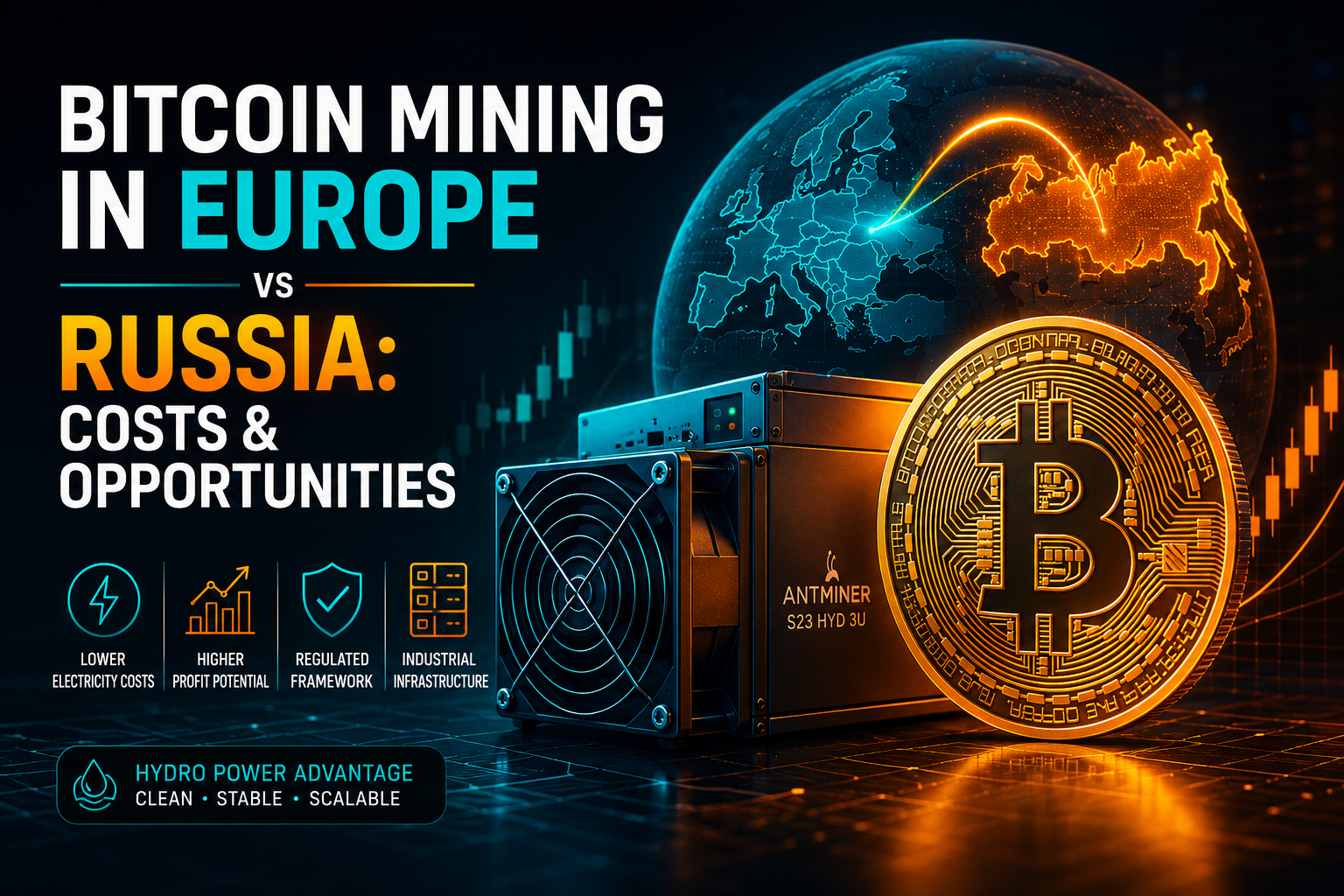
| Factor | Western Europe | Russia |
|---|---|---|
| Electricity Cost | $0.20 – $0.35 / kWh | $0.05 – $0.075 / kWh |
| Profitability | Negative ROI | Potentially profitable |
| Regulation | Strict / Energy restrictions | Regulated but open |
| Investment Access | Limited | Open to foreign investors |
| Infrastructure | Stable but expensive | Cheap + hydro-based regions |
Why Bitcoin Mining Is Becoming Unprofitable in Western Europe
The Heavy Losses in Europe: To understand the difference, the same device (S23 Hyd 3U from BITMAIN ANTMINER) that is profitable elsewhere is:
- Losing -$27 daily in France.
- Losing -$61 daily in Italy. This is truly unfortunate.
This turns mining from an investment into a guaranteed loss under current market conditions.
Russia as a Potential Bitcoin Mining Destination for Foreign Investors
🇷🇺 Russia: The Anticipated Alternative for Foreign Investors
There are certainly many places, each with its challenges, but today we will discuss a country where electricity prices are 4 times cheaper than in France, and 6 times cheaper than in Italy. Yes, it is Russia.
Electricity Prices and Industrial Mining Tariffs in Russia
The government has introduced special industrial electricity tariffs for the mining sector, typically ranging between $0.05 and $0.075 per kilowatt-hour (kWh), replacing the subsidized rates.
Industrial Power Access and Mining Infrastructure Requirements
Allowed Power: Only industrial power lines dedicated to mining are permitted.
Regions Suitable for Bitcoin Mining Infrastructure
Recommended Regions: Mining is banned in 10 federal regions (including Dagestan and North Caucasus). It is recommended to invest in areas that offer reliable infrastructure and cheap electricity near hydroelectric power plants, such as Irkutsk and Krasnoyarsk.
Legal Framework for Cryptocurrency Mining in Russia
The war, sanctions, and political issues between Europe and Russia exist, but you can invest as European individuals provided you adhere to specific conditions. Mining in Russia has moved out of the grey zone and become a legally regulated activity.
Mining Limits for Individuals and Hobby Miners
The law does not allow professional mining by individuals if the monthly consumption exceeds 6,000 kWh.
Exceeding the Limit: A single device like the 318th S23 ANTMINER consumes about 40% of this value. This means 3 devices easily exceed the 6,000 kWh limit.
Compliance: If an individual exceeds this limit, they must register a company or operate as an Individual Entrepreneur (IP).
Legal Structures for Foreign Bitcoin Mining Investors
For investors wishing to run multiple devices, there are two legal options:
1- Establish a Russian Company (LLC / ООО): Full foreign ownership is permitted. Registration is required in the “Mining Infrastructure Operators Registry.” The company can consume industrial electricity and legally mine, store, and sell digital currencies.
2- Use a Licensed Mining Hosting Provider: Devices are shipped or purchased locally and operated under the provider’s license. No physical presence is needed, and profits are legally transferred.
Taxes, Compliance, and Regulatory Requirements for Miners in Russia
The federal government intervened and decided to impose new taxes and set a special electricity tariff for the rapidly growing mining sector. The new framework provides clear guidelines:
-
Value Added Tax (VAT): Miners do not pay VAT.
-
Profit Tax: They only pay Profit Tax on the income generated from selling digital currencies.
Benefits: The sector has moved out of the grey area, and miners can now legally buy digital currencies, store them, exchange them, and pay taxes on them.
Mandatory Compliance: Foreign investors must register devices with unique identifiers, comply with information security standards, use approved trading platforms, and adhere to customs regulations.
The Great Mining Migration: A Global Power Shift
The landscape of global mining is undergoing a quiet but profound realignment. As Western Europe becomes increasingly inhospitable to energy-intensive industries due to rising costs and regulatory pressure, capital is migrating toward regions that offer the two things mining requires most: cheap power and structural clarity.
Final Insight: The Future of Bitcoin Mining Geography
Russia has emerged as a central pillar in this new geography. The draw isn't necessarily a "perfect" environment, but rather a functional alignment with the industry’s fundamental needs—specifically, stable, scalable, and low-cost energy reserves.
For the modern investor, the opportunity is significant, yet it comes with a caveat. Long-term profitability is no longer just a race for hardware efficiency; it is now a game of geopolitical literacy and rigorous regulatory navigation.
FAQ – Bitcoin Mining in Russia vs Europe (2026)
Q1: Why is Bitcoin mining unprofitable in Western Europe?
Bitcoin mining has become unprofitable in countries like France, Italy, and Germany mainly due to high electricity prices, increased network difficulty, and fluctuating Bitcoin prices. Electricity costs in Europe rose significantly after the Russia–Ukraine conflict, making operational costs higher than potential mining revenue for many ASIC devices.
Q2: How cheap is electricity for mining in Russia?
Industrial electricity tariffs for mining in Russia typically range between $0.05 and $0.075 per kWh. This is significantly cheaper than electricity prices in Western Europe, where mining electricity can cost four to six times more, making Russia attractive for large-scale mining operations.
Q3: Is cryptocurrency mining legal in Russia?
Yes. Cryptocurrency mining in Russia has moved from a grey legal area into a regulated sector. Miners must follow official regulations, register equipment, comply with information security rules, and use approved trading platforms. Mining is permitted but strictly regulated under the national legal framework.
Q4: Can foreign investors operate Bitcoin mining businesses in Russia?
Foreign investors can legally operate mining operations in Russia. They may establish a Russian company (LLC / ООО) with full foreign ownership or use a licensed mining hosting provider that operates mining equipment under its legal authorization.
Q5: What are the electricity consumption limits for individual miners?
Individuals are not allowed to conduct professional mining if their electricity consumption exceeds 6,000 kWh per month. If this threshold is exceeded, the miner must register as a company or operate as an Individual Entrepreneur (IP) to continue mining legally.
Q6: Which regions in Russia are best for Bitcoin mining?
Regions near hydroelectric power plants such as Irkutsk and Krasnoyarsk are considered attractive locations for mining operations due to their lower electricity costs and stable infrastructure. However, mining is banned in several federal regions including Dagestan and areas in the North Caucasus.
Q7: Do cryptocurrency miners in Russia pay taxes?
Miners in Russia do not pay Value Added Tax (VAT) on mining activities. However, they must pay profit tax on income generated from selling digital currencies. The regulatory framework also requires miners to properly register their equipment and follow compliance rules.