Introduction
For decades, the global energy transition has been chasing a Green Mirage. We have blanketed deserts with silicon panels and ridgelines with steel turbines, yet we remain tethered to the rhythmic hum of coal and gas. The paradox is as simple as it is frustrating: the wind doesn't blow on command, and the sun sets exactly when our cities—and our industries—begin to glow. This intermittency has long been the Achilles' heel of renewable energy—a gap between generation and demand that has historically been filled by carbon-heavy peaker plants and skyrocketing utility bills.
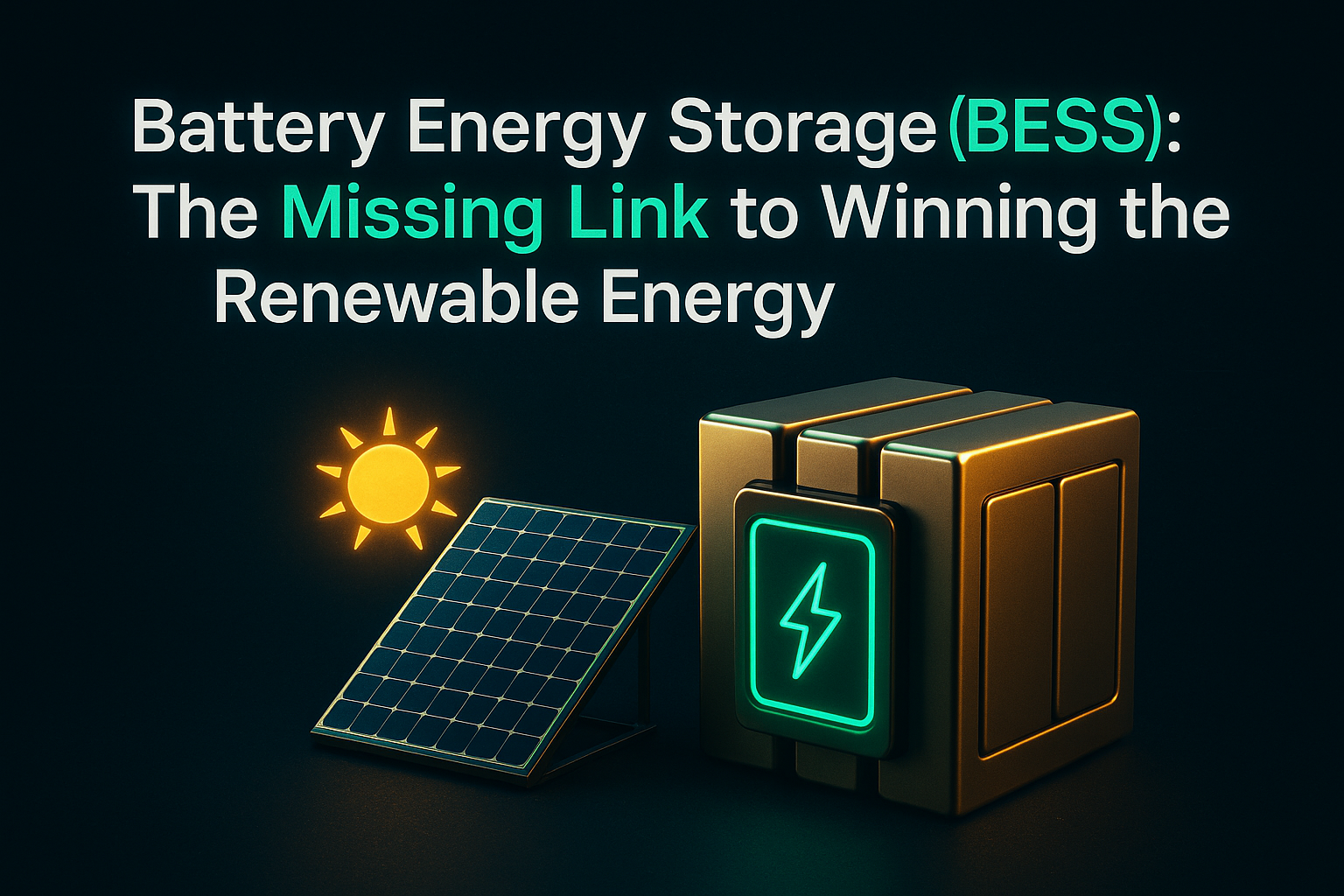
Enter the Battery Energy Storage System (BESS). We are no longer just talking about oversized AA batteries; we are discussing the Energy Internet. BESS is the critical infrastructure that transforms volatile, intermittent power into a stable, dispatchable, and highly profitable asset. It is the bridge between a fossil-fuel past and a decentralized, resilient future. For the industrialist, the crypto-mining pioneer, or the grid operator, BESS isn't just a "green" initiative—it is the ultimate tool for energy sovereignty and financial optimization.
What is Battery Energy Storage (BESS) and How Does It Actually Work?
At its fundamental level, a BESS is a technology that captures energy—whether from the grid or a renewable source—and stores it in a chemical medium to be released as electricity at a later time. While the concept sounds elementary, the execution is a marvel of modern engineering.
Think of a BESS as an Energy Bank. In the current market, power is essentially a "use it or lose it" commodity. When a 1-megawatt solar farm produces excess energy at 1:00 PM, but the local factory or data center doesn't need it until 7:00 PM, that energy is often wasted or sold back to the grid for pennies. BESS allows you to hit the "pause" button on physics, holding that energy in a chemical state until the exact moment it offers the highest utility or the best price.
Key Components of a BESS System: From Batteries to Inverters
To understand why BESS is a system and not just a battery, we have to look under the hood. An industrial-scale BESS is a sophisticated ecosystem of hardware and software designed to manage massive amounts of energy safely and efficiently, especially in harsh environments where heat is the enemy of efficiency.
-
The Battery Modules: Housed in massive, climate-controlled shipping containers, these are the heart of the system. Currently, Lithium Iron Phosphate (LFP) is the industry standard for stationary storage. It offers a superior balance of safety, thermal stability, and cycle life compared to the NMC batteries found in smartphones.
-
The Battery Management System (BMS): This is the "brain." It monitors the state of charge, health, and voltage of every individual cell. A high-tier BMS ensures that no single cell overcharges or overheats, preventing the dreaded thermal runaway.
-
The Power Conversion System (PCS) / Inverters: Batteries store Direct Current (DC), but our world runs on Alternating Current (AC). High-efficiency inverters are required to flip the power back and forth. In industrial applications, the speed of this conversion is measured in milliseconds, allowing for seamless transitions during grid failures.
-
Thermal Management Systems (TMS): Large-scale storage generates immense heat. Modern BESS units utilize advanced Liquid Cooling or specialized HVAC systems to keep cells at their "sweet spot" (usually around 25°C). This is critical in regions with high ambient temperatures, where air cooling simply won't cut it.
-
Fire Suppression & Safety: Given the energy density involved, industrial BESS units are equipped with specialized gas-based suppression agents (like FM-200 or Novec 1230) that neutralize risks without damaging the electronics.
| Investment Strategy | The Mechanism | Financial Payoff (ROI) |
|---|---|---|
| Peak Shaving | Discharges stored energy during your highest consumption spikes to bypass utility limits. | Slashes "Demand Charges" by up to 50% on commercial electricity bills. |
| Energy Arbitrage | Charges from the grid when power is cheap (off-peak) and discharges when it's expensive. | Captures the market price spread for direct, scalable energy savings. |
| Renewable Firming | Stores excess solar/wind energy (especially during weekends) for 24/7 reliability. | Recovers the 29% wastage and ensures 100% utilization of green assets. |
| Frequency Response | Sells ultra-fast, millisecond bursts of power to the grid to stabilize frequency. | Earns premium stability payments from the National Grid operator. |
| UPS & Resilience | Acts as an instantaneous backup during blackouts or brownouts. | Eliminates downtime costs and prevents hardware damage in remote sites. |
⚡ Profit Reality Check
If You're Not Storing Energy, You're Losing Money Every Day
Every kilowatt-hour you fail to store is either wasted or sold at a fraction of its true value—only to be bought back later at a premium. In industries like crypto mining and AI infrastructure, this inefficiency is not just a cost—it's a competitive disadvantage.
👉 Discover How to Optimize Your Energy Costs
Why Renewable Energy Fails Without Storage (And How BESS Fixes It)
Think of renewable energy like cash flow. If you earn $10,000 today but are forced to spend it all by midnight or lose it, you can never build wealth. That is the current state of solar and wind without storage.
Take the example of rapidly developing energy markets like India or North Africa. Nations are setting massive targets for non-fossil fuel capacity—often aiming for 50% of their grid to be renewable by 2030. However, without BESS, this creates a Duck Curve in the grid: a massive surplus of power in the afternoon when demand is low, followed by a catastrophic shortage in the evening when everyone turns on their lights.
BESS solves this by shaving the peaks and filling the valleys. It captures the afternoon's "cheap" solar energy and releases it during the evening "peak," stabilizing the grid and ensuring that renewable investments actually yield a 100% return on their carbon-offset potential.
How BESS Reduces Energy Costs and Eliminates Wasted Power
For the commercial and industrial (C&I) sector, the logic for BESS is aggressive and undeniable. Consider a standard five-day business week. If you have a rooftop solar array or a small wind farm, your system is producing power on Saturdays and Sundays while your machinery is idle.
That represents ~25–30% of your weekly energy production going to waste. You could sell it back to the utility company, but the math is often insulting: they might buy your power for 0.04 USD per kWh and sell it back to you on Monday morning for 0.30 USD.
By installing a BESS, you stop being a victim of the grid’s pricing. You store your own "weekend" power and use it to offset your "Monday morning" costs. This is Energy Arbitrage, and in an era of skyrocketing utility rates, it can be the difference between a profitable year and a deficit.
How Battery Storage Stabilizes the Grid in the Age of EV Charging
The global power grid is groaning under the weight of the Electric Vehicle (EV) revolution. Every new high-speed charging station is a massive localized load that aging infrastructure wasn't designed to handle.
BESS acts as a localized buffer. Instead of the grid having to supply a massive burst of power every time an EV plugs in or a heavy industrial motor starts, a battery system can slowly trickle-charge from the grid and then "dump" that power rapidly when needed. This prevents local blackouts and—more importantly for business owners—avoids the Demand Charges that utilities slap on businesses for sudden spikes in usage.
How BESS Projects Turn Land into Passive Energy Income
For those who own industrial land or farms located near a grid substation, BESS offers a unique infrastructure play. Grid operators are desperate for stability. They are often willing to pay handsomely for "Front-of-the-Meter" (FTM) storage—independently owned battery systems that can inject power into the grid during frequency fluctuations.
While the capital expenditure (CAPEX) for these systems is high, the emergence of Power Hub models allows landowners to partner with institutional investors. The landowner provides the footprint near the substation; the investor provides the BESS technology. It’s a symbiotic relationship that turns underutilized land into a vital node of national energy security.
BESS for Crypto Mining and AI Data Centers: The Ultimate Energy Advantage
In specialized industries like cryptocurrency mining or high-performance computing, energy is the primary cost of goods sold.
In the world of AI data centers, uptime is measured in milliseconds, and even a tiny hiccup can cost a fortune. In this high-stakes environment, energy isn't just a monthly bill—it’s a mission-critical lifeline. That’s where BESS comes in. It’s no longer just a 'nice-to-have' optimization; it is the backbone that ensures your power remains steady, controllable, and always on.
Here, BESS isn't just about backup; it’s about Efficiency Optimization. By pairing high-efficiency mining hardware—units that prioritize low Joules per Terahash (J/TH)—with a BESS, operators can run "Net-Zero" sites that utilize solar during the day and stored energy during the night.
This eliminates the reliance on unstable grids and allows for 24/7 uptime in off-grid locations, such as those utilizing gas flaring recovery. When every fraction of a cent per kilowatt-hour counts, having a controlled, stored energy source is the only way to maintain a competitive edge.
Conclusion: Why Energy Storage is the Future of Industrial Power
We are witnessing the end of an era—the era where businesses and individuals were mere passive consumers at the mercy of a centralized utility's pricing, politics, and stability. The rise of Battery Energy Storage Systems represents a fundamental shift in the global power dynamic.
BESS turns a factory into a power plant. It turns a farm into a grid stabilizer. It turns "intermittent" sunlight into "reliable" baseload power. As we march toward 2030, the companies and nations that lead will not be those that simply generate the most energy, but those that master the art of storing it.
In the high-stakes game of industrial survival, the battery is no longer a peripheral accessory; it is the heartbeat of the modern world. The question is no longer whether you can afford to integrate storage—it's whether you can afford to remain the only one still throwing ~25–30% of your energy away while your competitors bank it for the future. The future doesn't belong to those who wait for the sun to shine; it belongs to those who have captured it and are ready to use it when the world goes dark.
Frequently Asked Questions (FAQ)
Q1: What is the typical ROI for an industrial Battery Energy Storage System (BESS)?
While the return on investment varies based on local energy costs and usage patterns, most industrial BESS installations see a payback period of 4 to 7 years. The ROI is driven by three main factors: Peak Shaving (reducing expensive demand charges), Energy Arbitrage (buying low/using high), and participating in Grid Services (getting paid to stabilize the frequency). For high-uptime industries like crypto mining, the ROI is often accelerated by eliminating the massive cost of operational downtime.
Q2: Why is LFP (Lithium Iron Phosphate) preferred over NMC for stationary storage?
LFP has become the industry gold standard for BESS because of its superior thermal stability and safety profile. Unlike the NMC (Nickel Manganese Cobalt) batteries used in phones or cars, LFP is much less prone to "thermal runaway" or fire. Additionally, LFP batteries typically offer 6,000+ cycles, meaning they can be charged and discharged daily for over 15 years, making them a much more durable financial asset for long-term infrastructure.
Q3: How does BESS help businesses avoid "Demand Charges"?
Utility companies don't just bill you for how much energy you use; they charge "Demand Charges" based on your highest point of consumption in a single 15-minute window. A BESS monitors your usage in real-time. When it detects a "spike"—such as a heavy motor starting or a group of miners ramping up—the battery instantly discharges to cover that peak. This keeps your grid draw flat and can slash your monthly utility bill by up to 30–50%.
Q4: Can a BESS operate effectively in extreme heat or off-grid environments?
Yes, but the key lies in the Thermal Management System (TMS). Industrial-grade BESS units are housed in climate-controlled containers using liquid cooling, which is significantly more efficient than air cooling in high-ambient environments (like North Africa or the Middle East). This ensures the cells remain at a steady 25°C (77°F), preventing degradation and ensuring the system can support off-grid solar or gas-flaring operations 24/7.Q