Introduction: When Compute Becomes an Energy Problem
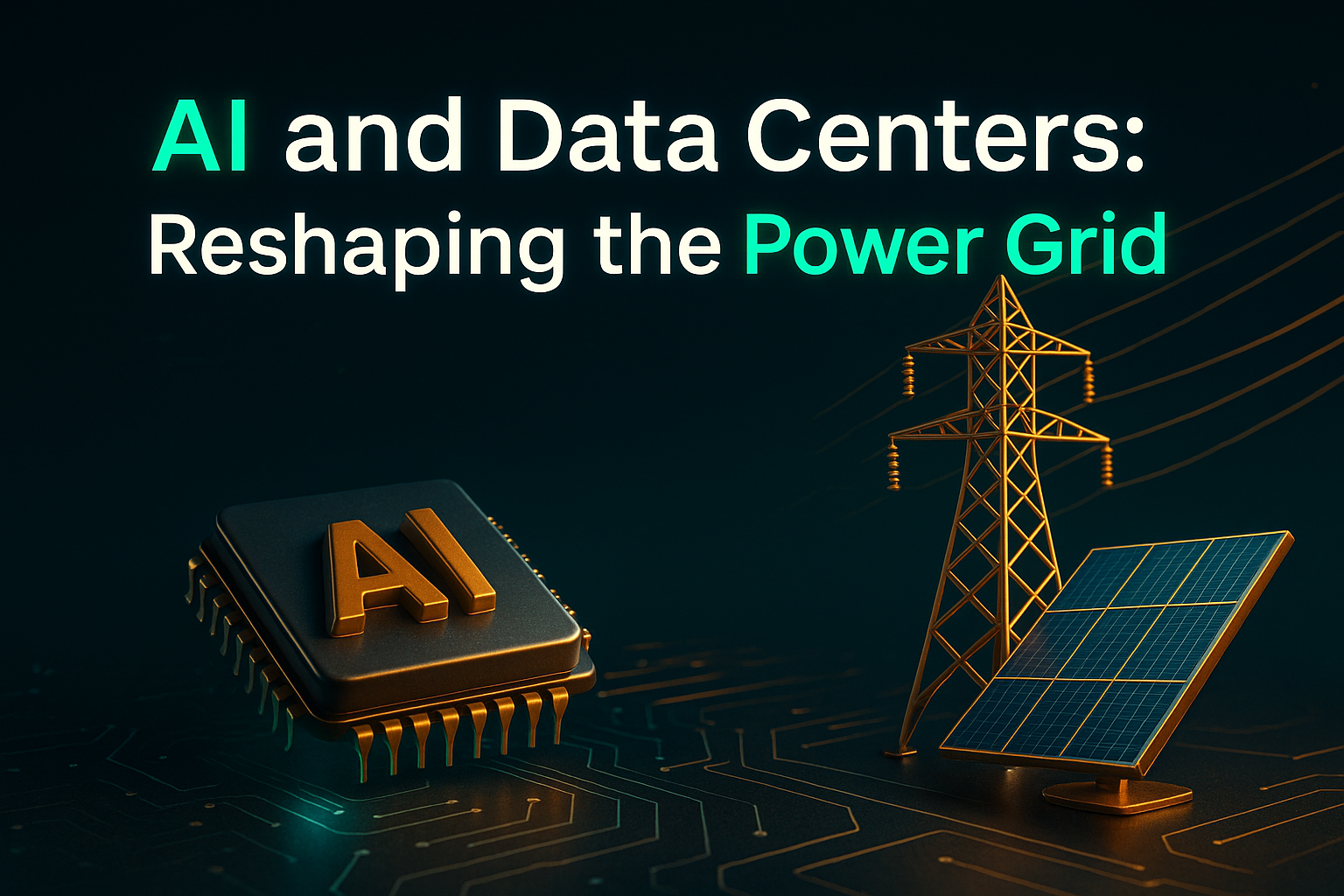
Artificial intelligence is no longer just a software story. It has become an energy story.
Since large language models entered the mainstream in late 2022, cloud providers and data center operators have been racing to build infrastructure capable of training and running massive AI systems. The result is a surge in electricity demand unlike anything the tech sector has seen before. A single modern data center can consume around 100 megawatts—roughly the same as a mid-sized city or about 100,000 U.S. homes.
For industries already familiar with heavy power usage—such as ASIC and GPU mining—this trend feels familiar. But the scale and speed of AI-driven growth are pushing energy systems into new territory. In the U.S. alone, data centers are projected to account for up to 12% of total electricity consumption by 2028, up from less than 4% just a few years ago.
This sudden demand spike is forcing governments, utilities, and tech giants to rethink where power comes from, how reliable it is, and how clean it can realistically be.
The AI Boom and the Return of “Always-On” Power
One of the biggest challenges with AI and high-performance compute is not just how much energy they use, but how consistently they need it. Training large models and running inference at scale requires power 24 hours a day, seven days a week.
Wind and solar, while essential to the energy transition, are intermittent by nature. They work best when the sun shines or the wind blows, not necessarily when compute demand peaks. This mismatch is one reason natural gas has quietly become the default solution for many new data center projects. It is relatively fast to deploy, dispatchable, and reliable.
In some regions, this has even slowed the retirement of coal plants. Facilities that were expected to shut down are getting temporary extensions because the grid simply needs every available megawatt. For companies that publicly committed to carbon-free goals, this creates a growing contradiction between climate pledges and operational reality.
Recent efficiency breakthroughs in AI models have sparked debate about whether power demand will keep rising at the same pace. In practice, history suggests the opposite: when compute becomes more efficient, it usually becomes cheaper and more widely used, which often increases total demand rather than reducing it.
Hydrogen Data Centers: A Glimpse of a Different Model
One of the more unusual experiments in this new energy landscape comes from companies trying to run data centers off-grid using hydrogen.
In Silicon Valley, a small pilot facility demonstrates how hydrogen fuel cells can generate electricity on-site. The basic process is simple: hydrogen reacts with oxygen inside a fuel cell, producing heat, electricity, and water vapor. The electricity is stored in large battery systems and used to power racks of GPUs, while the water byproduct can even be reused for cooling.
This approach offers an interesting advantage for compute-heavy workloads: it combines generation and consumption in one place, reducing dependence on the grid and avoiding some transmission bottlenecks.
However, not all hydrogen is created equal.
The Colors of Hydrogen: Gray, Blue, and Green
Gray hydrogen is produced from fossil fuels and currently dominates global supply. It comes with significant CO₂ emissions.
Blue hydrogen uses the same process but adds carbon capture to reduce emissions. This is more climate-friendly, but not fully clean.
Green hydrogen is made by using renewable electricity to split water into hydrogen and oxygen. It is the cleanest option—and also the most expensive and least available today.
Most current hydrogen projects rely on blue hydrogen as a transitional step, with the long-term goal of shifting to green hydrogen as costs come down and supply scales up.
For miners and AI compute operators, hydrogen is not a universal solution, but it shows how on-site generation could become part of future infrastructure strategies, especially in regions where grid access is limited or slow to expand.
Nuclear’s Comeback: Small, Modular, and Close to the Load
While hydrogen gets attention for its novelty, much of the serious investment is flowing back into nuclear energy—specifically, smaller and more modular designs.
Traditional nuclear plants are extremely expensive and slow to build, often taking more than a decade from planning to operation. That timeline does not match the pace of AI and data center expansion.
This is where Small Modular Reactors (SMRs) and microreactors come in. The idea is to manufacture standardized reactor units in factories and deploy them closer to where power is needed—potentially even near large data center campuses.
Several major tech companies are already backing these projects, seeing nuclear as one of the few realistic ways to get large amounts of carbon-free, always-on electricity.
Fission vs. Fusion: Two Very Different Paths
Fission (splitting atoms) is a proven technology and the basis of today’s nuclear power plants. New startups are trying to make it smaller, cheaper, and faster to deploy. From a risk perspective, fission is the most mature option and likely the first to scale for data centers.
Fusion (combining atoms) is the process that powers the sun. It promises abundant, clean energy with far less long-lived waste—but it has remained a scientific challenge for decades. Some companies now claim they can deliver commercial fusion power within the next decade, and at least one has signed preliminary agreements to supply future data centers.
For miners and AI operators, the practical takeaway is simple: fission may become a real option in the late 2020s, while fusion remains a high-risk, high-reward bet that could transform energy economics if it actually works at scale.
Geothermal: Old Technology, New Tricks
Geothermal energy is not new. In fact, the first geothermal power plant was built more than a century ago. Historically, its use was limited to places with obvious volcanic activity, where heat is close to the surface.
What has changed is drilling technology. Borrowing techniques from the oil and gas industry, modern geothermal developers can now drill much deeper and horizontally, accessing heat in places that were previously unusable.
This has opened the door to geothermal projects in regions that were never considered viable before. For data centers and mining operations, geothermal offers a rare combination: continuous, low-carbon, and locally generated power.
The limitation is scale and geography. Not every site will have suitable underground conditions, and projects still require large upfront investments. But where it works, geothermal can provide the kind of steady baseload power that high-performance compute needs.
Solar and Wind: Still Essential, But Not Enough Alone
Solar and wind remain the cheapest sources of new electricity in many parts of the world. For mining farms and AI data centers, they already play an important role in reducing operating costs and hedging against volatile energy prices.
To better understand how different energy sources compare in real-world AI and mining operations, the table below provides a simplified overview:
| Energy Source | Reliability (24/7) | Cost Level | Scalability | Best Use Case |
|---|---|---|---|---|
| Natural Gas | High | Medium | High | Immediate data center deployment |
| Nuclear (SMRs) | Very High | High (initial) | Medium | Long-term AI infrastructure |
| Hydrogen | Medium | High | Low–Medium | Off-grid data centers |
| Geothermal | High | Medium | Location-dependent | Stable baseload power |
| Solar + Batteries | Medium | Low | High | Daytime + hybrid systems |
| Wind + Storage | Medium | Low | High | Supplemental clean energy |
The future of AI and mining infrastructure will not depend on a single energy source—but on how intelligently these systems are combined.
The problem is not cost—it is timing.
Without massive storage or complementary generation, solar and wind alone cannot guarantee 24/7 uptime. This is why most serious clean energy strategies for compute-heavy industries now focus on hybrid systems:
- Batteries for short-term balancing
- Dispatchable sources (gas, nuclear, geothermal, or hydrogen) for continuous reliability
From an investor and operator perspective, the future is less about picking one perfect energy source and more about building resilient, multi-layered energy stacks.
What This Means for Mining and AI Infrastructure
For ASIC and GPU operators, the AI-driven energy crunch brings both risks and opportunities:
- Higher competition for power can push up prices in some regions.
- Grid constraints may delay new projects or limit expansion.
- On-site and dedicated generation could become a competitive advantage, not just a sustainability choice.
- Long-term contracts with clean baseload providers (nuclear, geothermal, or hydrogen) may offer more predictable costs than spot markets.
Efficiency improvements in hardware and software will help, but they will not eliminate the core issue: demand for compute is rising faster than traditional energy systems were designed to handle.
Conclusion: Energy Is Now a Strategic Part of Compute
The race to build AI and high-performance computing infrastructure has turned electricity into a strategic bottleneck. What used to be a background operating cost is now a central factor in where data centers and mining operations can exist, how fast they can grow, and how profitable they can be.
Hydrogen, nuclear fission, nuclear fusion, geothermal, solar, and wind all have roles to play—but none of them is a silver bullet on its own. The next decade will likely be defined by hybrid energy systems, on-site generation, and closer integration between compute infrastructure and power production.
For investors and operators in mining and AI compute, understanding energy is no longer optional. It is becoming just as important as understanding chips, cooling, and network connectivity.
FAQ
Q1. Why is AI causing such a big increase in electricity demand?
Training and running large AI models requires massive GPU clusters that operate continuously, consuming far more power than traditional data centers.
Q2. Will more efficient AI models reduce total energy consumption?
Not necessarily. Efficiency often lowers costs and increases usage, which can lead to higher overall demand rather than less.
Q3. Is hydrogen a realistic power source for data centers?
It can work in specific cases, especially for off-grid or dedicated sites, but clean (green) hydrogen is still expensive and limited in supply.
Q4. Why are tech companies investing in nuclear again?
Because nuclear provides large amounts of reliable, carbon-free, 24/7 power—exactly what AI and data centers need.
Q5. How soon could small nuclear reactors power data centers?
Some projects aim for the late 2020s, but timelines may slip due to regulation, construction, and safety reviews.
Q6. Is geothermal energy scalable for AI and mining?
In suitable locations, yes. New drilling techniques make it more flexible, but it still depends heavily on local geology.