
INTRODUCTION
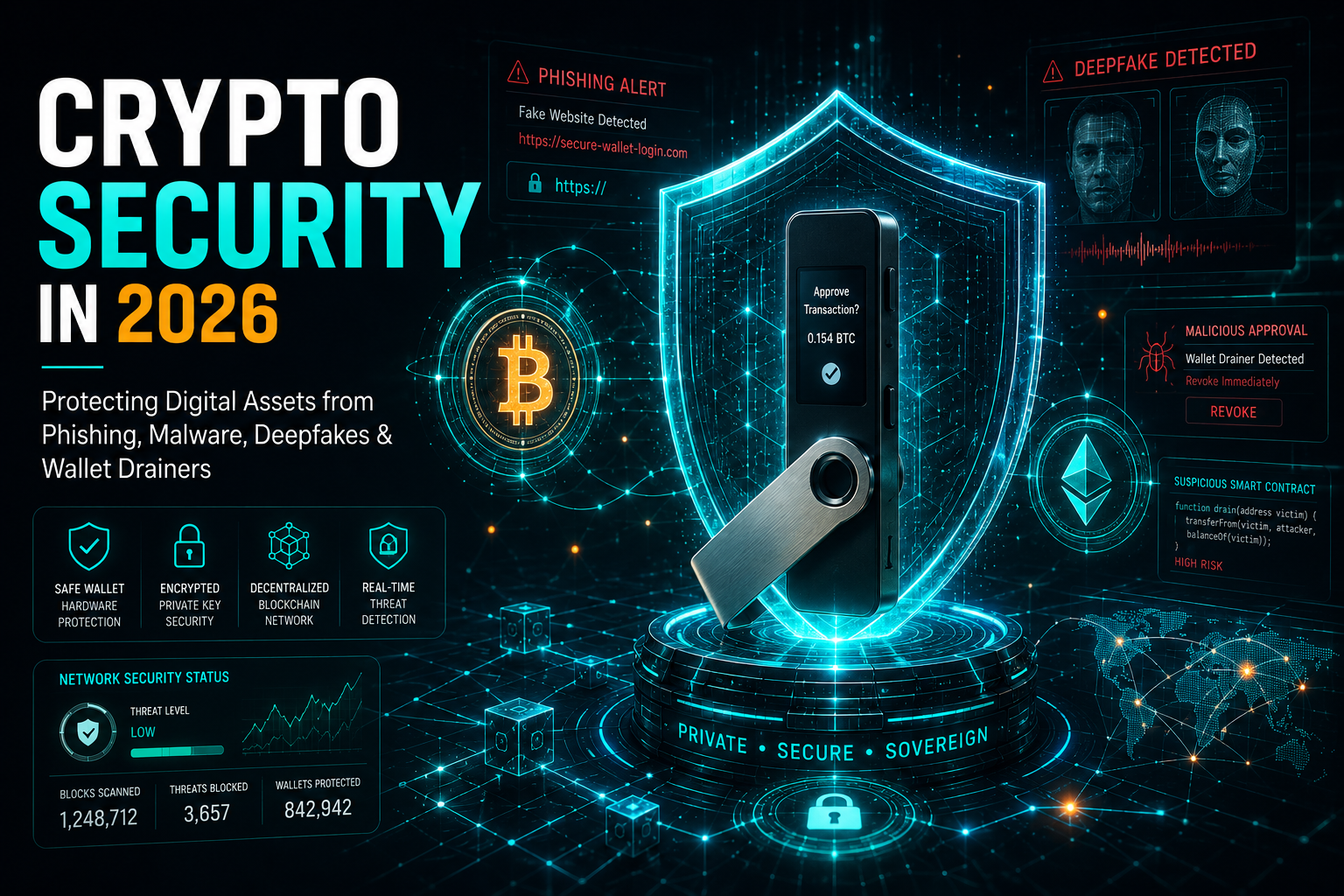
The cryptocurrency industry has matured into a massive digital economy involving exchanges, mining operations, institutional investors, and millions of individual users worldwide. However, the same features that make cryptocurrencies powerful — self-custody, decentralized infrastructure, and irreversible transactions — also make them an attractive target for cybercriminals.
Security researchers estimate that crypto-related scams and theft exceeded roughly $10 billion in 2024, and the sophistication of these attacks continues to increase every year. Many modern scams are no longer obvious. Attackers now combine social engineering, deepfake technology, malicious software, and smart contract exploits to target users.
For anyone holding crypto assets, especially those involved in mining operations, long-term investment, or high-value wallets, understanding these threats is essential. The reality is simple: protecting crypto is not only about technology; it's also about behavior and awareness.
The Growing Role of Social Engineering in Crypto Attacks
One of the oldest and still most effective attack techniques in cybersecurity is social engineering. Instead of attacking cryptographic systems directly, criminals manipulate human trust.
In recent cases, attackers have impersonated colleagues, developers, or business contacts on platforms like Telegram, Discord, or email. The victim receives a message suggesting a meeting to discuss a project, collaboration, or some work opportunity.
The attacker sends what appears to be a legitimate Zoom or video conference link, but the link actually leads to a cloned website that looks almost identical to the real one.
Once the victim joins the call, they may see familiar faces — sometimes generated using AI deepfakes or pre-recorded videos designed to build trust. From there, the scam becomes a bit sneaky.
The attackers claim there is a technical problem with the victim’s microphone or application and ask them to install a quick update. That download installs malware capable of stealing passwords, browser sessions, and access to crypto wallets.
Honestly, this type of attack works because it feels normal, like a regular meeting.
Security Recommendation
Never install software updates from random meeting links. Always download updates from official websites or verified app stores.
Also, if something feels suspicious, just verify the request through another platform. A quick message on Telegram or email could save a lot of trouble.
When Trusted Websites Become Attack Vectors
Even reputable crypto websites can sometimes become part of an attack chain.
In mid-2025, a popular cryptocurrency data platform briefly displayed a fake wallet verification prompt after attackers exploited a vulnerability in the site. Users who connected their wallets and approved the request unknowingly granted permissions allowing attackers to drain funds.
Only a few days later, another major crypto news platform temporarily displayed a fraudulent token airdrop banner redirecting users to a malicious wallet connection page.
These incidents highlight something important in the crypto ecosystem: trusting a website does not automatically mean it is safe.
Attackers sometimes compromise third-party tools used by multiple applications. If a widely used wallet connection library or JavaScript toolkit becomes compromised, any application using that tool might unknowingly execute malicious scripts.
This is why security experts often recommend using hardware wallets combined with permission monitoring tools when interacting with decentralized applications.
EtherHiding: Malware Delivered Through the Blockchain
One of the more advanced attack techniques discovered in recent years is known as EtherHiding.
Instead of hosting malware on traditional servers, attackers store malicious data directly on blockchain networks such as Ethereum or BNB Chain.
The attack usually begins with a fake job opportunity targeting developers. The victim is asked to complete a technical assignment and download project files from platforms like GitHub.
Inside the project, there may be hidden malware that compromises the developer’s computer. Once the attacker gains access, they inject malicious code into websites or projects that the developer manages.
When users visit those sites, the hidden script retrieves encrypted data from the blockchain. That data actually contains malicious code executed directly in the browser.
From there, attackers can steal login credentials, drain wallets, or redirect users to phishing pages.
Because the malicious payload is stored on-chain, removing it becomes extremely difficult, which makes this attack pretty nasty.
Phishing Attacks Are Becoming Harder to Detect
Phishing remains one of the most common ways users lose crypto assets, and the techniques are evolving.
Most Common Crypto Attack Methods and How to Prevent Them
| Type of Attack | How It Works | Main Target | Recommended Protection |
|---|---|---|---|
| Social Engineering | Attackers impersonate trusted contacts and send malicious links or files | Passwords, wallet access, exchange accounts | Verify contacts and avoid installing unknown software |
| Phishing Websites | Fake websites designed to steal login credentials or wallet approvals | Exchange accounts and DeFi wallets | Always access services through official URLs |
| Malicious Mobile Apps | Apps secretly scan files and photos searching for seed phrases | Wallet recovery phrases and private keys | Never store seed phrases digitally |
| Smart Contract Scams | Users deploy malicious contracts disguised as trading bots | Ethereum or DeFi wallets | Avoid running code you do not fully understand |
| EtherHiding Malware | Malware delivered through scripts retrieving payloads from blockchain networks | Browsers, wallets, login credentials | Use dedicated crypto devices and hardware wallets |
Modern phishing pages can even simulate a browser address bar, creating the illusion that the user is visiting a legitimate site even when they are not.
On mobile devices, this trick can make fake pages appear almost identical to real websites, which makes detection harder.
Email phishing has also improved. Attackers have found ways to send emails that appear to originate from trusted companies such as major technology providers or financial services.
These emails might pass spam filters and encourage users to click links or download files.
Security Recommendation
Never rely on links inside emails when accessing financial services. Instead, open the official website directly or use the official mobile app.
It might sound basic, but this simple habit prevents many attacks.
Malicious Apps and Seed Phrase Theft
Another growing threat involves malicious applications that manage to appear in legitimate mobile app stores.
Researchers recently discovered spyware hidden inside apps disguised as crypto portfolio trackers, messaging platforms, or wallet management tools.
Once installed, the spyware scans device storage searching for seed phrases, private keys, or wallet recovery information.
Many users, unfortunately, take screenshots of their recovery phrase or store it somewhere in their phone gallery. Malware can detect these images and send them to attacker-controlled servers.
Once a seed phrase is exposed, the attacker can restore the wallet and drain funds almost instantly. Basically, game over.
Security Recommendation
Never store seed phrases digitally on phones, cloud storage, or screenshots. The safest option is offline storage using paper or metal backup plates.
Fake MEV Bots and DeFi Arbitrage Scams
The growth of meme coins and DeFi has also created new opportunities for scammers.
One popular scam involves fake MEV trading bots promoted through YouTube tutorials or social media videos.
The idea sounds simple: deploy a smart contract, send a small amount of ETH, and the bot will automatically exploit arbitrage opportunities on decentralized exchanges.
But the reality is very different.
The smart contract is usually programmed to send funds directly to the scammer’s wallet. Blockchain data shows that in some cases, a single malicious contract generated more than $870,000 from victims who followed these tutorials.
Artificial intelligence is making things even worse. Some scam videos now use AI-generated presenters or deepfake avatars that look professional and trustworthy.
So yeah, if something promises easy money with zero effort, it's probably a scam.
Security Recommendation
Never deploy smart contracts, scripts, or bots that you do not fully understand.
Practical Security Practices for Crypto Investors
For anyone holding significant crypto assets, security should be treated as a continuous process, not a one-time setup.
Use Dedicated Devices
Some experienced investors use a dedicated browser or device exclusively for crypto activity. This reduces exposure to malware, compromised extensions, or browser exploits.
Monitor Wallet Permissions
Certain decentralized applications request unlimited token approvals. If a malicious contract receives approval, it may move funds later without further confirmation.
Permission monitoring tools can help detect and revoke unnecessary approvals.
Use Hardware Wallets for Cold Storage
Hardware wallets keep private keys isolated from internet-connected devices. This significantly reduces the risk of remote compromise.
Practical Security Practices for Crypto Investors
| Cold Wallet | Security Architecture | Supported Assets | Key Advantage | Best Use Case |
|---|---|---|---|---|
| Ledger Nano X | Secure Element Chip (CC EAL5+) | 5,500+ cryptocurrencies | Large ecosystem and mobile compatibility | Active traders and diversified portfolios |
| Trezor Model T | Open-source firmware and transparent architecture | 1,200+ assets | Highly trusted by security researchers | Long-term investors focused on transparency |
| Keystone Pro | Air-gapped QR transaction system | Multi-chain support | No USB or Bluetooth connectivity | Maximum offline security environments |
| Coldcard Mk4 | Bitcoin-only secure architecture | Bitcoin (BTC) | Advanced security features for Bitcoin users | Professional Bitcoin holders and maximalists |
| BitBox02 | Dual-chip security design | BTC, ETH and selected tokens | Simple interface with strong security | Beginner and intermediate crypto investors |
Cold storage remains one of the most reliable ways to protect long-term crypto holdings.
Conclusion
The cryptocurrency ecosystem continues to grow rapidly, and unfortunately, so do the threats targeting users. Modern crypto scams combine social engineering, phishing, malware, smart contract manipulation, and AI-driven deception.
In most cases, the blockchain itself is not compromised. Instead, attackers exploit weaknesses in human behavior, software supply chains, and application security.
The best defense is a mix of awareness, cautious behavior, and strong security tools.
For users looking to improve their security, our website provides technical comparisons, reviews, and evaluation tools that help compare some of the most reliable cold wallet solutions available today. We also highlight trusted companies offering secure hardware wallets so investors can make more informed decisions when protecting digital assets.
Choosing the right storage solution might sound simple, but honestly, it can make a huge difference when it comes to protecting your crypto.
FAQ
Q1: What is the safest way to store cryptocurrency?
The safest option for long-term storage is usually hardware cold wallets because private keys remain offline and isolated from internet-connected devices.
Q2: Can a hardware wallet be hacked remotely?
Remote hacking of hardware wallets is extremely difficult because private keys never leave the secure chip. However, users can still lose funds through phishing or malicious approvals.
Q3: What is a wallet draining attack?
A wallet draining attack occurs when a malicious smart contract or application receives permission to move tokens from a wallet and then transfers them to an attacker.
Q4: Why should seed phrases never be stored digitally?
If a seed phrase is stored digitally, malware or spyware could steal it. Anyone who obtains the phrase can restore the wallet and control the funds.
Q5: Are crypto scams increasing?
Yes. As cryptocurrency adoption grows, attackers continue developing new techniques including AI-driven phishing, malware, and social engineering campaigns. Remaining cautious and informed is critical for protecting digital assets.