The Reality of Hydro-Cooled Mining: It’s Rarely the Chips That Fail
Let’s cut to the chase: when you’re running a hydro-cooled ASIC setup, the mining chips themselves are rarely the culprits behind a system crash. More often than not, the real silent killers are cooling inefficiencies and unstable power delivery.
As high-performance rigs like the Antminer S21 Hydro and S19 XP Hydro push the boundaries of what’s possible in terms of power density, the margin for error effectively disappears. At this level of the game, it’s no longer just about chasing the highest hashrate; it’s about mastering thermal equilibrium, rock-solid electrical stability, and systematically hunting down every single point of failure before it happens.
Why Downtime Is the Real Profit Killer in Hydro Mining
In a market where even a few minutes of downtime can take a visible bite out of your daily revenue, you can't afford to treat your setup like a "plug-and-play" hobby. The synergy between your hardware, your fluid cooling loop, and your electrical infrastructure isn't just a technical detail—it is the critical foundation of your entire operation.
To survive in the next generation of mining, the question isn't just about the hardware you own, but how precisely you can control the environment it lives in.
Why Water Cooling Matters in Modern ASIC Mining Hardware
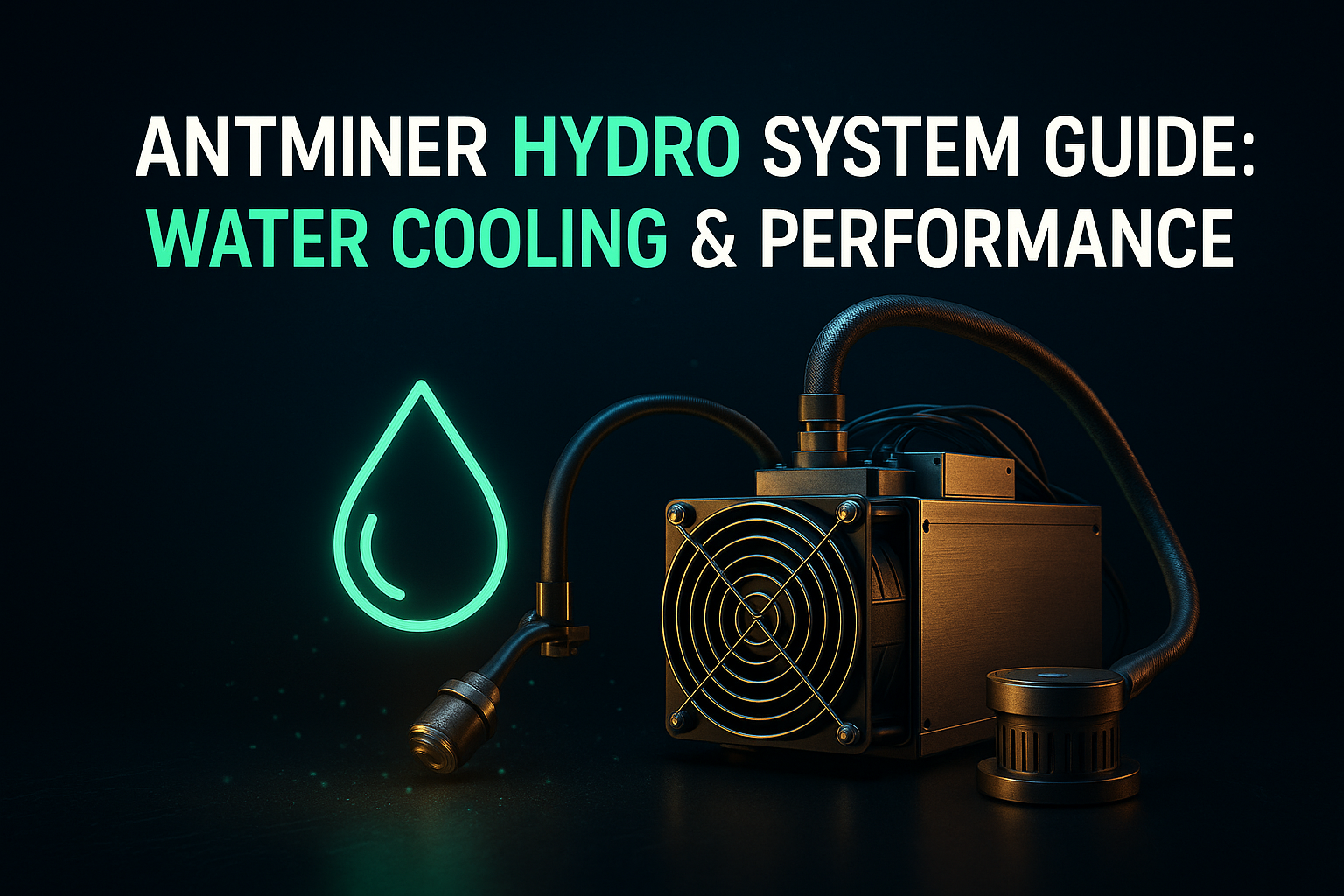
The modern generation of Bitmain devices relies on an advanced water-cooling system that far exceeds the capabilities of traditional air cooling. The Antminer S21 Hydro, which is considered the "technical beast" of Generation 7 with a hash rate of up to 335 TH/s, relies for its stability on dual water pumps and a dedicated tank. This system pulls heat directly from the processors and chips, allowing the device to operate under a power load of up to 5360 Watts without the risk of thermal burnout—which is the most common failure in these devices.
On the other hand, the Antminer S19 XP Hydro comes as a strategic option despite being relatively older; it belongs to Generation 6 and balances power and efficiency, offering 257 TH/s with a power consumption of 5304 Watts. The importance of these devices lies in their ability to operate in total silence, which solves the problem of noise pollution in mining farms. Additionally, it protects internal components from dust—especially in desert areas—and humidity, such as in coastal regions, thanks to the closed design, which significantly extends the lifespan of the device compared to air-cooled models.
| Model | Hashrate | Power Consumption | Cooling Type |
|---|---|---|---|
| Antminer S21 Hydro | ~335 TH/s | ~5360W | Water Cooling |
| Antminer S19 XP Hydro | ~257 TH/s | ~5304W | Water Cooling |
P13 Power Cable and APW17 PSU: Critical Power Engineering for Mining Stability
The power of these devices is not complete without a precise power supply system. Here comes the role of the P13 power cable dedicated to the APW17 power unit. This cable is not just an ordinary conductor; it is the lifeline specifically designed to withstand the high currents required by the S21 and S19 XP devices. This cable features a 4-pin plug that ensures balanced voltage distribution and supports multiple types of international plugs to fit various Power Distribution Units (PDU).
The use of a poor-quality or damaged power cable is the primary cause of mining operation failure; unstable current leads to the device restarting automatically, causing fluctuations in the Hashrate and loss of mining opportunities and lower profits. Furthermore, a weak connection in the socket area may generate additional heat, leading to the melting of connectors and damage to expensive mining boards from unreliable sources.
Safe Maintenance Practices for Antminer Hydro Systems and Power Cables
To ensure maximum performance, the process of replacing cables and maintaining the device must be handled with a strict protocol. The process begins by completely cutting off the electrical current (a very important matter that many do not take seriously) to avoid any static shock that might damage the highly sensitive chips. When replacing the P13 cable, the port must be inspected carefully to ensure it is free of carbon or dirt that may hinder the connection.
It is necessary to avoid extreme bending of the cable or stretching it over long distances, as the internal wires may suffer partial breakage, which raises electrical resistance and causes the cable to heat up. The golden rule is: "A tight connection is the key to stability"; ensuring the plug is pushed to the end prevents the occurrence of an electrical arc that destroys the power units.
Future of Hydro-Cooled Mining and the Shift Toward Green Bitcoin Mining
The integration of water-cooling technologies with high-quality power accessories reflects the global trend toward Green Mining. These systems not only reduce the energy lost in cooling but also contribute to reducing thermal and noise emissions. With the evolution of SHA256 technology, relying on these integrated systems becomes the only way to maintain profitability in light of intense competition and increasing mining difficulty.
In the end, investing in devices like the S21 Hydro and providing an ideal power environment through reliable P13 cables remains the true guarantee for continuing mining operations with high efficiency and the minimum amount of technical failures.
FAQ: Antminer Hydro Cooling, P13 Power Cables, and Mining Hardware Stability
Q1: What is the Antminer Hydro cooling system and how does it work?
The Antminer Hydro system is a water-cooling technology used in high-performance ASIC miners like the S21 Hydro and S19 XP Hydro. Instead of relying on air and fans, it circulates water through cooling plates that absorb heat directly from mining chips. This approach improves thermal efficiency, reduces noise, and allows miners to run at higher power levels with greater long-term stability.
Q2: Why is water cooling better than air cooling for ASIC miners?
Water cooling removes heat more efficiently than air cooling because water transfers heat faster than air. This allows mining devices to maintain stable operating temperatures even under heavy workloads. Hydro systems also reduce dust exposure, lower noise levels in mining farms, and extend the lifespan of sensitive components compared to traditional fan-based cooling systems.
Q3: What is the purpose of the P13 power cable in Antminer Hydro devices?
The P13 power cable connects the Antminer Hydro miner to the APW17 power supply unit. It is engineered to handle high electrical loads safely and deliver stable voltage to the miner. A proper P13 cable ensures consistent power delivery, preventing hashrate fluctuations, unexpected miner restarts, and potential damage to mining hardware.
Q4: Can a faulty power cable affect mining performance?
Yes. A damaged or low-quality power cable can cause unstable electrical current, which may lead to frequent miner restarts, reduced hashrate, and even hardware failure. Poor electrical connections can also generate excess heat that damages connectors or power supply units, making reliable power cables essential for stable mining operations.
Q5: How often should Antminer Hydro systems be inspected or maintained?
Regular inspections should be performed every few months, especially in large mining farms. Operators should check the condition of power cables, inspect connection ports for carbon buildup or dirt, verify water cooling system performance, and ensure all electrical connections remain secure. Preventive maintenance helps avoid costly downtime and protects mining hardware.
Q6: Are hydro-cooled ASIC miners more suitable for large mining farms?
Yes. Hydro-cooled miners are especially well suited for industrial mining operations because they provide superior thermal management and operate with significantly less noise. Their closed cooling systems also reduce dust accumulation and environmental contamination, which helps maintain stable performance in harsh environments such as desert regions or humid coastal locations.