
What Is Large-Scale Bitcoin Mining Investment? Understanding Capital Requirements and the Global Industry Shift
Getting into large Bitcoin mining needs a lot of capital, so it ends up being a very capital-intensive part of the digital asset world. This process uses affordable electricity to create the computing power essential for keeping the Bitcoin network secure with the SHA-256 algorithm. After 2018, this way of doing things became quite common, especially gaining pace since 2020, after mining operations moved out of China. This market change led institutional investors and public companies to relocate their mining operations. They needed places offering affordable electricity, clear rules, power grids that could handle growth, and industrial land that was ready for use. The United States, especially Texas, has become a global center for this kind of change.
Riot Platforms, Inc. Corporate Overview: Analyzing the Public Bitcoin Mining Company Strategy
Riot Platforms, Inc., runs one of the world's largest Bitcoin mining operations. Riot Platforms, Inc., which you might remember as Riot Blockchain, trades on the NASDAQ as RIOT. Their main approach is to build, own, and run large-scale Bitcoin mining operations themselves. They aren't just a company that hosts other miners. This strategy positions them as a strategic participant in the Bitcoin network for the long term.
The Whinstone Ranch Location Strategy: Why Rockdale, Texas is the Ideal Bitcoin Mining Facility Hub
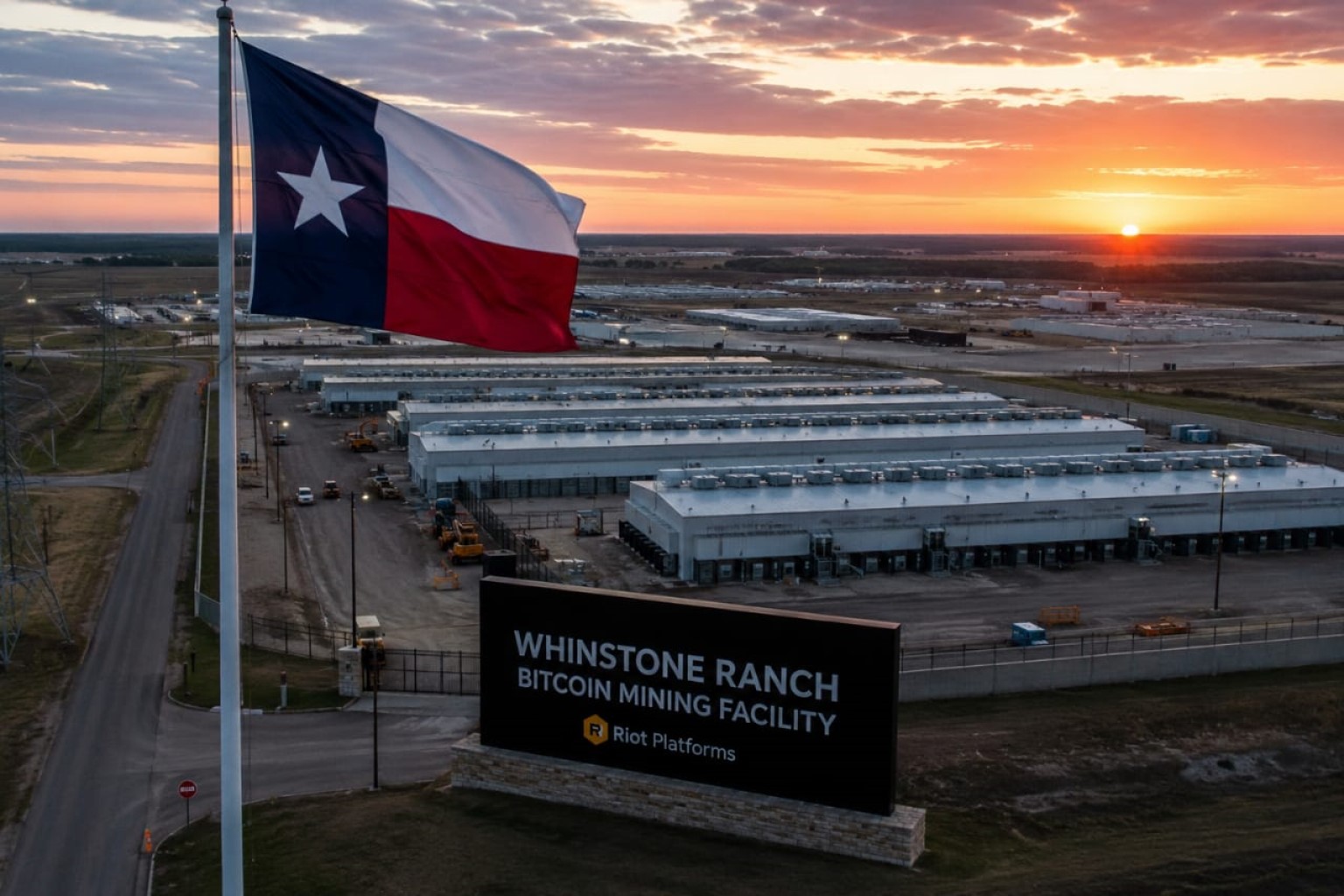
The main mining work happens in Rockdale, Texas, United States. It's at a large industrial place called the Whinstone Ranch Bitcoin Mining Facility. This place was set up on what used to be a power plant. This means it has direct access to lines that carry a lot of electricity, plenty of industrial land, and an energy-rich power grid, which is perfect for big digital operations like this.
Ownership and Corporate Governance Structure: How Riot Platforms Manages the Project
The project is wholly owned by Riot Platforms, Inc. This whole operation is set up like a big energy or data center company, not like a small, private mining business. It's run by a corporate governance team, not a single owner. People like Jason Les used to lead as CEO, and big decisions come from the board of directors, the institutional shareholders, and all of their regulatory disclosures. This structure helps ensure everything is done properly.
Total Project Cost and Capital Investment Breakdown: Financing Crypto Infrastructure at Scale
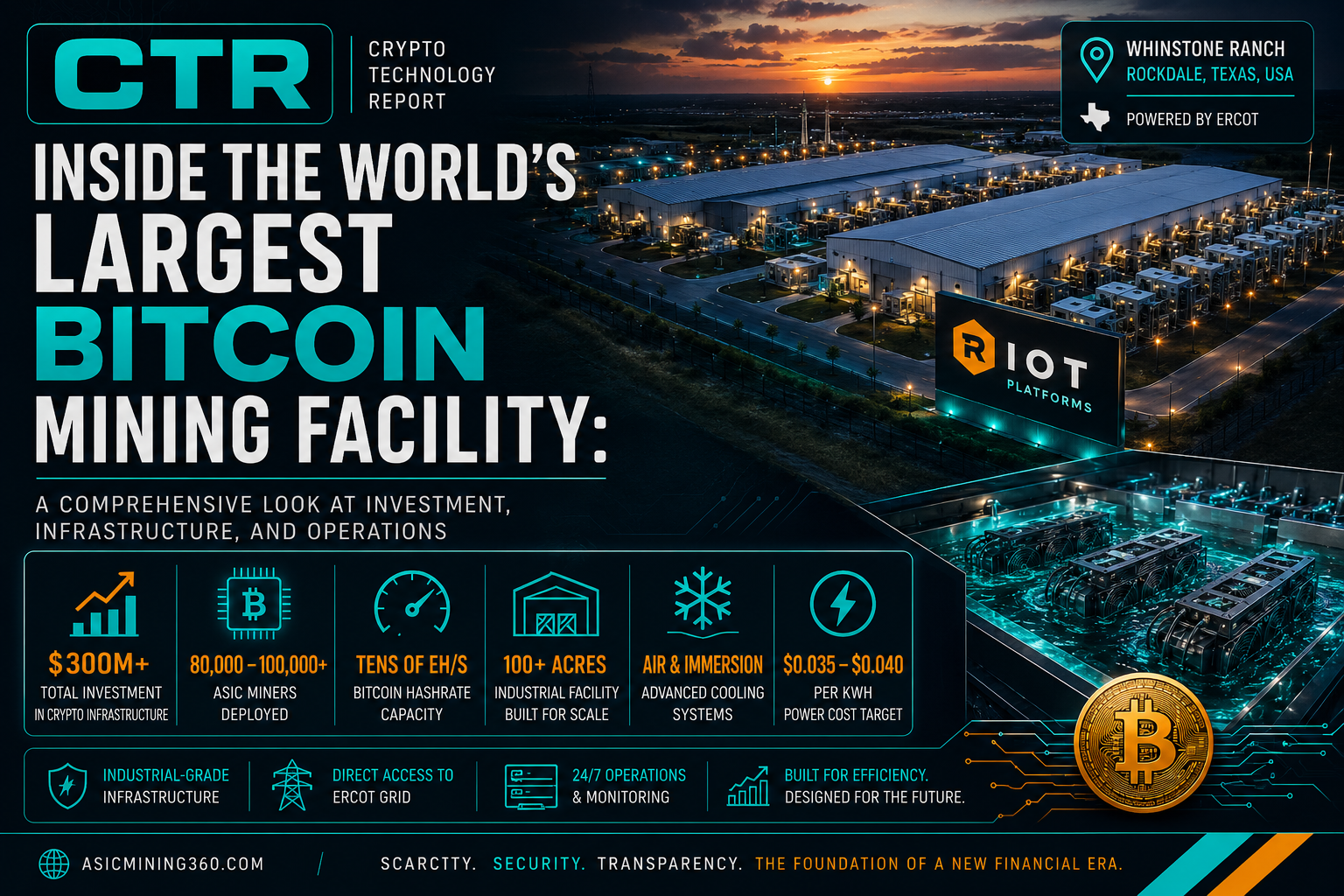
The Whinstone Ranch project represents a substantial financial commitment, with total investment reaching into the hundreds of millions. The initial expansion by itself goes over $300 million. This covers everything from buying the land, building necessary industrial infrastructure, and setting up power substations and internal distribution networks. We also included cooling systems, control rooms, and security arrangements. A major part of this investment is buying tens of thousands of mining units. Basically, it’s a facility built for converting power into computing capability.
Number of ASIC Miners and Total Bitcoin Hashrate Capacity: The Scale of Mining Hardware
This site operates with a large setup of specialized ASIC mining units. Depending on how much of the equipment is running at any given time, there are between 80,000 and over 100,000 machines. These units collectively produce a mining power measured in tens of exahashes per second (EH/s), which means the facility is a key part of the global Bitcoin network's overall hashrate.
Keywords: ASIC Miners, Bitcoin Hashrate, Mining Hardware Scale
Facility Size, Industrial Layout and Internal Infrastructure: Designing a Mining Mega-Farm
Whinstone Ranch is about 100 acres, or over 400,000 square meters. It includes a few industrial buildings that are set up for things like high-density power use, strong flooring, good airflow, high-voltage wiring, fire control, and security. We also have people keeping an eye on things 24/7. It really functions like a large data center, specifically designed for Bitcoin mining.
Keywords: Mining Facility Size, Industrial Data Center, Bitcoin Infrastructure
Advanced Cooling Systems for Bitcoin Mining: Comparing Air Cooling vs Immersion Cooling Technology
Our Texas site uses a mix of cooling methods. Standard industrial air cooling handles much of the equipment. For specialized areas, particularly where ASIC miners operate, we use immersion cooling, where the miners are submerged in dielectric fluids. This setup helps us manage heat more efficiently, stabilizes operations, and extends the life of our hardware, which lets us maintain better performance, especially given the hot climate.
Keywords: Immersion Cooling, ASIC Cooling Systems, Mining Heat Management
Managing Electricity Cost and ERCOT Grid Access: The Strategic Energy Plan for Texas Mining
Electric costs are typically the biggest expense. Riot Platforms gets its electricity right from the ERCOT grid in Texas. They've arranged long-term power purchase agreements, which helps them keep the average electricity cost down to about $0.035–$0.040 per kWh. We can reduce our net energy expenses by participating in demand-response programs. This lets us curtail operations when demand is highest and sell power back to the grid.
Conclusion: The Industrialization and Future Outlook of Large-Scale Bitcoin Mining Operations
The Whinstone Ranch really shows how Bitcoin mining has changed. It started as something for hobbyists, but now it's a big industry that takes a lot of money to run. For it to work well, you need to think about scale, how much power it uses, good cooling systems, a clear management structure, and how it fits into the grid. This really brings home the point that the future of Bitcoin mining will likely be found in large, well-managed operations. These setups are able to run very efficiently and recover from issues, making them the preferred approach.
Frequently Asked Questions (FAQ)
Q1. Where is the world’s largest Bitcoin mining facility located?
The largest industrial-scale operation, managed by Riot Platforms, is located at the Whinstone Ranch in Rockdale, Texas. This site was chosen due to its massive industrial infrastructure and direct access to the ERCOT Texas power grid.
Q2. How much does it cost to build a large-scale Bitcoin mining farm?
Building a facility like Whinstone Ranch requires a massive crypto infrastructure investment. Costs can exceed $300 million for initial phases, covering land acquisition, high-voltage electrical setups, ASIC miners, and advanced immersion cooling systems.
Q3. Why do large mining companies use immersion cooling for ASIC miners?
Immersion cooling is essential for mining heat management, especially in hot climates like Texas. By submerging ASIC mining units in dielectric fluid, companies can improve hardware efficiency, reduce noise, and extend the lifespan of their mining hardware.
Q4. What is the total Bitcoin hashrate of the Riot Platforms facility?
The facility operates with over 80,000 to 100,000 ASIC miners, contributing significantly to the global Bitcoin hashrate. The site’s capacity is measured in tens of exahashes per second (EH/s), making it a critical node in the Bitcoin network.